Gili Tepekong, Candidasa
Protected Area
KK Karangasem
Why dive here
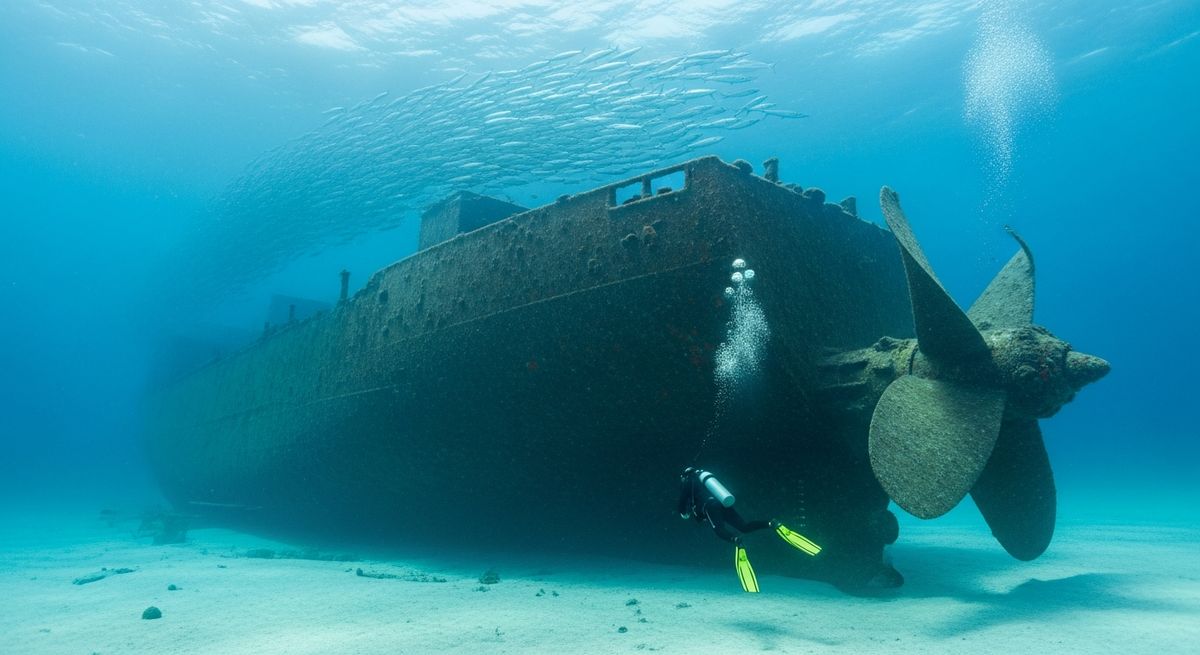
With 246+ marine species recorded in the area - including blue-spotted stingrays, bull sharks, grey reef sharks, manta rays and mobula rays (devil rays) - Gili Tepekong, Candidasa offers some of Lombok & Gili Islands's richest wreck diving. Water ranges 28-30°C, warmest April, May, November.
Gili Tepekong, off Candidasa, is a site we always make time for. It’s got a bit of everything, but what really grabs us are those huge boulders that form a labyrinth of overhangs and tunnels in the shallows. Diving through them, sunlight breaks through the cracks, illuminating schools of Glass-eye Snapper that shimmer like scattered jewels. It feels like exploring an ancient, submerged ruin. Beyond the boulders, the reef drops to a steep wall, bottoming out well past our 25-meter limit. We've often seen Green Turtles cruising along the face, oblivious to us, and the occasional White-tip Reef Shark patrolling deeper. Keep an eye out for Jansen’s wrasse darting between corals and if you're lucky, during season, a Mola Mola might just glide by in the blue. The currents here can be a bit frisky, making it better for experienced divers, but the reward is usually worth the effort. Visibility averages 18m, which gives you plenty to see.
Safety Notes
Wreck site - avoid penetration without wreck diving certification. Watch for sharp metal and entanglement hazards.
Nearest Dive Centres to Gili Tepekong, Candidasa
Dive shops near Gili Tepekong, Candidasa
Orca Dive Club Bali
Salty Finns Diving Bali
Gangga Divers
PT. Penjelajahan Laut Biru
SOUTHERN DREAMS DIVING CLUB
Geko Dive Bali
Reviews for Gili Tepekong, Candidasa
Conditions
Ocean conditions, forecast and tides for Gili Tepekong, Candidasa
Gili Tepekong, Candidasa Ocean Conditions
Monthly averages for Gili Tepekong, Candidasa, sourced from Open-Meteo marine data + Copernicus Marine (EU) - nearest station: Open-Meteo marine grid (-8.35, 116.05) (0km away)
October Averages
Sea Temperature
30°C
85°F · Range: 28.3–30.9°C
Current Speed
29.15 cm/s
Direction: SW (239°)
Chlorophyll-a
0.223 mg/m³
Clear water
Salinity
33.97 PSU
Based on 4 years of monitoring data · Data sources: Open-Meteo marine data + Copernicus Marine (EU)
Plan & book
Ways to dive Lombok & Gili Islands, from day trips to liveaboards.
Day trips & courses
via GetYourGuideGuided dives, courses and snorkel trips with instant booking.
Find dive trips in Lombok & Gili IslandsPlaces to stay
via Booking.comHotels and dive resorts near Lombok & Gili Islands.
Search stays in Lombok & Gili IslandsDive insurance
Most travel insurance excludes or limits scuba. Check what you need before you go.
Dive insurance explainedPartner links: we may earn a commission if you book, at no extra cost to you. How we make money
Where to Stay near Gili Tepekong, Candidasa
Prices from Booking.com. We may earn a commission at no extra cost to you.