Japanese Shipwreck (Wreck)
Protected Area
KK Karangasem
Why dive here
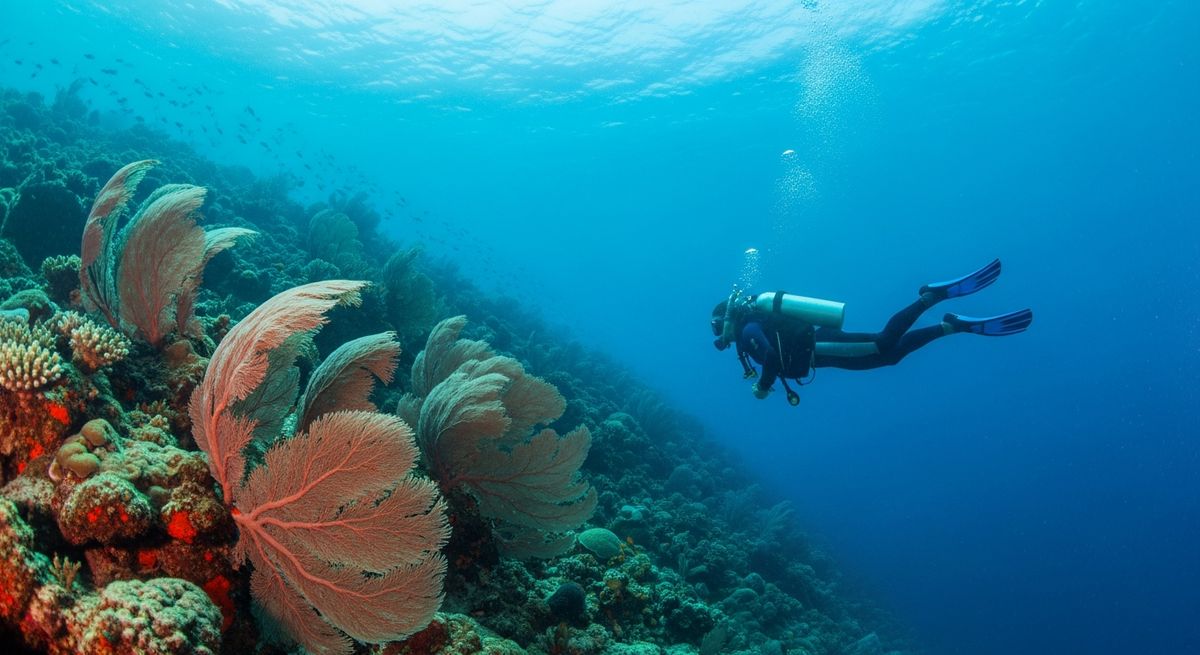
With 246+ marine species recorded in the area - including blue-spotted stingrays, bull sharks, grey reef sharks, manta rays and mobula rays (devil rays) - Japanese Shipwreck (Wreck) offers some of Lombok & Gili Islands's richest drift diving. Water ranges 28-30°C, warmest April, May, November.
Forget Gili T’s party vibe for a bit, the Japanese Shipwreck off Lombok is a completely different pace. We’ve always been drawn to how nature reclaims things, and this wreck is a prime example. It’s a small, wooden fishing vessel, nothing dramatic like a big freighter, but it’s absolutely smothered in coral, especially the staghorn, which forms these incredible, intricate structures. You’ll find it quite shallow, starting around 12m, but the real show is down at the stern, around 20m. That’s where you’ll spot our favourite anemone, home to a bustling family of orange and white clownfish – perfect for a photo if you can hold still. Look closer, and you’ll notice Shimada’s pygmygobies darting in and out of the cracks. The currents here can be a bit shifty, so we always suggest diving this one on a calm morning. The entry from the pebble beach can be a bit of a shuffle if there’s any swell, but it’s worth it.
Safety Notes
Drift dive - carry a surface marker buoy (SMB) and stay with your group. Brief the current direction before entry.
Nearest Dive Centres to Japanese Shipwreck (Wreck)
Dive shops near Japanese Shipwreck (Wreck)
DIVEONESIA
BLD Dive Center
Bali reef divers
Amed White Sand Divers
Ecodive Bali
Divers Café
Reviews for Japanese Shipwreck (Wreck)
Conditions
Ocean conditions, forecast and tides for Japanese Shipwreck (Wreck)
Japanese Shipwreck (Wreck) Ocean Conditions
Monthly averages for Japanese Shipwreck (Wreck), sourced from Open-Meteo marine data + Copernicus Marine (EU) - nearest station: Open-Meteo marine grid (-8.35, 116.05) (0km away)
October Averages
Sea Temperature
30°C
85°F · Range: 28.3–30.9°C
Current Speed
29.15 cm/s
Direction: SW (239°)
Chlorophyll-a
0.223 mg/m³
Clear water
Salinity
33.97 PSU
Based on 4 years of monitoring data · Data sources: Open-Meteo marine data + Copernicus Marine (EU)
Plan & book
Ways to dive Lombok & Gili Islands, from day trips to liveaboards.
Day trips & courses
via GetYourGuideGuided dives, courses and snorkel trips with instant booking.
Find dive trips in Lombok & Gili IslandsPlaces to stay
via Booking.comHotels and dive resorts near Lombok & Gili Islands.
Search stays in Lombok & Gili IslandsDive insurance
Most travel insurance excludes or limits scuba. Check what you need before you go.
Dive insurance explainedPartner links: we may earn a commission if you book, at no extra cost to you. How we make money
Where to Stay near Japanese Shipwreck (Wreck)
Prices from Booking.com. We may earn a commission at no extra cost to you.