Rolling Hills
Protected Area
KK Pulau Gili Air, Gili Meno, dan Gili Trawangan
Why dive here
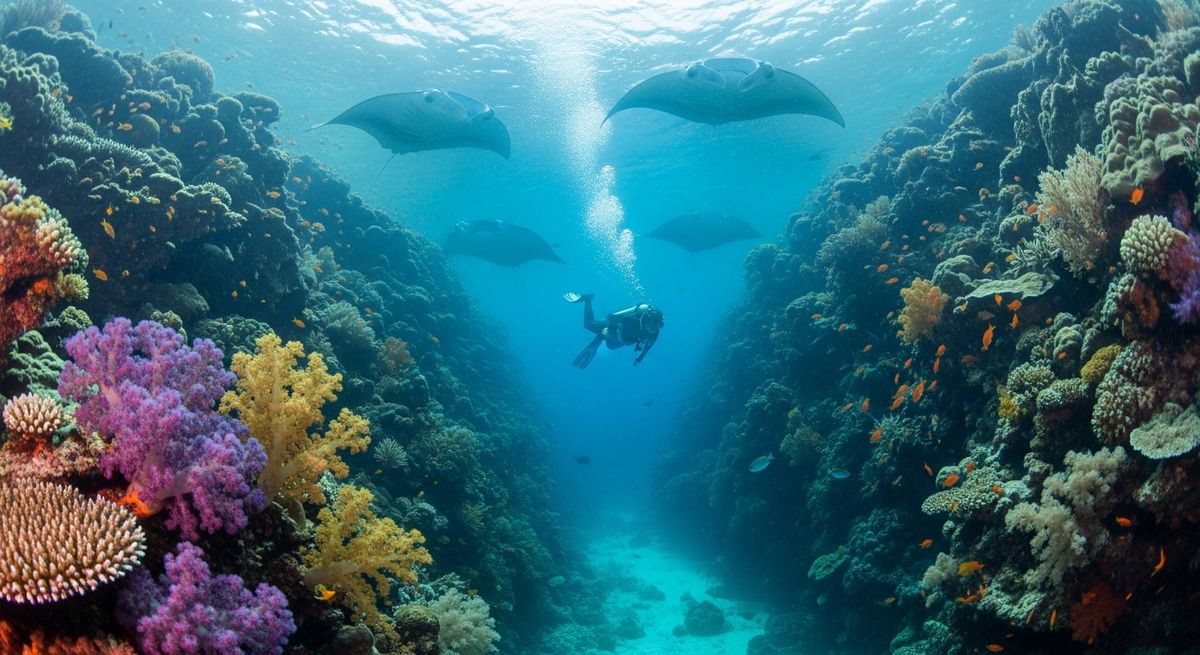
With 246+ marine species recorded in the area - including blue-spotted stingrays, bull sharks, grey reef sharks, manta rays and mobula rays (devil rays) - Rolling Hills offers some of Lombok & Gili Islands's richest reef diving. Water ranges 28-30°C, warmest April, May, November.
Rolling Hills, just off the southern tip of Gili Meno, is one of those spots that often gets overlooked, but we think that’s a real shame. It’s got a lovely, gentle slope, a series of ridges that angle in towards the island, topping out around 18 metres. We love dropping in here, letting the current (which is usually pretty mild) carry us along. You’ll drift over fields of staghorn coral, some impressive tables, and patches of seagrass, which are always worth a close look for something unusual. We’ve had great luck spotting bluespotted maskrays tucked into the sand and even whitetip reef sharks cruising in the deeper sections. The schools of sweetlips and snapper can be thick here, and if you’re lucky, a dusky shark might ghost past. It’s a beautifully relaxed dive, perfect for a slow exploration, especially good for photographers or divers who just want to unwind and absorb the surroundings.
Nearest Dive Centres to Rolling Hills
Dive shops near Rolling Hills
Gili Meno Divers
Blue Marlin Dive Gili Meno
Meno Dive Club
Sea Store
Diversia
Manta Dive Gili Trawangan
Reviews for Rolling Hills
Conditions
Ocean conditions, forecast and tides for Rolling Hills
Rolling Hills Ocean Conditions
Monthly averages for Rolling Hills, sourced from Open-Meteo marine data + Copernicus Marine (EU) - nearest station: Open-Meteo marine grid (-8.35, 116.05) (0km away)
October Averages
Sea Temperature
30°C
85°F · Range: 28.3–30.9°C
Current Speed
29.15 cm/s
Direction: SW (239°)
Chlorophyll-a
0.223 mg/m³
Clear water
Salinity
33.97 PSU
Based on 4 years of monitoring data · Data sources: Open-Meteo marine data + Copernicus Marine (EU)
Plan & book
Ways to dive Lombok & Gili Islands, from day trips to liveaboards.
Day trips & courses
via GetYourGuideGuided dives, courses and snorkel trips with instant booking.
Find dive trips in Lombok & Gili IslandsPlaces to stay
via Booking.comHotels and dive resorts near Lombok & Gili Islands.
Search stays in Lombok & Gili IslandsDive insurance
Most travel insurance excludes or limits scuba. Check what you need before you go.
Dive insurance explainedPartner links: we may earn a commission if you book, at no extra cost to you. How we make money
Where to Stay near Rolling Hills
Prices from Booking.com. We may earn a commission at no extra cost to you.