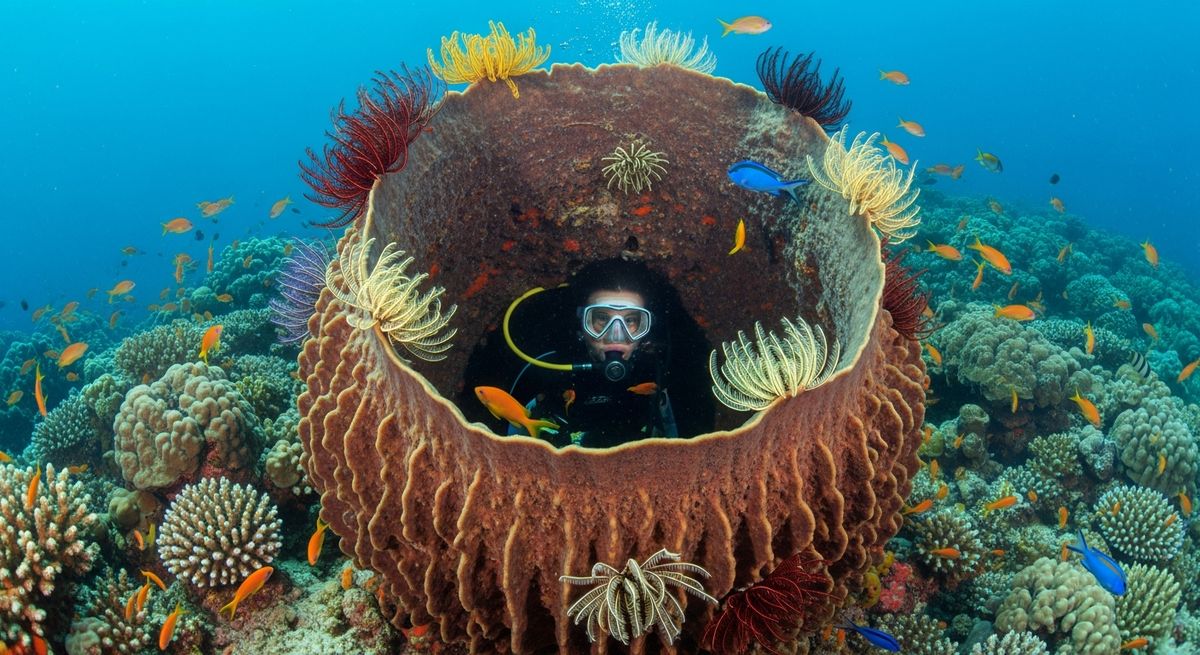
Temple Coral
Protected Area
KK Karangasem
Why dive here
With 246+ marine species recorded in the area - including blue-spotted stingrays, bull sharks, grey reef sharks, manta rays and mobula rays (devil rays) - Temple Coral offers some of Lombok & Gili Islands's richest reef diving. Water ranges 28-30°C, warmest April, May, November.
Temple Coral feels more like a sunken art installation than a natural reef, and we mean that as a compliment. This site, just off Lombok, is a fantastic example of a thriving artificial reef, maxing out at about 18 metres. What started as over a hundred concrete blocks and steel structures has transformed into a busy ecosystem, a true testament to how quickly marine life can reclaim new territory. You'll find these structures arranged on a gentle sandy slope, creating nooks and crannies perfect for exploration. We love how the concrete has become encrusted with different corals, attracting a good mix of residents. Look closely for the Elegant Sandburrower or Shimada's Pygmygoby darting between the crevices. False Brown Morays peek from the shadows, and you’ll often spot a few robust Groupers patrolling the edges. Our favourite part is the sheer density of Glassy Cardinalfish that often swarm the structures, reflecting the light in a shimmering cloud. It’s also a surprisingly good spot for finding some of the more unusual residents, like the Rosy Frogfish, if you have a keen eye. This site is brilliant for those who enjoy a slower paced dive, taking time to really examine the artificial habitats. It’s also excellent for anyone working on their Advanced Adventurer or Wreck Diver speciality, offering plenty of structure to navigate without being overly challenging. Visibility averages 16m, making for comfortable exploring.
Nearest Dive Centres to Temple Coral
Dive shops near Temple Coral
Matahari Dive Center
Madha Dive Center
Tour Dive Bali
Let’s Dive
Dive Quest
Bali Dive Quest
Reviews for Temple Coral
Conditions
Ocean conditions, forecast and tides for Temple Coral
Temple Coral Ocean Conditions
Monthly averages for Temple Coral, sourced from Open-Meteo marine data + Copernicus Marine (EU) - nearest station: Open-Meteo marine grid (-8.35, 116.05) (0km away)
October Averages
Sea Temperature
30°C
85°F · Range: 28.3–30.9°C
Current Speed
29.15 cm/s
Direction: SW (239°)
Chlorophyll-a
0.223 mg/m³
Clear water
Salinity
33.97 PSU
Based on 4 years of monitoring data · Data sources: Open-Meteo marine data + Copernicus Marine (EU)
Plan & book
Ways to dive Lombok & Gili Islands, from day trips to liveaboards.
Day trips & courses
via GetYourGuideGuided dives, courses and snorkel trips with instant booking.
Find dive trips in Lombok & Gili IslandsPlaces to stay
via Booking.comHotels and dive resorts near Lombok & Gili Islands.
Search stays in Lombok & Gili IslandsDive insurance
Most travel insurance excludes or limits scuba. Check what you need before you go.
Dive insurance explainedPartner links: we may earn a commission if you book, at no extra cost to you. How we make money
Where to Stay near Temple Coral
Prices from Booking.com. We may earn a commission at no extra cost to you.