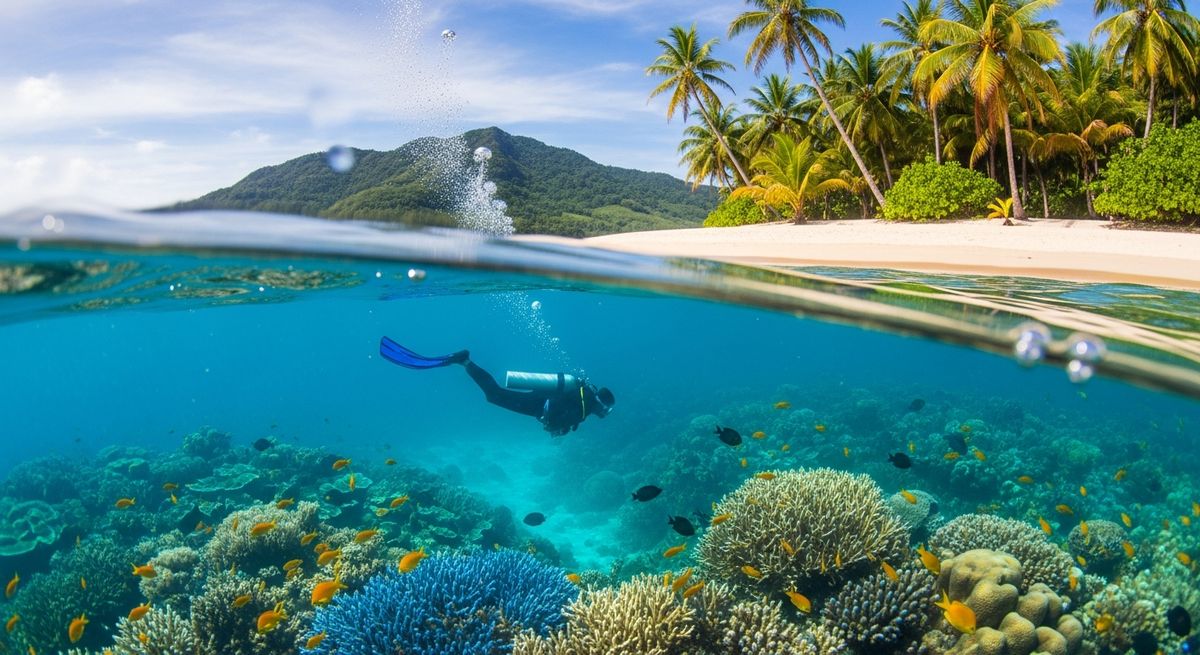
Arno’s Underwater Reef - Raja Ampat

Cistern Point feels like a proper BVI dive: bright, shallow, and full of those small, interesting moments you find when you take your time. We love it as a second dive, especially after something deeper, because you can just relax and watch the reef unfold. The namesake "cisterns" are these big, bowl-like depressions in the coral, almost like natural amphitheaters. They collect light beautifully, making it a dream for photographers, especially later in the morning when the sun is high. We’ve spent entire safety stops here just watching Spaghetti Eels poke their heads out of the sand, or spotting Mimic Blennies darting between coral branches. Keep your eyes peeled for Nurse Sharks tucked under ledges; they’re pretty reliably found here. And while the reef itself is the main show, we always suggest a quick peek into the blue for bigger pelagics. We’ve seen Tarpon cruising by, and on one memorable dive, a Southern Stingray drifted past us, ghost-like. Maximum depth is just 13m, so it’s perfect for extended bottom times and suits anyone who enjoys a leisurely poke around a vibrant, sun-drenched reef.

Location
Raja Ampat, Indonesia, Southeast Asia
Coordinates
-0.572800, 130.554200
Type
reef

Marine Protected Area: TAMAN WISATA PERAIRAN KEPULAUAN RAJA AMPAT

Best Time to Dive in Raja Ampat

The warmest water temperatures in Raja Ampat occur in November, averaging 30.3°C. The coolest conditions are in July at 29.3°C.

Monthly Water Temperatures

  • January: 29.7°C
  • February: 29.4°C
  • March: 29.6°C
  • April: 29.9°C
  • May: 29.9°C
  • June: 29.7°C
  • July: 29.3°C
  • August: 29.4°C
  • September: 29.6°C
  • October: 30.0°C
  • November: 30.3°C
  • December: 30.1°C

Nearby Dive Sites in Raja Ampat

Nearest Dive Centres to Arno’s Underwater Reef

Marine Life in Raja Ampat

Home to 250 recorded species including 176 reef fish, 43 hard corals, 8 seagrass & algae, 5 sea cucumbers, 4 clams & mussels, 4 other.

Notable Species

Recommended Packing List for Arno’s Underwater Reef

Based on average water temperature of 29.7°C, currents 20 cm/s.

  • Shorty or Rashguard - warm 30°C water needs minimal exposure protection
  • Mask - essential for every dive
  • Fins
  • BCD - buoyancy compensator
  • Regulator - your most safety-critical piece of gear
  • Dive Computer - tracks depth, time, and NDL
  • Surface Marker Buoy (SMB) - essential for boat pickups
  • Dive Torch - useful for crevices and colour at depth
  • Underwater Camera - capture your diving memories

Frequently Asked Questions

What is the maximum depth for diving at Arno's Underwater Reef, and are there shallower areas suitable for less experienced divers?
The maximum depth for diving at Arno's Underwater Reef is 22 meters. While the site features a drop-off with an overhang from 28 to 35 meters and areas deeper than 50 meters, the stated maximum depth for diving is 22m. For less experienced divers, the dive concludes in a nice soft coral garden that extends up to 5 meters, offering shallower exploration.
What kind of marine life and coral can divers expect to see at Arno's Underwater Reef?
Divers visiting Arno's Underwater Reef can anticipate a vibrant display of marine life, including various swimming fishes and shell-less nudibranches. The reef is also home to abundant marine corals, with a particularly nice soft coral garden found in shallower areas up to 5 meters. Keep an eye out for an occasional sub-aquatic manta passing by, adding to the excitement of your dive. For more information on marine species, visit our wildlife database.
How challenging is diving at Arno's Underwater Reef, and is it considered suitable for beginner divers?
Diving at Arno's Underwater Reef is rated as intermediate difficulty. Divers should be prepared for potentially strong currents, especially on favorable days, which may require quick movement or specialized fins. Due to these conditions and the overall difficulty rating, it is generally not considered suitable for beginner divers.
What is the best time of year or day to dive Arno's Underwater Reef for optimal conditions and marine encounters?
The provided data for Arno's Underwater Reef does not specify a best time of year or day for optimal conditions or marine encounters. It only notes that currents can be strong on the most favorable days. For general information on when to dive in Raja Ampat, please consult our When to Dive section.
What scuba diving certifications are typically required to dive at Arno's Underwater Reef?
The provided data for Arno's Underwater Reef does not specify the typical scuba diving certifications required. However, given its intermediate difficulty and the potential for strong currents, divers should ensure they have adequate training and experience for such conditions. We recommend checking with local dive centers in Raja Ampat for their specific requirements.
What are the typical current conditions and underwater visibility like at Arno's Underwater Reef?
At Arno's Underwater Reef, divers should be prepared for strong current conditions, particularly on favorable days. These currents can be significant, requiring divers to start close to the drop-off or use freediving fins to navigate efficiently. The average underwater visibility at this site is 15 meters, offering good viewing opportunities despite the currents.