Kabui Reef
Protected Area
Teluk Mayalibit (Raja Ampat)
Why dive here
With 236+ marine species recorded in the area - including blacktip reef sharks, manta rays, mobula rays (devil rays), pygmy seahorses and sea turtles - Kabui Reef offers some of Raja Ampat's richest reef diving. Water ranges 29-30°C, warmest May, November, December.
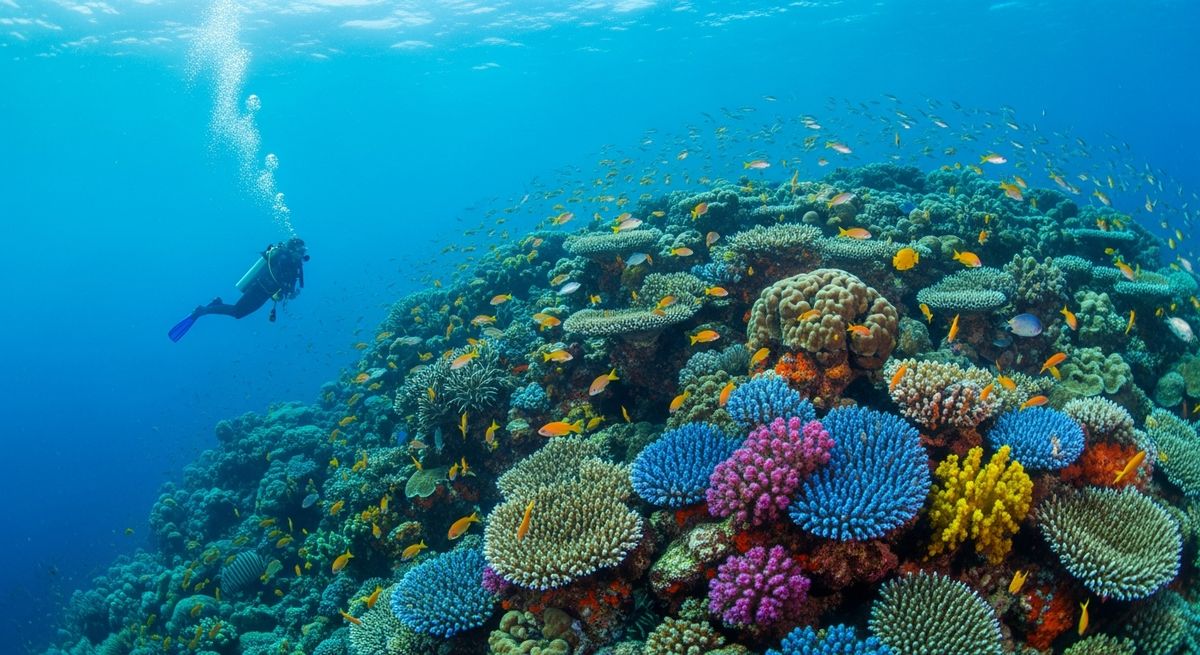
Kabui Reef feels like a secret garden, a calm oasis in Raja Ampat. We love this site for its relaxed vibe; it’s perfect when you want a break from the roaring currents and don’t need the high-octane pelagic action. Descending into Kabui, you're immediately struck by the sheer density of clown anemonefish, their orange bodies a constant flicker among the anemone tentacles. It’s a photographer’s dream, and we’ve spent entire dives just watching their territorial squabbles. The real magic here is in the details, though. We’ve found multiple pygmy seahorses, including Denise’s, tucked away in gorgonian fans. It takes a keen eye and a patient fin, but they are there. Look closely at the hard coral patches, and you might spot a Scaly-nape Tentacle Goby or a tiny Wasp Pygmy Goby darting into cover. The reef drops to a maximum of 16 meters, so there’s plenty of bottom time to explore the nooks and crannies. Visibility often hovers around 14 meters, good enough to appreciate the intricate textures of the corals and the subtle movements of the smaller inhabitants. It’s a gentle drift, ideal for long, slow dives where discovery is the main goal. This is a place for macro enthusiasts, new divers, or anyone who just wants to unwind and truly see the small wonders.
Safety Notes
Strong currents typical this month (avg 35 cm/s). Good buoyancy control essential.
Nearest Dive Centres to Kabui Reef
Dive shops near Kabui Reef
Raja Ampat Biodiversity Resort
Raja Ampat dive resort
Scuba republic
Tarzan-Diving
Gurara
Dive into Raja Ampat
Reviews for Kabui Reef
Conditions
Ocean conditions, forecast and tides for Kabui Reef
Kabui Reef Ocean Conditions
Monthly averages for Kabui Reef, sourced from Open-Meteo marine data + Copernicus Marine (EU) - nearest station: Open-Meteo marine grid (-0.5, 130.6) (0km away)
October Averages
Sea Temperature
30°C
86°F · Range: 29.2–30.9°C
Current Speed
34.71 cm/s
Direction: NW (311.5°)
Chlorophyll-a
0.138 mg/m³
Clear water
Salinity
34.33 PSU
Based on 4 years of monitoring data · Data sources: Open-Meteo marine data + Copernicus Marine (EU)
Plan & book
Ways to dive Raja Ampat, from day trips to liveaboards.
Day trips & courses
via GetYourGuideGuided dives, courses and snorkel trips with instant booking.
Find dive trips in Raja AmpatPlaces to stay
via Booking.comHotels and dive resorts near Raja Ampat.
Search stays in Raja AmpatDive insurance
Most travel insurance excludes or limits scuba. Check what you need before you go.
Dive insurance explainedPartner links: we may earn a commission if you book, at no extra cost to you. How we make money
Where to Stay near Kabui Reef
Prices from Booking.com. We may earn a commission at no extra cost to you.