Pasir Timbul
Protected Area
TAMAN WISATA PERAIRAN KEPULAUAN RAJA AMPAT
Why dive here
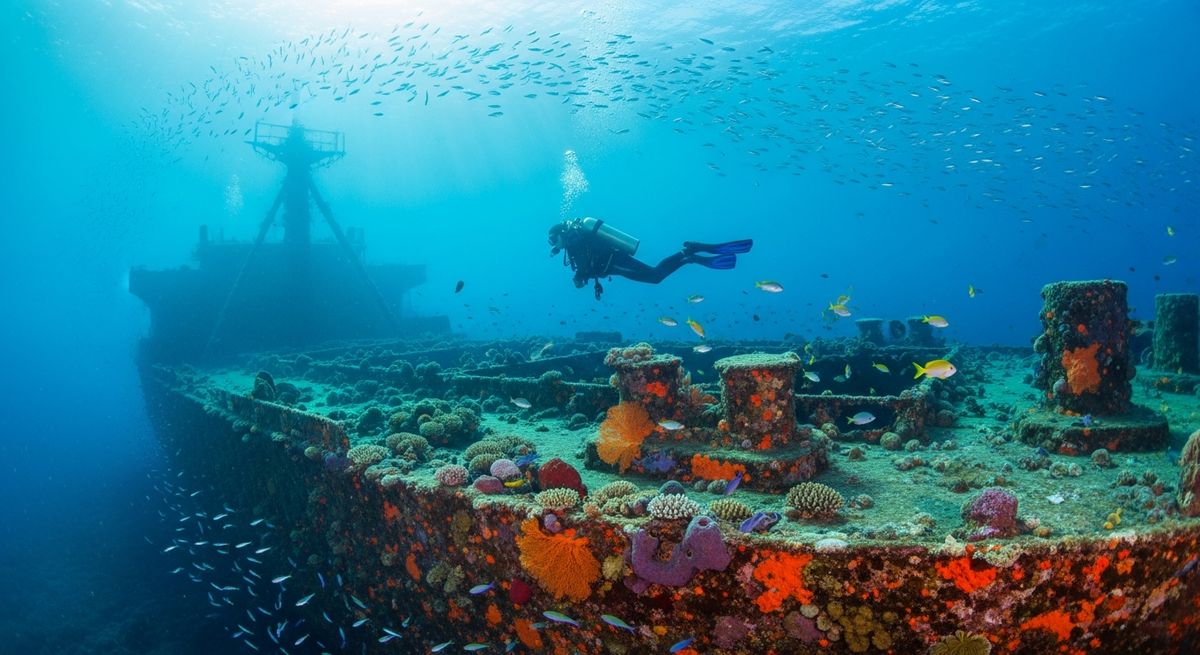
With 236+ marine species recorded in the area - including blacktip reef sharks, manta rays, mobula rays (devil rays), pygmy seahorses and sea turtles - Pasir Timbul offers some of Raja Ampat's richest wreck diving. Water ranges 29-30°C, warmest May, November, December.
Pasir Timbul is one of those Raja Ampat sites we genuinely look forward to, a real drift-dive treat. Ten minutes from Soul Scuba Divers, you drop onto a sloping coral reef that just screams 'go with the flow.' The currents here, while generally mild enough for most divers, keep things moving nicely, giving you a proper armchair ride over some beautiful hard coral formations. We’ve seen plenty of action on the deeper parts of the slope, blacktip and whitetip reef sharks cruising by, the occasional eagle ray gliding past. But for us, the real magic happens when you slow down and stick your nose into the coral. This is pygmy seahorse territory; we’ve spotted them tucked into gorgonians, barely visible. Keep an eye out for the smaller stuff too: the tiny Eyebar Spinygoby, those vibrant Patchwork Gobies, and the almost camouflaged Slender Snake Eel poking from the sand. It’s a site that rewards both the big picture gaze and the macro hunter, perfect for a relaxed dive that still delivers plenty of "wow" moments.
Safety Notes
Wreck site - avoid penetration without wreck diving certification. Watch for sharp metal and entanglement hazards.
Strong currents typical this month (avg 35 cm/s). Good buoyancy control essential.
Nearest Dive Centres to Pasir Timbul
Dive shops near Pasir Timbul
Papua Diving - Kri Eco Resort
Yenkoranu Homestay
Wobegong Dive Center
Koranu Fyak Homestay
Delvin
Lumba Lumba
Reviews for Pasir Timbul
Conditions
Ocean conditions, forecast and tides for Pasir Timbul
Pasir Timbul Ocean Conditions
Monthly averages for Pasir Timbul, sourced from Open-Meteo marine data + Copernicus Marine (EU) - nearest station: Open-Meteo marine grid (-0.5, 130.6) (0km away)
October Averages
Sea Temperature
30°C
86°F · Range: 29.2–30.9°C
Current Speed
34.71 cm/s
Direction: NW (311.5°)
Chlorophyll-a
0.138 mg/m³
Clear water
Salinity
34.33 PSU
Based on 4 years of monitoring data · Data sources: Open-Meteo marine data + Copernicus Marine (EU)
Plan & book
Ways to dive Raja Ampat, from day trips to liveaboards.
Day trips & courses
via GetYourGuideGuided dives, courses and snorkel trips with instant booking.
Find dive trips in Raja AmpatPlaces to stay
via Booking.comHotels and dive resorts near Raja Ampat.
Search stays in Raja AmpatDive insurance
Most travel insurance excludes or limits scuba. Check what you need before you go.
Dive insurance explainedPartner links: we may earn a commission if you book, at no extra cost to you. How we make money
Where to Stay near Pasir Timbul
Prices from Booking.com. We may earn a commission at no extra cost to you.