Vietnamese Wreck
Protected Area
Pulau Perhentian Kecil Marine Park
Why dive here
With 153+ marine species recorded in the area - including sea turtles, sperm whales, whale sharks and pufferfish - Vietnamese Wreck offers some of Perhentian Islands's richest wreck diving. Water ranges 28-31°C, warmest May, June, August.
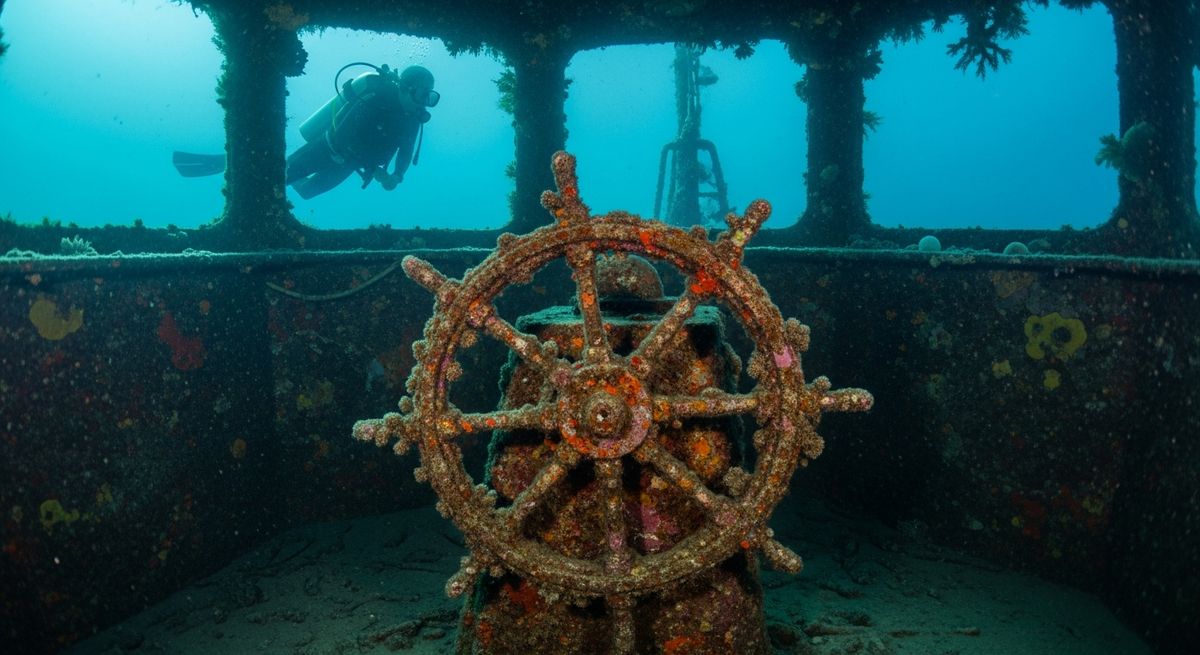
The Vietnamese Wreck is less about dramatic structure and more about the slow, silent work of the ocean. It’s a fishing trawler, sunk in the late 70s, sitting upright on the sandy bottom. We tend to drop in the early morning; the thermocline can be a bit sharp around 20 metres, but the visibility usually stretches out further before the day boats arrive. As you descend, the wreck slowly emerges, a dark shape draped in fishing nets that have since become home to all sorts of critters. We always spend time finning around the bow, where the branch and leaf corals have taken a real hold. Look closely in the nooks and crannies – we've spotted some surprisingly large stonefish tucked away. Further along the deck, you’ll find plump black sea cucumbers and sandfish, like slow-motion vacuum cleaners. It’s a calm dive, typically no strong current, making it a good spot for newer wreck divers to practice buoyancy around a genuine piece of history. While we’ve never seen a whale shark here, the narrow-barred Spanish mackerel do cruise by occasionally, especially if you’re patient.
Safety Notes
Wreck site - avoid penetration without wreck diving certification. Watch for sharp metal and entanglement hazards.
Nearest Dive Centres to Vietnamese Wreck
Dive shops near Vietnamese Wreck
Chomel Dive Center
Sea Sight Divers
Anti Gravity Divers
Sea Voice Divers
Quiver Dive Team
Ombak Divers
Reviews for Vietnamese Wreck
Conditions
Ocean conditions, forecast and tides for Vietnamese Wreck
Vietnamese Wreck Ocean Conditions
Monthly averages for Vietnamese Wreck, sourced from Open-Meteo marine data + Copernicus Marine (EU) - nearest station: Open-Meteo marine grid (5.91, 102.77) (0km away)
October Averages
Sea Temperature
30°C
87°F · Range: 29.4–31.2°C
Current Speed
6.71 cm/s
Direction: SE (116.6°)
Salinity
31.46 PSU
Based on 4 years of monitoring data · Data sources: Open-Meteo marine data + Copernicus Marine (EU)
Plan & book
Ways to dive Perhentian Islands, from day trips to liveaboards.
Day trips & courses
via GetYourGuideGuided dives, courses and snorkel trips with instant booking.
Find dive trips in Perhentian IslandsPlaces to stay
via Booking.comHotels and dive resorts near Perhentian Islands.
Search stays in Perhentian IslandsDive insurance
Most travel insurance excludes or limits scuba. Check what you need before you go.
Dive insurance explainedPartner links: we may earn a commission if you book, at no extra cost to you. How we make money
Where to Stay near Vietnamese Wreck
Prices from Booking.com. We may earn a commission at no extra cost to you.