Bonbon Sea Grass Valley
Why dive here
With 176+ marine species recorded in the area - including giant moray eels, sea turtles, sperm whales, lionfish and pufferfish - Bonbon Sea Grass Valley offers some of Apo Reef's richest wreck diving. Water ranges 28-30°C, warmest May, June, July.
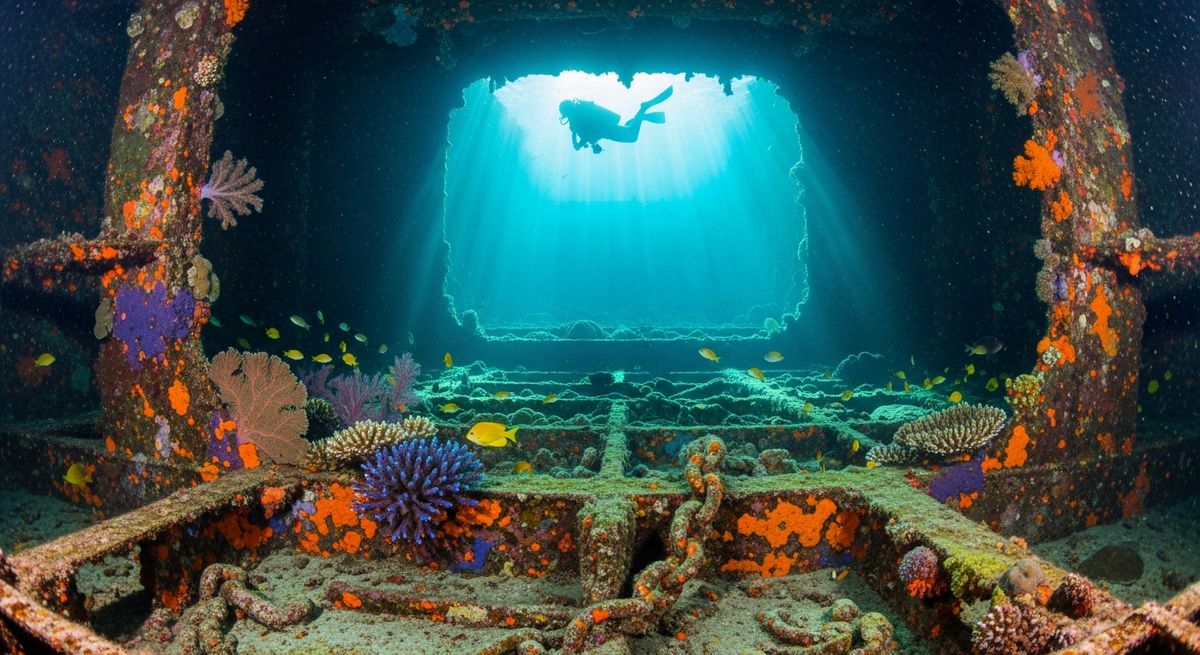
Bonbon Seagrass Valley isn't your typical Apo Reef drift or wall dive. It’s got a different kind of charm, the sort that grows on you after a few minutes, especially if you appreciate the subtler beauty of a wreck. The site is essentially the skeletal remains of a World War II Japanese supply ship, broken into sections across a surprisingly extensive seagrass bed. We love it because it’s a tangible piece of history, slowly being reclaimed by the sea. As you descend, the light shifts, playing tricks through the seagrass, and then the dark shapes of the wreck emerge. You’ll weave through rusting hull plates and twisted metal, imagining the ship's final moments. Our favourite part is spotting the surprisingly large green sea turtles that graze here, unbothered by divers, often accompanied by schools of yellow-stripe scad darting through the ship's shadow. Look closely at the metal itself – there are nudibranchs and flatworms galore, plus plenty of pipefish camouflaged amongst the blades. Visibility can be a bit variable here depending on the tide, but we'd suggest going at high tide for the clearest views, when the light really penetrates the seagrass. It’s a gentle dive, perfect for photographers or anyone who wants a break from the strong currents often found elsewhere in Apo Reef.
Typical Bonbon Sea Grass Valley Dive Profile
Illustrative profile based on site depth and type. Actual dive profiles vary - always follow your dive computer and training.
Safety Notes
Wreck site - avoid penetration without wreck diving certification. Watch for sharp metal and entanglement hazards.
Bonbon Sea Grass Valley Wreck History
Vessel Type
unknown
Cause
unknown
Despite its inclusion in some wreck databases, the 'Bonbon Sea Grass Valley' is not a shipwreck but a celebrated natural dive site within the Apo Reef Natural Park. This protected area is renowned for its incredible biodiversity, and this site is a prime example of its pristine underwater landscapes. Divers descending into the valley will find themselves gliding over vast, healthy seagrass beds, a crucial habitat for a myriad of marine creatures.
The gentle slopes are a haven for green sea turtles, which are often seen grazing peacefully on the grasses. The valley is also a fantastic location for macro photography, with critters like nudibranchs, pipefish, and juvenile fish hiding among the blades. The excellent visibility and calm conditions typical of Apo Reef make this an accessible and rewarding dive for all levels, showcasing the vibrant life of the Philippines' coral triangle.
Reviews for Bonbon Sea Grass Valley
Conditions
Ocean conditions, forecast and tides for Bonbon Sea Grass Valley
Bonbon Sea Grass Valley Ocean Conditions
Monthly averages for Bonbon Sea Grass Valley, sourced from Open-Meteo marine data + Copernicus Marine (EU) - nearest station: Open-Meteo marine grid (12.33, 121.06) (26km away)
October Averages
Sea Temperature
30°C
86°F · Range: 28.1–31.3°C
Current Speed
3.16 cm/s
Direction: E (108.4°)
Chlorophyll-a
0.049 mg/m³
Very clear (oligotrophic)
Salinity
32.63 PSU
Based on 4 years of monitoring data · Data sources: Open-Meteo marine data + Copernicus Marine (EU)
Plan & book
Ways to dive Apo Reef, from day trips to liveaboards.
Day trips & courses
via GetYourGuideGuided dives, courses and snorkel trips with instant booking.
Find dive trips in Apo ReefPlaces to stay
via Booking.comHotels and dive resorts near Apo Reef.
Search stays in Apo ReefDive insurance
Most travel insurance excludes or limits scuba. Check what you need before you go.
Dive insurance explainedPartner links: we may earn a commission if you book, at no extra cost to you. How we make money
Where to Stay near Bonbon Sea Grass Valley
Prices from Booking.com. We may earn a commission at no extra cost to you.