Camia Wreck
Protected Area
DENR Antique, BFAR Antique, Office of the Provincial Agriculture (OPA) Antique and Rare Inc.
Why dive here
With 176+ marine species recorded in the area - including giant moray eels, sea turtles, sperm whales, lionfish and pufferfish - Camia Wreck offers some of Apo Reef's richest wreck diving. Water ranges 28-30°C, warmest May, June, July.
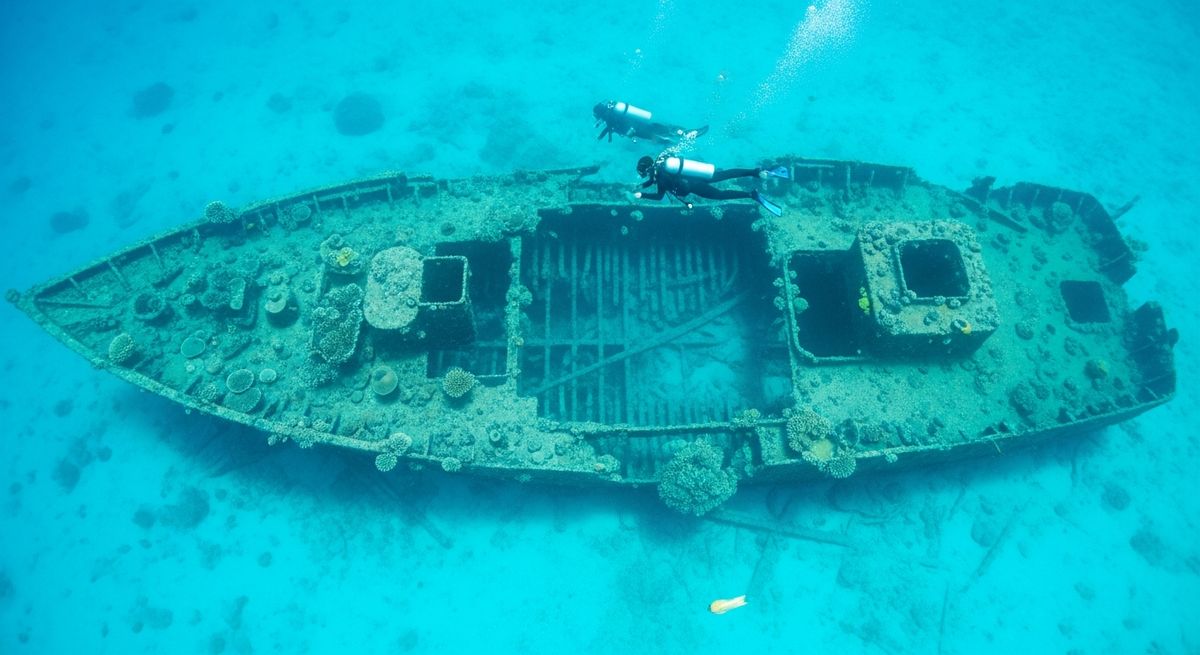
The Camia Wreck is one of those sites we always look forward to at Apo Reef. It’s not just a pile of metal; it feels like a genuine ghost ship, a cargo vessel that went down in a typhoon back in the 1980s. You can still make out the superstructure, the cranes, the massive cargo holds. We love dropping down onto the bow, often finding a big school of batfish hanging out, almost greeting you. What makes it standout, though, is the sheer density of glassfish inside the holds. They literally shimmer, hundreds of thousands of them, creating these living walls of silver. Prod them gently, and they part like a curtain, revealing the shadows where you might spot a lionfish or even a whitetip reef shark cruising through. It’s an easy wreck to penetrate, mostly open, so it’s great for experienced divers looking for a bit more than just a reef, but also accessible enough for those newer to wrecks. Keep an eye out for robust ghost pipefish tucked away in the soft corals growing on the deck, especially around the stern. We think early morning is the best time to dive it, before the current picks up too much and the light really brings out the colours of the sponges and tunicates.
Safety Notes
Wreck site - avoid penetration without wreck diving certification. Watch for sharp metal and entanglement hazards.
Camia Wreck Wreck History
Vessel Type
cargo ship
Cause
scuttled
Unlike wrecks born from tragedy, the Camia Wreck is a story of purpose and conservation. This small cargo vessel was intentionally scuttled in the pristine waters of Apo Reef Natural Park to create a new dive site and artificial reef. The practice of sinking prepared ships provides a stable, non-toxic structure for corals to colonize and marine life to inhabit, taking pressure off the natural reefs while creating exciting new underwater playgrounds for divers.
The Camia now sits perfectly upright on a sandy bottom, offering an ideal environment for wreck diving training and underwater photography. Its open holds and easy-to-navigate structure are now home to a profusion of marine life. Divers can expect to find large schools of batfish and snapper, curious moray eels peeking from pipes, and a variety of macro life hiding on its surfaces. The clear waters of Apo Reef and the wreck's gentle disposition make it a highlight for any diver visiting the area.
Nearest Dive Centres to Camia Wreck
Dive shops near Camia Wreck
Calypso Diving School International
BORACAY KESAM DIVE
Mikly's Dive Center
Diamond Water Sports
WaterColors Boracay Diving Adventures - North
Viking Scuba Diving
Reviews for Camia Wreck
Conditions
Ocean conditions, forecast and tides for Camia Wreck
Camia Wreck Ocean Conditions
Monthly averages for Camia Wreck, sourced from Open-Meteo marine data + Copernicus Marine (EU) - nearest station: Open-Meteo marine grid (12.33, 121.06) (26km away)
October Averages
Sea Temperature
30°C
86°F · Range: 28.1–31.3°C
Current Speed
3.16 cm/s
Direction: E (108.4°)
Chlorophyll-a
0.049 mg/m³
Very clear (oligotrophic)
Salinity
32.63 PSU
Based on 4 years of monitoring data · Data sources: Open-Meteo marine data + Copernicus Marine (EU)
Plan & book
Ways to dive Apo Reef, from day trips to liveaboards.
Day trips & courses
via GetYourGuideGuided dives, courses and snorkel trips with instant booking.
Find dive trips in Apo ReefPlaces to stay
via Booking.comHotels and dive resorts near Apo Reef.
Search stays in Apo ReefDive insurance
Most travel insurance excludes or limits scuba. Check what you need before you go.
Dive insurance explainedPartner links: we may earn a commission if you book, at no extra cost to you. How we make money
Where to Stay near Camia Wreck
Prices from Booking.com. We may earn a commission at no extra cost to you.