Kogyo
Why dive here
With 176+ marine species recorded in the area - including giant moray eels, sea turtles, sperm whales, lionfish and pufferfish - Kogyo offers some of Apo Reef's richest wreck diving. Water ranges 28-30°C, warmest May, June, July.
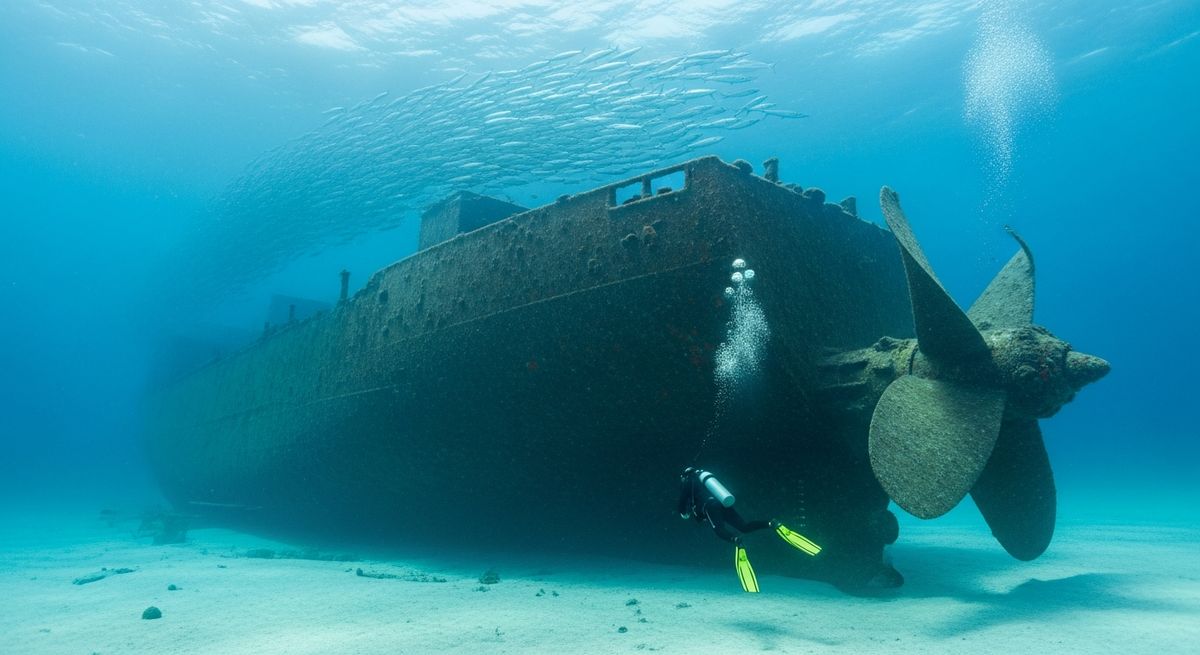
The Kogyo Maru isn't just a wreck; it's a living, breathing art installation. This 130-metre cargo ship, resting mostly upright, starts around 18 metres and drops to 30, making it accessible for advanced open water divers. We love exploring the huge hold, where light shafts pierce the gloom, illuminating schools of big-eye trevally that swirl inside like liquid silver. There’s something special about finning through the superstructure, imagining the ship's past life. Look closely and you’ll find bluespotted shrimpgobies peeking from sandy patches, and often a hefty pufferfish or two peering out from a porthole. Our favourite moment is always rounding the bow, feeling that slight current push, and seeing the massive scale of the vessel. We’d suggest a morning dive here, when the light is best for photography and the currents are typically calmer. It's a proper wreck dive, full of atmosphere and plenty of space to explore, perfect for divers who appreciate history merging with vibrant marine life.
Safety Notes
Wreck site - avoid penetration without wreck diving certification. Watch for sharp metal and entanglement hazards.
Nearest Dive Centres to Kogyo
Dive shops near Kogyo
Sangat Island Dive Resort
Chindonan Dive & Beach Resort
D’Divers
Pirate Divers
Dive Link Resort
Pirates Diving Center and Resort diveshop
Reviews for Kogyo
Conditions
Ocean conditions, forecast and tides for Kogyo
Kogyo Ocean Conditions
Monthly averages for Kogyo, sourced from Open-Meteo marine data + Copernicus Marine (EU) - nearest station: Open-Meteo marine grid (12.33, 121.06) (26km away)
October Averages
Sea Temperature
30°C
86°F · Range: 28.1–31.3°C
Current Speed
3.16 cm/s
Direction: E (108.4°)
Chlorophyll-a
0.049 mg/m³
Very clear (oligotrophic)
Salinity
32.63 PSU
Based on 4 years of monitoring data · Data sources: Open-Meteo marine data + Copernicus Marine (EU)
Plan & book
Ways to dive Apo Reef, from day trips to liveaboards.
Day trips & courses
via GetYourGuideGuided dives, courses and snorkel trips with instant booking.
Find dive trips in Apo ReefPlaces to stay
via Booking.comHotels and dive resorts near Apo Reef.
Search stays in Apo ReefDive insurance
Most travel insurance excludes or limits scuba. Check what you need before you go.
Dive insurance explainedPartner links: we may earn a commission if you book, at no extra cost to you. How we make money
Where to Stay near Kogyo
Prices from Booking.com. We may earn a commission at no extra cost to you.