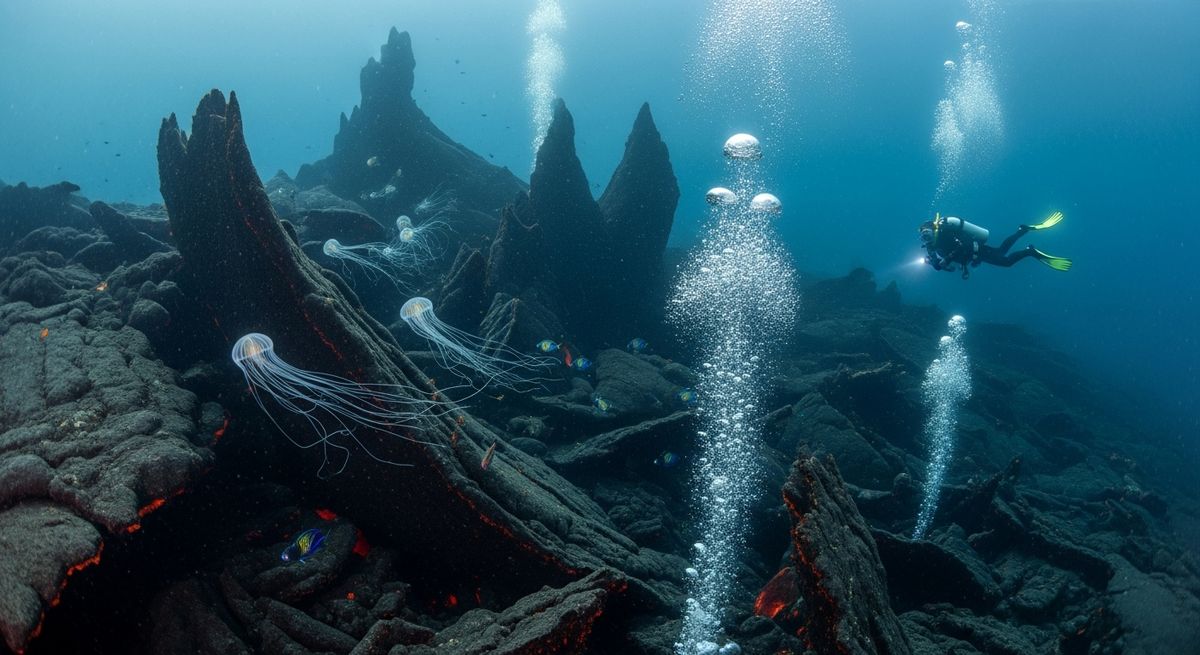
The Gorge - Apo Reef

Dropping into The Gorge, you're immediately struck by the sheer scale of it. This is a proper wall dive on Apo Reef's southwestern edge, plummeting well past 40 metres. Corals and sponges cling to the vertical face, a healthy tapestry that hints at the deeper action. We've often found ourselves hanging here, watching grey reef sharks cruise by, sometimes whitetips too, and if you’re lucky, a hammerhead might ghost past in the blue. Keep an eye out for big schools of snappers and the occasional Napoleon wrasse. It’s a site we’d recommend for experienced divers, ideally hit at slack tide to avoid the stronger currents that can whip through here.

Location
Apo Reef, Philippines, Southeast Asia
Coordinates
12.670000, 120.425000

Marine Protected Area: Apo Reef Natural Park

Best Time to Dive in Apo Reef

The warmest water temperatures in Apo Reef occur in June, averaging 30.3°C. The coolest conditions are in February at 27.8°C.

Monthly Water Temperatures

  • January: 28.1°C
  • February: 27.8°C
  • March: 28.2°C
  • April: 29.1°C
  • May: 30.1°C
  • June: 30.3°C
  • July: 29.9°C
  • August: 29.6°C
  • September: 29.7°C
  • October: 29.8°C
  • November: 29.5°C
  • December: 29.2°C

Nearby Dive Sites in Apo Reef

Nearest Dive Centres to The Gorge

Marine Life in Apo Reef

Home to 181 recorded species including 171 reef fish, 5 seagrass & algae, 2 other, 1 whales & dolphins, 1 hard corals, 1 clams & mussels.

Notable Species

Recommended Packing List for The Gorge

Based on average water temperature of 29.3°C, currents 8 cm/s.

  • Shorty or Rashguard - warm 29°C water needs minimal exposure protection
  • Mask - essential for every dive
  • Fins
  • BCD - buoyancy compensator
  • Regulator - your most safety-critical piece of gear
  • Dive Computer - tracks depth, time, and NDL
  • Surface Marker Buoy (SMB) - essential for boat pickups
  • Dive Torch - useful for crevices and colour at depth
  • Underwater Camera - capture your diving memories

Frequently Asked Questions

How deep is The Gorge dive site in Jervis Bay?
The provided data for The Gorge dive site pertains to Apo Reef, Philippines, not Jervis Bay. At this location, The Gorge is a dramatic deep-wall dive that plummets to 40+ metres. While the wall extends quite deep, the exact maximum depth is not specified in the available information.
What kind of marine life and underwater features can I expect to see when diving The Gorge at Jervis Bay?
The information for The Gorge dive site describes the location in Apo Reef, Philippines, not Jervis Bay. Here, you can expect a dramatic deep-wall dive draped in healthy corals and sponges. It's known as 'shark territory', with regular sightings of grey reef sharks and whitetip reef sharks, occasional hammerheads, and schools of snappers and Napoleon wrasse.
How challenging is diving at The Gorge in Jervis Bay, and what level of diver experience is recommended?
Based on the data for The Gorge in Apo Reef, Philippines - not Jervis Bay - the dive is rated as intermediate difficulty. To ensure a safe and enjoyable experience, it is highly recommended to dive at slack tide to avoid potentially turbulent flow. This dive is best suited for divers with experience managing currents and deeper profiles.
What is the best time of year to dive The Gorge dive site in Jervis Bay for optimal conditions?
The available data for The Gorge dive site in Apo Reef, Philippines - not Jervis Bay - does not specify the best time of year for optimal conditions. However, it does advise that diving at slack tide is crucial to avoid turbulent flow. For general information on optimal diving seasons in the region, you might consult our When to Dive guide.
What scuba diving certifications are required to dive The Gorge in Jervis Bay?
The provided information for The Gorge dive site in Apo Reef, Philippines - not Jervis Bay - does not explicitly state specific certification requirements. However, given its classification as an intermediate difficulty deep-wall dive that plummets to 40+ metres, an Advanced Open Water certification or equivalent is generally recommended to safely manage the depth and potential conditions.
What are the typical current and visibility conditions at The Gorge dive site in Jervis Bay?
The data for The Gorge dive site refers to Apo Reef, Philippines, not Jervis Bay. At this site, currents can be significant, as it is recommended to dive at slack tide to avoid turbulent flow. The provided information does not specify typical visibility conditions, but healthy coral walls often indicate good water quality.