Pamilacan - Dumaguete

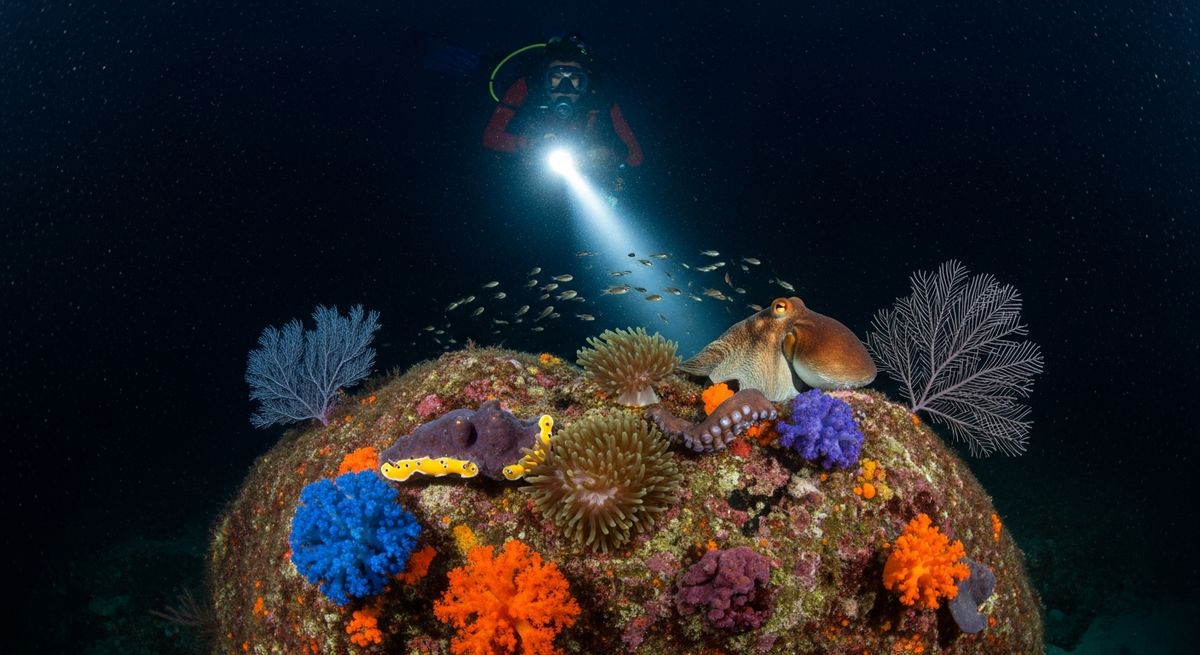
Pamilacan, a small island southeast of Panglao, feels a world away from the busy mainland. Its remote location often means encounters with larger pelagic species. We’ve seen manta rays cruising the deeper sections, and pods of dolphins sometimes make an appearance. The sloping reefs and walls around the island are healthy, with good coral coverage, providing sustenance for various sponges, anemones, and sea whips. Currents can be present, bringing in nutrients, so it's a good spot for divers comfortable with a bit of a drift. It's a solid choice for those hoping for a chance at bigger creatures, without guaranteeing it.

Location
Dumaguete, Philippines, Southeast Asia
Coordinates
9.490000, 124.180000

Marine Protected Area: Baclayon, Tagbilaran Bohol

Best Time to Dive in Dumaguete

The warmest water temperatures in Dumaguete occur in January, averaging 26.8°C. The coolest conditions are in December at 26.8°C.

Monthly Water Temperatures

  • January: 26.8°C (air: 26.7°C)
  • February: 26.8°C (air: 26.6°C)
  • March: 26.8°C (air: 27.3°C)
  • April: 26.8°C (air: 28.1°C)
  • May: 26.8°C (air: 28.5°C)
  • June: 26.8°C (air: 27.8°C)
  • July: 26.8°C (air: 27.4°C)
  • August: 26.8°C (air: 27.6°C)
  • September: 26.8°C (air: 27.6°C)
  • October: 26.8°C (air: 27.3°C)
  • November: 26.8°C (air: 27.3°C)
  • December: 26.8°C (air: 27.0°C)

Nearby Dive Sites in Dumaguete

Nearest Dive Centres to Pamilacan

Marine Life in Dumaguete

Home to 522 recorded species including 440 reef fish, 18 sharks & rays, 15 sea cucumbers, 12 sea snails & nudibranchs, 9 seagrass & algae, 9 hard corals.

Notable Species

Recommended Packing List for Pamilacan

Based on average water temperature of 26.8°C.

  • Shorty or Rashguard - warm 27°C water needs minimal exposure protection
  • Mask - essential for every dive
  • Fins
  • BCD - buoyancy compensator
  • Regulator - your most safety-critical piece of gear
  • Dive Computer - tracks depth, time, and NDL
  • Surface Marker Buoy (SMB) - essential for boat pickups
  • Dive Torch - useful for crevices and colour at depth
  • Underwater Camera - capture your diving memories

Frequently Asked Questions

What are the typical depths for diving at Pamilacan Island and its various dive sites?
Based on the available information, the typical depths for diving at Pamilacan Island are not specified. While the site is described as having sloping reefs and walls, exact depth ranges are not provided in the current data. Divers should inquire with local dive centers for specific depth profiles of the various dive sites around Pamilacan.
What kind of marine life and coral formations can divers expect to see when diving around Pamilacan Island?
Divers at Pamilacan Island can expect to encounter a rich diversity of marine life, including impressive larger creatures such as manta rays, dolphins, and whale sharks. Beyond these 'big boys,' there are also plenty of smaller species to observe. The underwater topography features spectacular coral coverage on sloping reefs and walls, adorned with multi-hued sessile life like sponges, anemones, and sea whips.
How challenging is diving at Pamilacan Island, and are there dive sites suitable for beginners versus advanced divers?
Diving at Pamilacan Island is categorized as intermediate difficulty. This is partly due to the regular currents that sweep through the area, which provide sustenance for the vibrant sessile life but can add a layer of challenge for divers. While the data specifies an intermediate difficulty, it does not explicitly detail sites suitable for beginners versus advanced divers; however, intermediate sites typically require some prior diving experience.
What is the best time of year to dive in Pamilacan for optimal conditions and marine life sightings?
The provided data for Pamilacan Island does not specify the best time of year for optimal diving conditions or marine life sightings. For general information on seasonal diving conditions in the Philippines, you might consult DivePlnr's When to Dive guide. Local dive operators in Dumaguete can offer the most current advice on seasonal variations.
What scuba diving certifications are recommended or required for diving at Pamilacan Island?
The available data for Pamilacan Island does not explicitly state recommended or required scuba diving certifications. However, given its classification as an intermediate difficulty dive site with regular currents, divers typically benefit from at least an Open Water Diver certification, and often an Advanced Open Water Diver certification is recommended for comfort and safety in varying conditions. Always check with your chosen dive operator for their specific certification requirements.
What are the usual current conditions and visibility like at Pamilacan Island dive sites?
At Pamilacan Island, divers can expect regular currents to sweep through the dive sites. These currents are a key factor in sustaining the spectacular coral coverage and multi-hued sessile life, including sponges, anemones, and sea whips. The provided data does not specify typical visibility conditions for the area.