Diving in Malapascua
Why dive here
Malapascua offers some of Philippines's richest diving, with 87+ marine species recorded in the area - including sea turtles, thresher sharks, lionfish and pufferfish. Water ranges 27-30°C, warmest June, July, September.
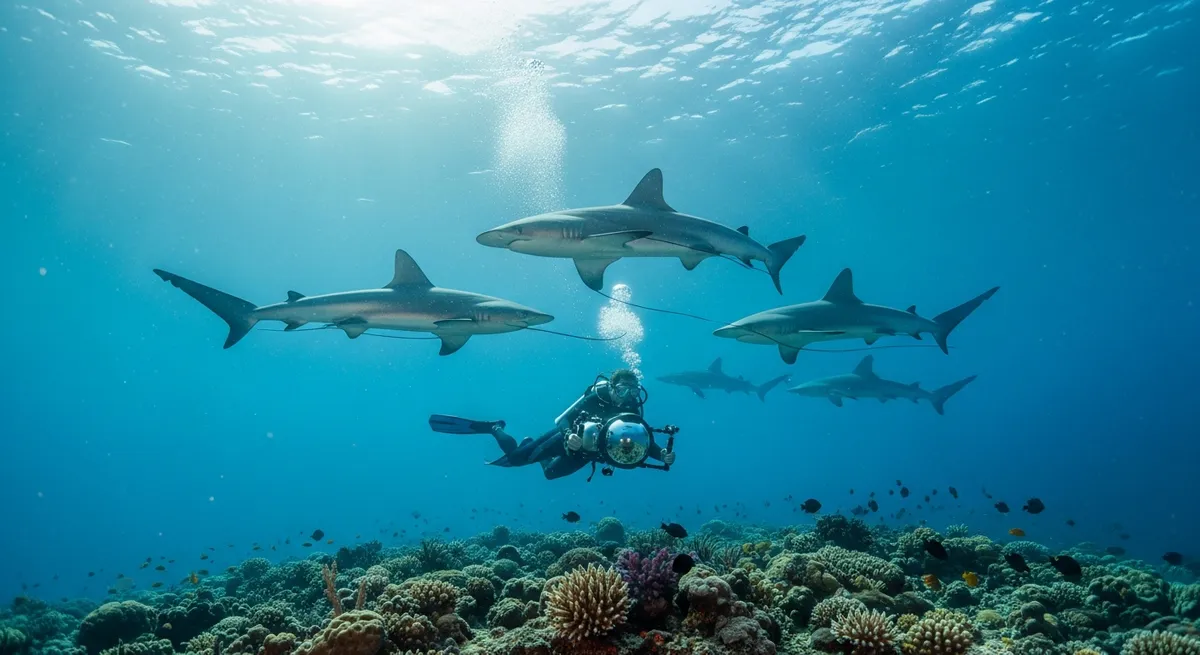
Malapascua. Just the name makes us think of those early morning alarms and the promise of something truly special. For us, the draw is always Monad Shoal. There’s nowhere else on Earth where you can consistently see thresher sharks. We’re talking almost daily sightings, usually at dawn, as they come in for a clean-up. The water can be cool at that hour, and you often feel a gentle push from the current, but then a thresher glides into view, its impossibly long tail trailing behind, and you completely forget the chill. Beyond the threshers, the diving here holds plenty of other delights. We’ve spent hours at sites like Gato Island, weaving through its cave, spotting white-tip reef sharks snoozing and the occasional banded sea snake slithering by. The macro life is also excellent; we’ve found red-banded lobsters tucked into crevices and Japanese stargazers buried in the sand, their eyes peeking out. Muck diving around the shallower reefs near the island can turn up some real oddities if you have a sharp eye, like robust ghost pipefish and various nudibranchs. Visibility averages around 15-20 metres, but it can drop after heavy rains, especially if you’re not out at the more exposed sites. We’d suggest staying for at least five days to really soak it all in.
Malapascua Dive Site Map
Dive sites and dive centres in Malapascua
Malapascua Dive Sites
70 dive sites in Malapascua
ALASKA 1
Alright, Alaska 1. We love this wreck, tucked away just a short boat ride from Malapascua’s main beaches. It’s a fishing vessel, not some grand warship, but that’s part of its charm. She sits upright on a sandy bottom at 28 metres, a proper steel hulk with a story written all over her. You can actually picture the nets, the crew, the daily grind before she went down. This isn’t a penetration dive for the faint of heart; the wreck is in pretty rough shape, hence the "dangerous wreck" tag. But the exterior offers plenty to explore. Schools of fusiliers often swirl over the stern, a shimmering curtain you can swim right through. Look closely into the shadowy crevices and you’ll often spot lionfish, their venomous fins fanned out, perfectly camouflaged against the rust. Moray eels peek from behind twisted metal, and the occasional batfish will drift by, curious about your presence. It’s a quiet dive, often just your boat there, letting you really soak in the atmosphere of a vessel reclaimed by the sea. For photographers, the light playing on the corroded metal is just beautiful, especially on a sunny morning.
ANNA MARZ
The Anna Marz, just a stone's throw from Bounty Beach, is one of Malapascua's most accessible wrecks. At a maximum depth of eight metres, it’s a brilliant afternoon dive, especially if you’ve been out to Monad Shoal early and want something relaxed to finish the day. This isn't some ancient galleon, it's a relatively modern motor vessel, scuttled intentionally in 2011 to create an artificial reef. We love how quickly marine life has adopted it; schools of batfish often hang out around the stern, their silver bodies catching the light, while colourful nudibranchs are usually dotted across the hull. You can poke around the open cargo holds, which are now home to juvenile sweetlips and the occasional lionfish lurking in the shadows. What we really enjoy about the Anna Marz is its playful nature. It’s small enough to circumnavigate multiple times, finding new details with each pass. The light penetration is fantastic, so everything feels bright and inviting. We’d suggest going in the late afternoon; the sun angles are beautiful, and the boat traffic has usually died down by then. It's a fantastic site for newer wreck divers or photographers looking for some great natural light shots.
ASIA MALAYSIA
Asia Malaysia, Malapascua, isn't your typical deep wreck dive. She’s a roll-on/roll-off ferry, sunk in 2011, sitting upright in a shallow 10 metres of water. We love that it’s accessible to almost everyone, a gentle introduction to wreck diving. The story itself is fascinating – everyone onboard was rescued after she succumbed to heavy seas on a run from Cebu to Iloilo. Today, she’s a playground for macro life. You can spend an entire dive exploring the upper decks, looking into the bridge windows, and imagining the final moments. We've often found robust ghost pipefish tucked into crannies, and our last visit yielded a beautiful ornate ghost pipefish camouflaged against some soft coral. Schools of small silversides shimmer around the superstructure, and lionfish often lurk in the shadows, waiting for an easy meal. This is a site we’d suggest for photographers or anyone wanting a relaxed, rewarding dive. It's a proper wreck, but without the nitrogen penalty.
ASIA SOUTH KOREA
Asia South Korea, now there’s a wreck that tells a story. We’ve spent a fair bit of time on her, and each dive reveals something new. This isn’t one of those wrecks where you’re just looking at a pile of metal; she sits upright, proud, and remarkably intact for something that went down in heavy weather back in '99. We love dropping down to her bow, often a little spooky with the light filtering through the 30-metre depth, then drifting along her main deck. You'll spot the bridge area first, always a highlight, with plenty of entry points if you’re wreck-trained and want to explore the darker corners. The cargo holds are open too, and often filled with schools of snappers, their scales catching the torch beam. Garden eels populate the sandy patches around the hull, swaying in unison, and we’ve seen some hefty groupers lurking in the deeper sections. It’s a proper wreck dive, best suited for advanced divers comfortable with depth and overhead environments, offering plenty to discover beyond just the exterior.
BALANGIGA
Balangiga, just off Malapascua, isn't about deep dives or thresher sharks. This is a shallow wreck, resting at a mere 5 meters, which makes it perfect for a leisurely second dive or even a snorkel. The ferry went down in 1988 during a storm, carrying far too many people. You can feel that history when you’re finning over it, a quiet kind of respect. What we love about Balangiga is how approachable it is. It’s a 22-meter hull, broken but still recognisable, and sunlight just drenches the whole scene. You’ll find schools of batfish circling the main structure, and clouds of damselfish darting in and out of the deck openings. Look closely, and you’ll spot nudibranchs clinging to the metal, maybe a lionfish tucked into a shadowy corner. It's an easy dive, ideal for photographers wanting to practice natural light wreck shots, or just anyone who wants to spend some relaxed time exploring without the pressure of depth limits. It’s a gentle reminder of both human stories and nature's resilience.
Blue Coral Malapascua
Blue Coral is a comfortable, shallow dive right off Malapascua, often used for check-out dives or when the conditions elsewhere are a bit too sporty. At a gentle 17 metres, it’s perfect for new divers finding their buoyancy or anyone looking for a relaxed afternoon float. We typically spot a few different nudibranchs clinging to the soft corals, maybe a tiny pipefish if you've got a sharp eye, and we’ve even seen small cuttlefish hunting here. While you won't find thresher sharks, it's a pleasant enough spot to stretch your fins and enjoy the smaller things.
Bogtong Bato
Bogtong Bato, just off Malapascua, often surprises us. We've found it's a solid choice when the currents are a bit much elsewhere. Down at around 18 meters, you often spot thresher sharks cruising past – not as consistently as Monad Shoal, of course, but a pleasant bonus. Look closely in the seagrass beds, especially the halodule and thalassia, for Savigny's Brittle Stars. It's a relaxed dive, good for photographers who want to take their time and suitable for advanced open water divers.
Calangaman - Nunez Shoal
Calangaman - Nunez Shoal offers a decent wall dive, best explored when the currents aren't too strong. We often see schooling fusiliers and the occasional reef shark patrolling the deeper sections. It’s a good spot for a second dive of the day if you’re looking for a relaxed drift. Visibility here can be inconsistent, but on a good day, it’s a pleasant dive for intermediate divers.
Capitancillo Island
Capitancillo Island, a protected marine sanctuary, is an easy day trip from Malapascua, usually bundled with other sites. The main dive is a gentle slope that bottoms out around 23 meters, making it a comfortable spot for newer divers looking to get their fins wet in a pretty environment. We often find schools of fusiliers here, sometimes so thick they can dim the sunlight, and the corals are in decent shape, attracting plenty of smaller reef fish. It's a relaxed dive, good for a second or third dip of the day, with minimal currents and reliable visibility.
Celsa 2
The Celsa 2, sitting right off Malapascua’s Bounty Beach, is an absolute cracker of a shore dive. It’s barely a year old, sunk deliberately by the local community in April 2022 to kickstart a new reef, and it’s already punching above its weight. We love how accessible it is, literally a few steps from the sand, and at just three metres deep, it’s perfect for a quick dip or for anyone getting comfortable with their buoyancy again. What makes Celsa 2 special is its immediate colonisation. The wreck itself is a small motor vessel, now listing gently to starboard. Within months, we saw little patches of new coral beginning to form, and now it’s bristling with juvenile fish. Look closely, and you’ll spot gobies peeking out from tiny crevices, small damselfish zipping around the superstructure, and sometimes a grumpy stonefish perfectly camouflaged on the hull. It’s a brilliant spot for macro photography, especially in the late afternoon sun when the light hits the port side just right. Our favourite detail? The propeller, still remarkably intact, already serving as a nursery for tiny glassfish. It’s a simple dive, but profoundly satisfying for showing just how quickly nature reclaims what’s hers.
Chocolate Island
Chocolate Island offers a shallower dive, a good option when the currents are a bit strong elsewhere. You'll often find a decent collection of nudibranchs and small reef fish here, along with the occasional cuttlefish or octopus tucked into the rocks. It’s a nice, relaxed second dive, especially for those who enjoy taking their time to spot the smaller stuff.
Chocolate Island Malapascua
Chocolate Island is a handy little spot, particularly if you’re fresh out of open water training or just looking for a relaxed afternoon dive. It’s shallow, capping out at around 17 meters, which means plenty of bottom time to poke around. We've often seen cuttlefish here, sometimes in pairs, along with a decent variety of nudibranchs if you slow down and look closely. It’s not going to blow your mind with massive pelagics, but for a gentle introduction to Malapascua's calmer side, it does the trick. Good for honing those buoyancy skills too.
Show all 70 dive sites in Malapascua
- Coral Garden
- Coral Garden Marine Protected Area
- Cresta de Gallo
- Dakit-Dakit
- Deep Rock
- Deep Rock
- Deep Slope
- DELSAN VI
- DONA CONCHITA
- Dona Marilyn
- Dona Marilyn Wreck
- Doña Marilyn (Wreck)
- DON ARTURO
- DON ENRIQUE
- Evo House Reef
- Evolution reef
- Exotic House Reef
- FRIENDSHIP VII
- Gato Island
- Japanese Ship Wreck
- Kalangaman Island
- Kalanggaman
- Ka Osting
- Ka-Osting / Bantigue
- Kimod Shoel
- Kimud Shoal
- KINU
- Lapus-Lapus
- Lapus-Lapus 2
- Lighthouse
- Los Bamboos
- Malapascua - Bantigue
- Malapascua Monad Shoal
- Malapascua Monad Shoal
- Malapascua - North Point
- Malapascua - Quiliano
- Malapascua - Ubang Bato
- Mangrove
- Manta Bowl
- Maria Island
- Marine Protected Area
- MICHAEL & RIZZA
- Monad Shoal
- Monad Shoal
- Monad Shoel
- MUSKRAT
- North Point
- Oakita Maru
- Ormoc Shoal
- Pioneer Wreck
- Reef Village
- ROSARIO
- Secret Wall
- SUNSHINE I
- Tapilon Wreck
- The Malapascua Diving Season
- Wreck of Japanese battleship Musashi
- Wreck of Japanese battleship Musashi
Malapascua Dive Centres
69 dive shops and operators in Malapascua
Asia Divers Inc
Aura Resort
Avila's Horizon Dive Resort
Bauan Diver Sanctuary
Big Apple Dive Resort
Biri Resort & Dive Center
Blue Heaven Malapascua
Bohol Divers Club
Show all 69 dive centres in Malapascua
- Boracay Fisheye Divers
- Brave Diver
- Camostes Fun Divers
- Casa Del Mar Golf & Dive Hotel
- Deepper Dive, Inc
- Devocean Divers Malapascua
- Dive Center
- Dive Funatics
- Divelink Cebu
- DiverGems Scuba Diving School
- Dive Society
- Dive Society Dive Center
- Donsol Dive Center
- Dynamic Bohol
- Emerald Green Diving Center
- Enjoy Cebu Diving
- Enjoy Islands Bohol
- Evolution
- Fish Buddies
- French Kiss Divers
- Fun & Sun
- Johan Dive
- JS Snorkel Center
- Keep Diving
- Keep Diving Bohol
- La Laguna Dive Center
- Lalaguna Villas Luxury Dive Resort and Spa
- La Pang Resort
- Lead Marine
- Leyte Dive Resort
- Lucky Tito Dive Resort
- Mabuhay
- Mactan Scuba University
- Malapascua-Exotic Island Dive Resort
- Neptune Diving Resort Moalboal
- Ocean Dive PG
- Ocean Passion
- Ocean Player Dive
- OCEANWIDE MARITIME SERVICES CORP
- Ocean Xtreme, Incorporated
- On Dive
- Pacific Blue dive center
- P. C. Divers
- Philippine Fun Divers, Inc
- Pirate Divers Busuanga
- Scandi Divers
- Sea Explorers
- Sea Explorers
- Sea Flower Dive
- Seahorse Dive
- Seaquest
- Sea Slug Divers - Dive Stop
- Shark Diving Shop
- Sierra Madre Divers Dive Center
- Sol-Divers
- Super Diving and Tina's Reef Divers
- The Sharks Tail Dive Resort
- Thresher Shark Divers Dive Shop
- Tropical Divers Dive Center
- Yegrina Dive Resort
- Zhuilang Bohol
Ocean Wildlife in Malapascua
87 species recorded in Malapascua
Malapascua Daylight & Sunrise/Sunset
Sunrise and sunset times for Malapascua, calculated from coordinates
Today - Sunday 11 October
Sunrise
05:34
Sunset
17:30
Daylight
11h 56m
Golden Hour
17:01
First light (dawn) at 05:13 · Last light (dusk) at 17:51
Monthly Averages
| Month | Sunrise | Sunset | Daylight |
|---|---|---|---|
| Jan | 06:08 | 17:40 | 11h 31m |
| Feb | 06:06 | 17:52 | 11h 46m |
| Mar | 05:53 | 17:56 | 12h 3m |
| Apr | 05:34 | 17:56 | 12h 23m |
| May | 05:22 | 18:01 | 12h 39m |
| JunLongest | 05:22 | 18:09 | 12h 47m |
| Jul | 05:29 | 18:13 | 12h 44m |
| Aug | 05:34 | 18:05 | 12h 31m |
| Sep | 05:34 | 17:47 | 12h 12m |
| OctNow | 05:34 | 17:27 | 11h 53m |
| Nov | 05:41 | 17:18 | 11h 36m |
| DecShortest | 05:56 | 17:24 | 11h 28m |
Times are approximate local times based on longitude. Actual times may vary slightly depending on the exact timezone observed in Malapascua.
Where to Stay near Malapascua
Prices from Booking.com. We may earn a commission at no extra cost to you.
Marine Protected Areas near Malapascua
78 protected areas near Malapascua - please respect local regulations when diving
Tañon Strait Protected Seascape
Asid Gulf Marine Protected Area Network (AGMPAN)
Ticao-Burias Pass Protected Seascape
Marine Protected Area Network within Biri-Larosa Protected Landscape and Seascape
Negros Occidental Coastal Wetlands Conservation Area (NOCWCA)
Ticao Island marine Protected Area Network (TIMPAN)
Sagay Marine Reserve
Biri Larosa Protected Landscape & Seascape
Cuatro Islas Protected Landscape & Seascape
Island of Banaon, Basaan, Saac, Tambu, Bambanon Wilderness Area
Cataingan Bay Marine Protected Area
Island of Pamusuan, Handayan, Majanay,,, Islets of Bonoon, Lapinig, Pinahon and Lapinig Chico, Mangrove areas east of Soom River Pangpang Mangrove Swamp Forest Reserve
Showing 12 largest of 78
Getting to Malapascua
Ormoc City
Cebu City/Lapu-Lapu City
Bacolod City
Plan & book
Ways to dive Malapascua, from day trips to liveaboards.
Day trips & courses
via GetYourGuideGuided dives, courses and snorkel trips with instant booking.
Find dive trips in MalapascuaPlaces to stay
via Booking.comHotels and dive resorts near Malapascua.
Search stays in MalapascuaDive insurance
Most travel insurance excludes or limits scuba. Check what you need before you go.
Dive insurance explainedPartner links: we may earn a commission if you book, at no extra cost to you. How we make money