ASIA SOUTH KOREA
Protected Area
Islands of Guinauyan, Naro, Chico, and Pobre Wilderness Area
Why dive here
With 87+ marine species recorded in the area - including sea turtles, thresher sharks, lionfish and pufferfish - ASIA SOUTH KOREA offers some of Malapascua's richest wreck diving. Water ranges 28-31°C, warmest May, June, July.
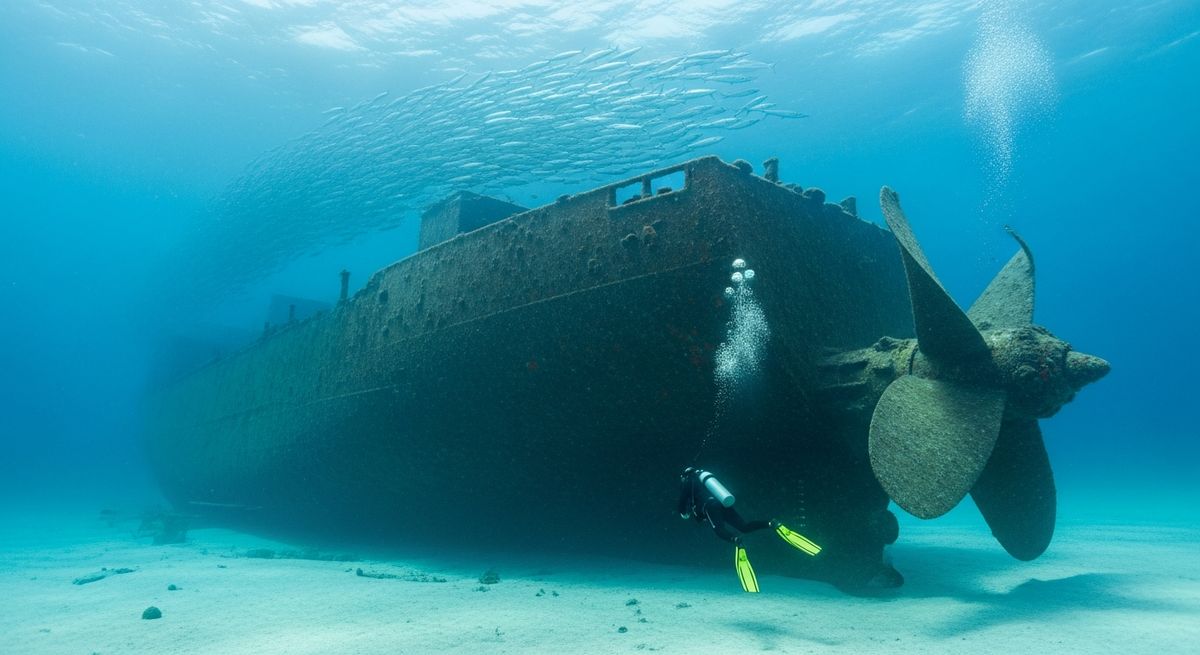
Asia South Korea, now there’s a wreck that tells a story. We’ve spent a fair bit of time on her, and each dive reveals something new. This isn’t one of those wrecks where you’re just looking at a pile of metal; she sits upright, proud, and remarkably intact for something that went down in heavy weather back in '99. We love dropping down to her bow, often a little spooky with the light filtering through the 30-metre depth, then drifting along her main deck. You'll spot the bridge area first, always a highlight, with plenty of entry points if you’re wreck-trained and want to explore the darker corners. The cargo holds are open too, and often filled with schools of snappers, their scales catching the torch beam. Garden eels populate the sandy patches around the hull, swaying in unison, and we’ve seen some hefty groupers lurking in the deeper sections. It’s a proper wreck dive, best suited for advanced divers comfortable with depth and overhead environments, offering plenty to discover beyond just the exterior.
Typical ASIA SOUTH KOREA Dive Profile
Illustrative profile based on site depth and type. Actual dive profiles vary - always follow your dive computer and training.
Safety Notes
Depth of 30m - Advanced Open Water certification recommended.
Wreck site - avoid penetration without wreck diving certification. Watch for sharp metal and entanglement hazards.
Always perform a 3-minute safety stop at 5m before surfacing.
ASIA SOUTH KOREA Wreck History
Year Sunk
1999
Vessel Type
ferry
Cause
storm
The sinking of the ferry Asia South Korea is one of the Philippines' most tragic maritime disasters. On December 23, 1999, just two days before Christmas, the vessel was en route from Cebu City to Iloilo, operated by Trans-Asia Shipping Lines. Caught in severe weather, the ferry was overwhelmed by a massive wave that swamped the decks and caused it to capsize and sink rapidly. The disaster resulted in a devastating loss of life, with reports indicating over 600 passengers and crew perished in the incident.
Today, the Asia South Korea rests at a depth of 30 meters off Malapascua. This is a somber and challenging dive reserved for advanced divers. The depth requires careful planning and respect for the site's tragic history. Divers who visit the wreck will find a large, intact vessel that serves as a poignant memorial to the many lives lost. It is a powerful dive that encourages reflection on the unforgiving nature of the sea and the human stories tied to the wrecks we explore.
Nearest Dive Centres to ASIA SOUTH KOREA
Dive shops near ASIA SOUTH KOREA
Avila's Horizon Dive Resort
DiverGems Scuba Diving School
Dive Society
Divelink Cebu
Dive Society Dive Center
Mabuhay
Reviews for ASIA SOUTH KOREA
Conditions
Ocean conditions, forecast and tides for ASIA SOUTH KOREA
ASIA SOUTH KOREA Ocean Conditions
Monthly averages for ASIA SOUTH KOREA, sourced from Open-Meteo marine data + Copernicus Marine (EU) - nearest station: Open-Meteo marine grid (11.45, 124.02) (6km away)
October Averages
Sea Temperature
30°C
86°F · Range: 29.3–31.5°C
Current Speed
8.25 cm/s
Direction: S (194°)
Salinity
33.75 PSU
Based on 4 years of monitoring data · Data sources: Open-Meteo marine data + Copernicus Marine (EU)
Plan & book
Ways to dive Malapascua, from day trips to liveaboards.
Day trips & courses
via GetYourGuideGuided dives, courses and snorkel trips with instant booking.
Find dive trips in MalapascuaPlaces to stay
via Booking.comHotels and dive resorts near Malapascua.
Search stays in MalapascuaDive insurance
Most travel insurance excludes or limits scuba. Check what you need before you go.
Dive insurance explainedPartner links: we may earn a commission if you book, at no extra cost to you. How we make money
Where to Stay near ASIA SOUTH KOREA
Prices from Booking.com. We may earn a commission at no extra cost to you.