BALANGIGA
Protected Area
Guinob-an Marine Sanctuary
Why dive here
With 87+ marine species recorded in the area - including sea turtles, thresher sharks, lionfish and pufferfish - BALANGIGA offers some of Malapascua's richest wreck diving. Water ranges 28-31°C, warmest May, June, July.
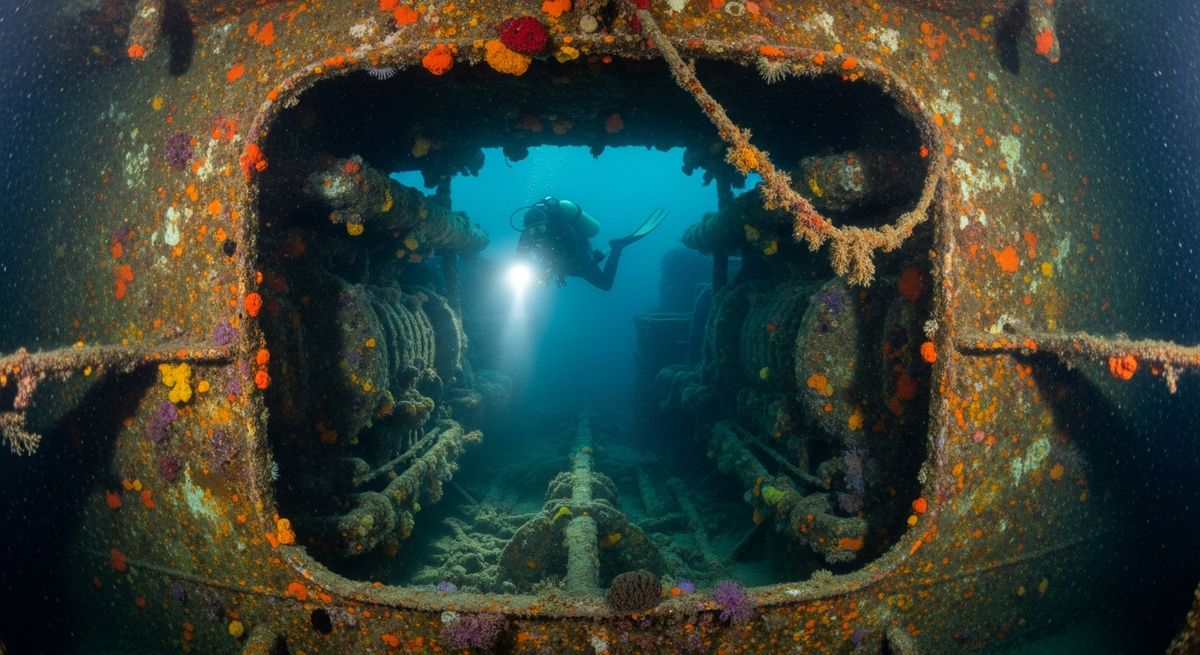
Balangiga, just off Malapascua, isn't about deep dives or thresher sharks. This is a shallow wreck, resting at a mere 5 meters, which makes it perfect for a leisurely second dive or even a snorkel. The ferry went down in 1988 during a storm, carrying far too many people. You can feel that history when you’re finning over it, a quiet kind of respect. What we love about Balangiga is how approachable it is. It’s a 22-meter hull, broken but still recognisable, and sunlight just drenches the whole scene. You’ll find schools of batfish circling the main structure, and clouds of damselfish darting in and out of the deck openings. Look closely, and you’ll spot nudibranchs clinging to the metal, maybe a lionfish tucked into a shadowy corner. It's an easy dive, ideal for photographers wanting to practice natural light wreck shots, or just anyone who wants to spend some relaxed time exploring without the pressure of depth limits. It’s a gentle reminder of both human stories and nature's resilience.
Typical BALANGIGA Dive Profile
Illustrative profile based on site depth and type. Actual dive profiles vary - always follow your dive computer and training.
Safety Notes
Wreck site - avoid penetration without wreck diving certification. Watch for sharp metal and entanglement hazards.
BALANGIGA Wreck History
Year Sunk
1988
Vessel Type
ferry
Cause
storm
The Balangiga ferry has a tragic history that serves as a somber reminder of the power of the sea. On October 14, 1988, while on passage from Samar to Tacloban, the vessel was caught in a fierce storm and capsized. The ferry was tragically overloaded; though authorized to carry only 34 passengers, it was carrying over 120 people. In the disaster, 51 lives were lost, while 78 were rescued. The ferry was likely named after the historic town of Balangiga on Samar, the vessel's point of origin.
Today, the wreck of the Balangiga rests in just 5 meters of water near Malapascua, making it an extremely accessible dive site. Its shallow depth allows for long bottom times and excellent light for underwater photography. While the structure is now an artificial reef hosting a variety of local marine life, it is also a gravesite. Divers are reminded to explore this wreck with the utmost respect for the tragedy that occurred here and the lives that were lost.
Reviews for BALANGIGA
Conditions
Ocean conditions, forecast and tides for BALANGIGA
BALANGIGA Ocean Conditions
Monthly averages for BALANGIGA, sourced from Open-Meteo marine data + Copernicus Marine (EU) - nearest station: Open-Meteo marine grid (11.45, 124.02) (6km away)
October Averages
Sea Temperature
30°C
86°F · Range: 29.3–31.5°C
Current Speed
8.25 cm/s
Direction: S (194°)
Salinity
33.75 PSU
Based on 4 years of monitoring data · Data sources: Open-Meteo marine data + Copernicus Marine (EU)
Plan & book
Ways to dive Malapascua, from day trips to liveaboards.
Day trips & courses
via GetYourGuideGuided dives, courses and snorkel trips with instant booking.
Find dive trips in MalapascuaPlaces to stay
via Booking.comHotels and dive resorts near Malapascua.
Search stays in MalapascuaDive insurance
Most travel insurance excludes or limits scuba. Check what you need before you go.
Dive insurance explainedPartner links: we may earn a commission if you book, at no extra cost to you. How we make money
Where to Stay near BALANGIGA
Prices from Booking.com. We may earn a commission at no extra cost to you.