JHUFEL
Protected Area
Olango Island Wildlife Sanctuary
Why dive here
With 554+ marine species recorded in the area - including barracuda, blacktip reef sharks, blue-spotted stingrays, manta rays and mobula rays (devil rays) - JHUFEL offers some of Visayas's richest wreck diving. Water ranges 28-31°C, warmest May, June, October.
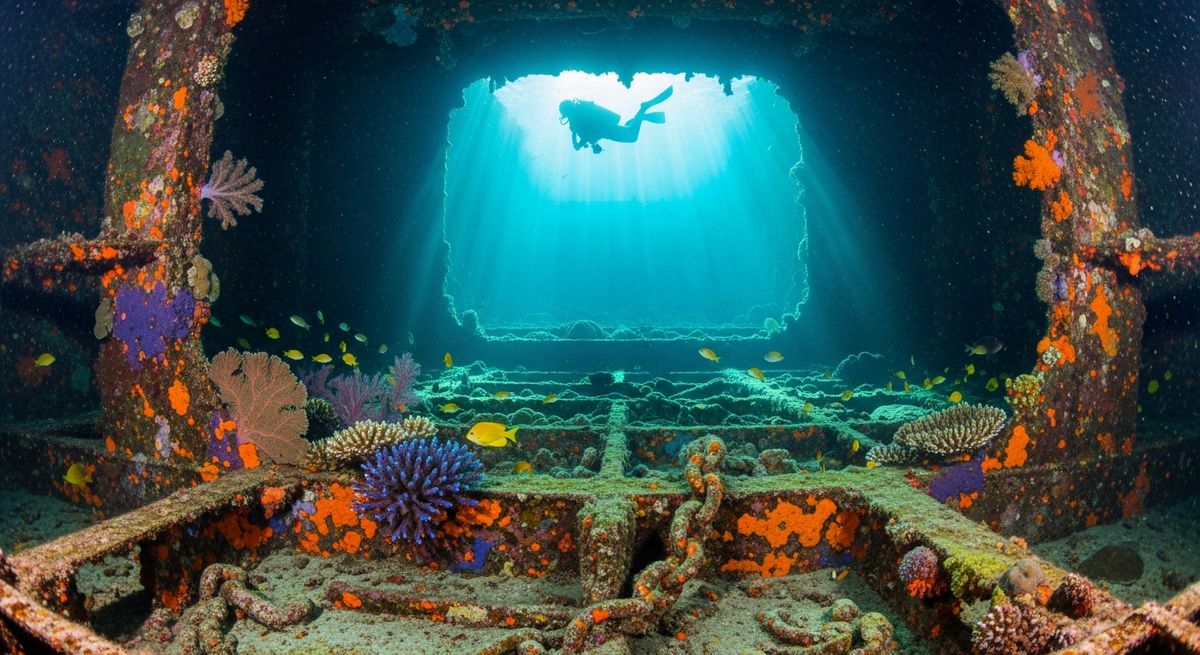
We’ve explored a fair few wrecks in the Visayas, but the JHUFEL holds a special kind of charm. Sunk during Typhoon Mike in 1990, this old ferry, once the Yumeji Maru, rests at a max depth of 6m. It’s a shallow dive, almost a snorkel, perfect for extending a surface interval or shaking out the kinks after a long flight. What we love about the JHUFEL is its accessibility. You can spend a good 45 minutes just poking around the bow and stern. The superstructure is long gone, stripped away by the storm, but the hull remains surprisingly intact. Schools of juvenile snapper often shelter within the hull’s skeletal ribs. We’ve spotted lionfish perched on rusted plates, their fins fanning slowly, and the occasional moray peering out from a dark corner. Sunlight still penetrates every part of the wreck, painting the metal with shifting patterns. It’s a surprisingly photogenic site, especially on a sunny morning before the boat traffic picks up. Our pick for entry is a gentle giant stride from a small banca, dropping right onto the deck. Keep an eye out for nudibranchs, too; the growth on the hull is surprisingly rich. It’s a simple, relaxing dive, and sometimes, that’s exactly what you need.
Typical JHUFEL Dive Profile
Illustrative profile based on site depth and type. Actual dive profiles vary - always follow your dive computer and training.
Safety Notes
Wreck site - avoid penetration without wreck diving certification. Watch for sharp metal and entanglement hazards.
Nearest Dive Centres to JHUFEL
Dive shops near JHUFEL
Aquamundo
Divers Point Cebu
Aquaventure Whitetip Dive Supply
Blue Coral
Pacifica Dive
DIVE MALDITAS SCUBA DIVING SERVICES
Reviews for JHUFEL
Conditions
Ocean conditions, forecast and tides for JHUFEL
JHUFEL Ocean Conditions
Monthly averages for JHUFEL, sourced from Open-Meteo marine data - nearest station: Open-Meteo marine grid (10.3, 124.07) (19km away)
October Averages
Sea Temperature
31°C
87°F · Range: 29.5–32.2°C
Air Temperature
24°C
76°F
Wind Speed
3.27 m/s
6.4 knots
Atmospheric Pressure
1010 hPa
Based on 4 years of monitoring data · Data sources: Open-Meteo marine data
Plan & book
Ways to dive Visayas, from day trips to liveaboards.
Day trips & courses
via GetYourGuideGuided dives, courses and snorkel trips with instant booking.
Find dive trips in VisayasPlaces to stay
via Booking.comHotels and dive resorts near Visayas.
Search stays in VisayasDive insurance
Most travel insurance excludes or limits scuba. Check what you need before you go.
Dive insurance explainedPartner links: we may earn a commission if you book, at no extra cost to you. How we make money
Where to Stay near JHUFEL
Prices from Booking.com. We may earn a commission at no extra cost to you.