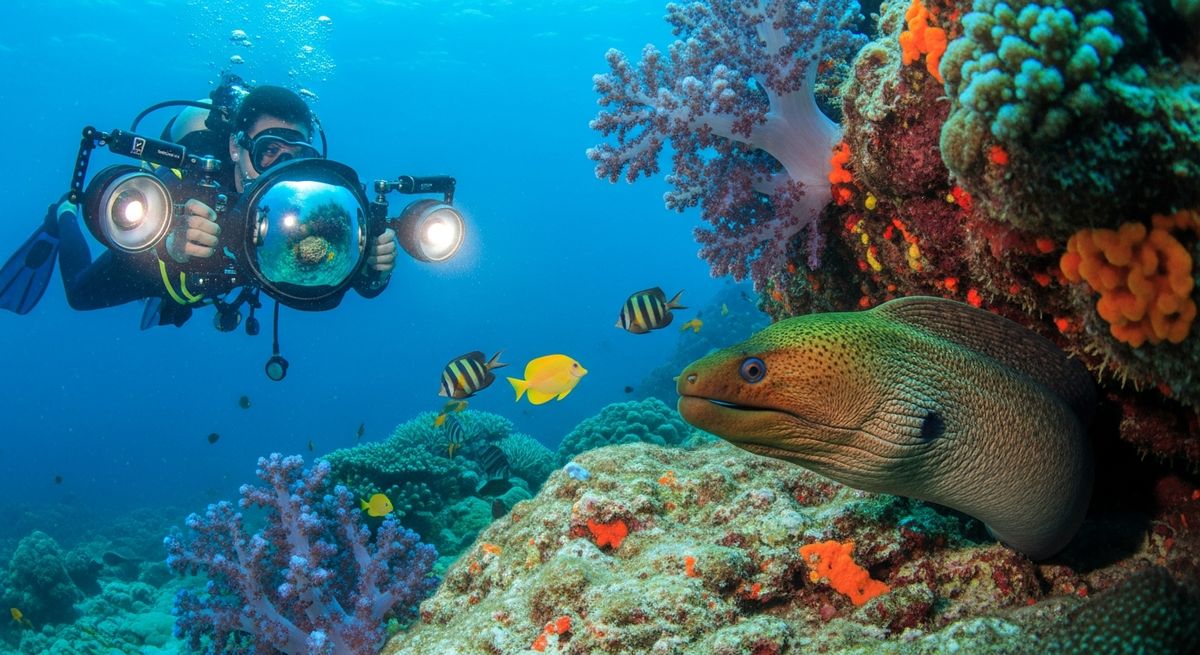
Koh Dor - Similan Islands

Koh Dor is a solid afternoon stop in the Similans, particularly if you’re keen on seeing blacktip reef sharks. We’ve found the best chance to spot them is actually on snorkel, right around lunchtime, on the west side of the island; they can be a bit shy on scuba, but a fleeting glimpse isn’t out of the question. Underwater, it’s a good mix of hard corals like those big Porites and Diploastrea Heliopora, alongside soft corals, sea whips, and some impressive barrel sponges. It’s a pleasant, easy dive, probably best for those who appreciate healthy reef structure and don’t mind a quiet afternoon seeking out elusive sharks.

Location
Similan Islands, Thailand, Southeast Asia
Coordinates
7.966700, 98.750000

Marine Protected Area: Hat Noppharat Thara-Mu ko Phi Phi

Best Time to Dive in Similan Islands

The warmest water temperatures in Similan Islands occur in May, averaging 30.8°C. The coolest conditions are in January at 28.6°C.

Monthly Water Temperatures

  • January: 28.6°C
  • February: 29.0°C
  • March: 29.6°C
  • April: 30.6°C
  • May: 30.8°C
  • June: 29.9°C
  • July: 29.6°C
  • August: 29.3°C
  • September: 29.0°C
  • October: 29.0°C
  • November: 29.2°C
  • December: 28.7°C

Nearby Dive Sites in Similan Islands

Nearest Dive Centres to Koh Dor

Marine Life in Similan Islands

Home to 183 recorded species including 127 reef fish, 38 hard corals, 9 seagrass & algae, 4 sharks & rays, 2 other, 1 octopus & squid.

Notable Species

Recommended Packing List for Koh Dor

Based on average water temperature of 29.4°C, currents 7 cm/s.

  • Shorty or Rashguard - warm 29°C water needs minimal exposure protection
  • Mask - essential for every dive
  • Fins
  • BCD - buoyancy compensator
  • Regulator - your most safety-critical piece of gear
  • Dive Computer - tracks depth, time, and NDL
  • Surface Marker Buoy (SMB) - essential for boat pickups
  • Dive Torch - useful for crevices and colour at depth
  • Underwater Camera - capture your diving memories

Frequently Asked Questions

What are the typical diving depths at Koh Dor?
The specific typical diving depths at Koh Dor are not explicitly detailed in our current information. However, as a reef dive site, depths can vary significantly depending on the specific dive plan and the reef's topography. Divers should always consult with their dive guide for the most accurate depth information on the day of their dive.
What kind of marine life and corals can divers expect to see when diving at Koh Dor?
Divers at Koh Dor can anticipate a rich variety of marine life and corals. The site is known for a good mix of larger hard corals, including Porites and Diploastrea Heliopora, alongside vibrant soft corals, sea whips, fans, and leather corals. Several large barrel sponges are also dotted around the dive site, and while brief sightings are possible on scuba, the west side often hosts black-tip reef sharks, which are best observed while snorkeling at lunchtime.
How challenging are the dive sites around Koh Dor for different experience levels?
The dive site at Koh Dor is rated as intermediate difficulty. This suggests that divers should have some prior experience beyond entry-level certifications and be comfortable with varying conditions. It's always recommended for divers to assess their comfort level and consult with local dive operators before planning their dive.
What is the best time of year to dive at Koh Dor for optimal conditions?
Our current data for Koh Dor does not specify the best time of year for optimal diving conditions. For general guidance on seasonal diving in the Similan Islands, we recommend checking our When to Dive section. Always consult with local dive centers for the most up-to-date seasonal advice.
What scuba diving certifications are required to dive at Koh Dor?
While specific scuba diving certifications for Koh Dor are not explicitly provided, its classification as an intermediate dive site suggests that an Open Water Diver certification may be sufficient, but advanced training or significant experience is highly recommended. Divers should be comfortable with various conditions and consult with their dive operator regarding any specific certification requirements for this site.
What are the usual current and visibility conditions like at Koh Dor?
Information regarding the usual current and visibility conditions at Koh Dor is not detailed in our current dataset. As conditions can vary significantly, even day-to-day, it is always best to check with local dive operators or your dive guide immediately before your dive for the most accurate and current conditions.