Koh Si - Similan Islands

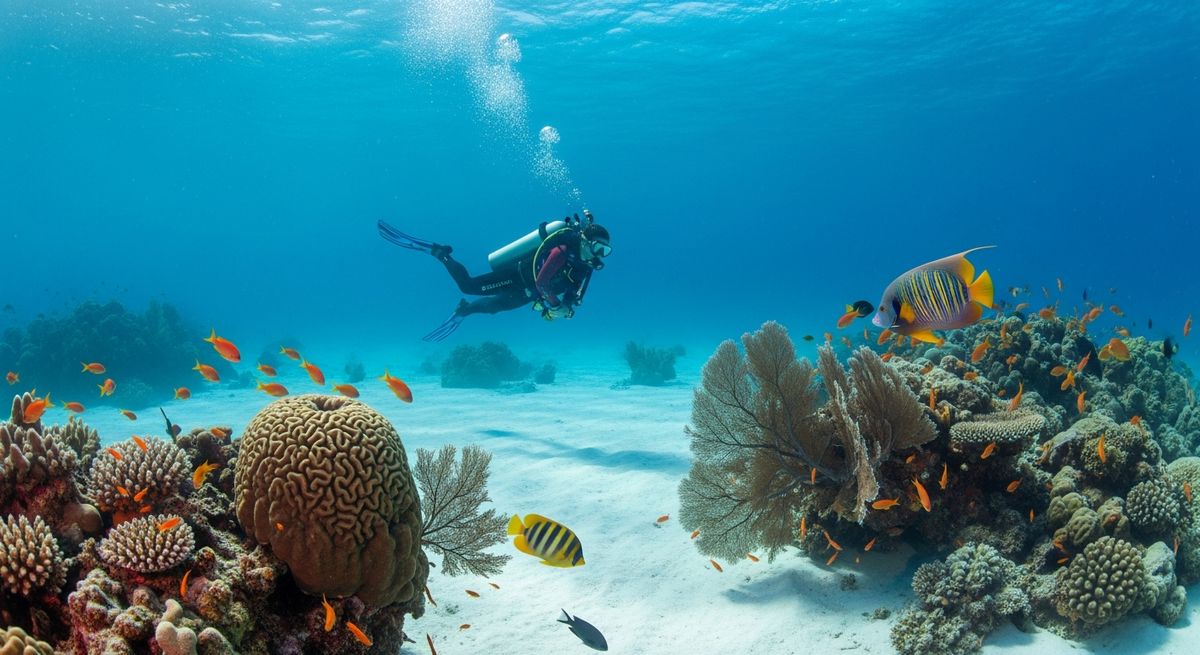
Koh Si, tucked away in the Similan Islands, often gets overlooked for its flashier neighbours, but we’ve always found it a solid option when you’re after something a bit calmer. It’s mostly shallow, topping out around 12 meters, with wide, flat plateaus on either side of the island. Think big coral patches stretching out, dotted with rocky outcrops. On a good day, when the visibility really picks up, you can get some impressive schools of snapper here, sometimes even a big grouper cruising by. If the wider scene isn't quite as active, we usually poke around the rocks for seahorses, nudibranchs, or a well-camouflaged scorpionfish. It’s a pretty laid-back spot, great for extended bottom times or those days when you just want to take it easy.

Location
Similan Islands, Thailand, Southeast Asia
Coordinates
7.983300, 98.766700

Marine Protected Area: Hat Noppharat Thara-Mu ko Phi Phi

Best Time to Dive in Similan Islands

The warmest water temperatures in Similan Islands occur in May, averaging 30.8°C. The coolest conditions are in January at 28.6°C.

Monthly Water Temperatures

  • January: 28.6°C
  • February: 29.0°C
  • March: 29.6°C
  • April: 30.6°C
  • May: 30.8°C
  • June: 29.9°C
  • July: 29.6°C
  • August: 29.3°C
  • September: 29.0°C
  • October: 29.0°C
  • November: 29.2°C
  • December: 28.7°C

Nearby Dive Sites in Similan Islands

Nearest Dive Centres to Koh Si

Marine Life in Similan Islands

Home to 183 recorded species including 127 reef fish, 38 hard corals, 9 seagrass & algae, 4 sharks & rays, 2 other, 1 octopus & squid.

Notable Species

Recommended Packing List for Koh Si

Based on average water temperature of 29.4°C, currents 7 cm/s.

  • Shorty or Rashguard - warm 29°C water needs minimal exposure protection
  • Mask - essential for every dive
  • Fins
  • BCD - buoyancy compensator
  • Regulator - your most safety-critical piece of gear
  • Dive Computer - tracks depth, time, and NDL
  • Surface Marker Buoy (SMB) - essential for boat pickups
  • Dive Torch - useful for crevices and colour at depth
  • Underwater Camera - capture your diving memories

Frequently Asked Questions

What is the maximum depth for scuba diving at Koh Si?
The maximum depth for scuba diving at Koh Si is not specified in the available data. However, the site is described as having two large shallow coral-covered plateaus, suggesting a focus on shallower diving experiences. Divers should consult with local dive operators for precise depth information.
What kind of marine life and coral can divers expect to see at Koh Si?
Divers at Koh Si can expect to encounter a vibrant array of marine life, including big schools of snappers and sometimes large grouper, which create a breathtaking sight when visibility is good. The site is also home to fascinating creatures like seahorses, nudibranchs, and scorpionfishes, which live amongst the rocks. The island features two large shallow coral-covered plateaus, offering excellent opportunities to observe diverse coral formations.
Is Koh Si a suitable dive site for beginner divers, or is it considered difficult?
Koh Si is classified as an intermediate difficulty dive site. This means it is generally more suitable for divers who have some experience beyond their initial certification, rather than absolute beginners. Divers should be comfortable with various conditions that might be encountered at an intermediate site.
When is the best time of year to dive at Koh Si for optimal conditions and visibility?
The provided data does not specify a particular best time of year for diving at Koh Si. However, the southern end of the site is noted for usually having good visibility, which enhances the experience of seeing large schools of snappers and groupers. For general information on seasonal diving conditions in the region, you can consult our When to Dive guide.
What scuba diving certifications are required to dive at Koh Si?
While specific scuba diving certifications required for Koh Si are not explicitly stated, its classification as an intermediate dive site suggests that divers should possess more than just an entry-level certification. It is advisable to have experience beyond basic open water diving to comfortably and safely navigate the site's conditions. Always check with local dive operators for their specific requirements.
What are the typical current and water conditions like at the Koh Si dive site?
The provided data for Koh Si does not detail typical current or water temperature conditions. However, it does highlight that the southern end of the site usually has good visibility, which is a positive indicator for enjoyable diving. Divers should always consult with local dive centers for the most up-to-date information on currents and water conditions before their dive.