Celestes
Why dive here
With 231+ marine species recorded in the area - including barracuda, blacktip reef sharks, blue sharks, grey reef sharks and manta rays - Celestes offers some of Cocos (Keeling) Islands's richest reef diving. Water ranges 27-29°C, warmest January, February, March.
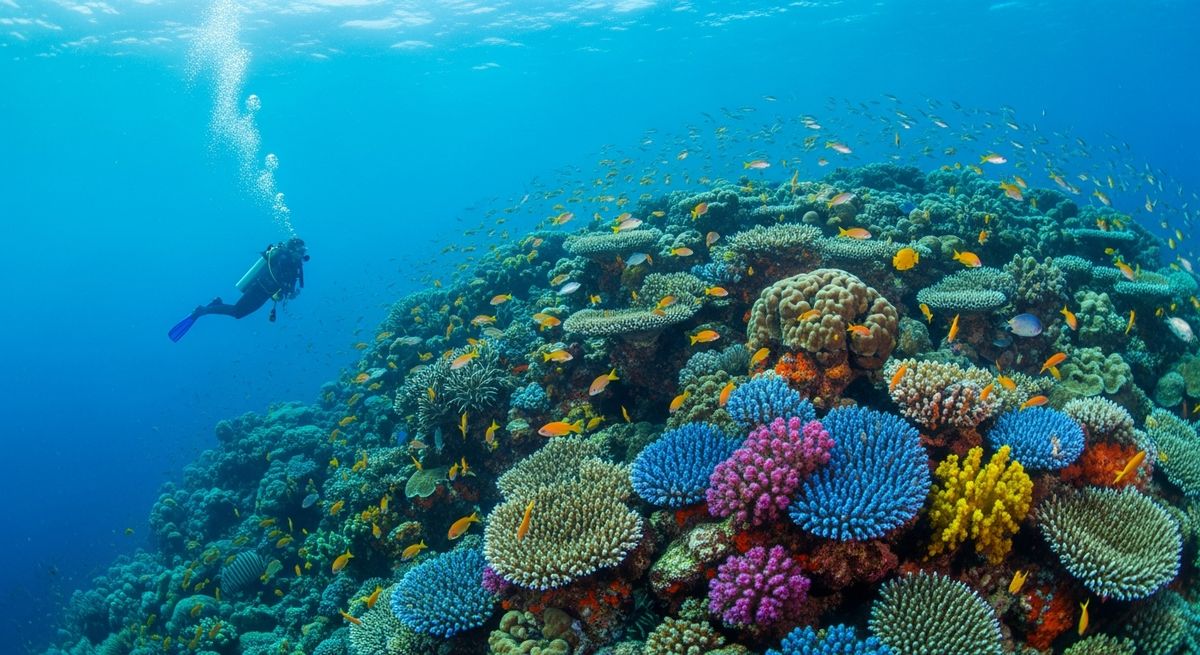
Celestes is one of our go-to spots when the current picks up elsewhere. It’s tucked away on the eastern side, and while it might not always have the big pelagic action of some other Cocos sites, it delivers a really enjoyable dive every time. The hard coral here, especially the Starflower and Pavona, forms these sprawling landscapes, and we love drifting over them. Keep an eye out for the Trumpet fish blending in, or the peppered squirrelfish darting into crevices. We’ve had incredible luck spotting the High Hat Triplefin here too, little bursts of colour on the reef. Visibility usually holds at around 35m, which is just glorious. You’ll often find schools of Indian triggers and pyramid butterflyfish shimmering against the blue. It’s a site that rewards a slower pace, letting you really appreciate the smaller things – the Fat-handed snapping shrimp, the Blue Green Chromis flitting about. If you’re into macro life or just want a relaxing, beautiful dive without fighting a ripping current, Celestes is our pick, particularly in the summer months. It’s a genuinely pretty dive, ideal for anyone who enjoys a peaceful drift over healthy reef.
Nearest Dive Centres to Celestes
Dive shops near Celestes
View all dive centres in Cocos (Keeling) IslandsReviews for Celestes
Conditions
Ocean conditions, forecast and tides for Celestes
Celestes Ocean Conditions
Monthly averages for Celestes, sourced from Open-Meteo marine data - nearest station: Open-Meteo marine grid (-12.09, 96.86) (1km away)
October Averages
Sea Temperature
27°C
81°F · Range: 25.6–27.8°C
Air Temperature
26°C
79°F
Wind Speed
9.53 m/s
18.5 knots
Atmospheric Pressure
1012.9 hPa
Based on 4 years of monitoring data · Data sources: Open-Meteo marine data
Plan & book
Ways to dive Cocos (Keeling) Islands, from day trips to liveaboards.
Day trips & courses
via GetYourGuideGuided dives, courses and snorkel trips with instant booking.
Find dive trips in Cocos (Keeling) IslandsPlaces to stay
via Booking.comHotels and dive resorts near Cocos (Keeling) Islands.
Search stays in Cocos (Keeling) IslandsDive insurance
Most travel insurance excludes or limits scuba. Check what you need before you go.
Dive insurance explainedPartner links: we may earn a commission if you book, at no extra cost to you. How we make money
Where to Stay near Celestes
Prices from Booking.com. We may earn a commission at no extra cost to you.