Fan Wall
Why dive here
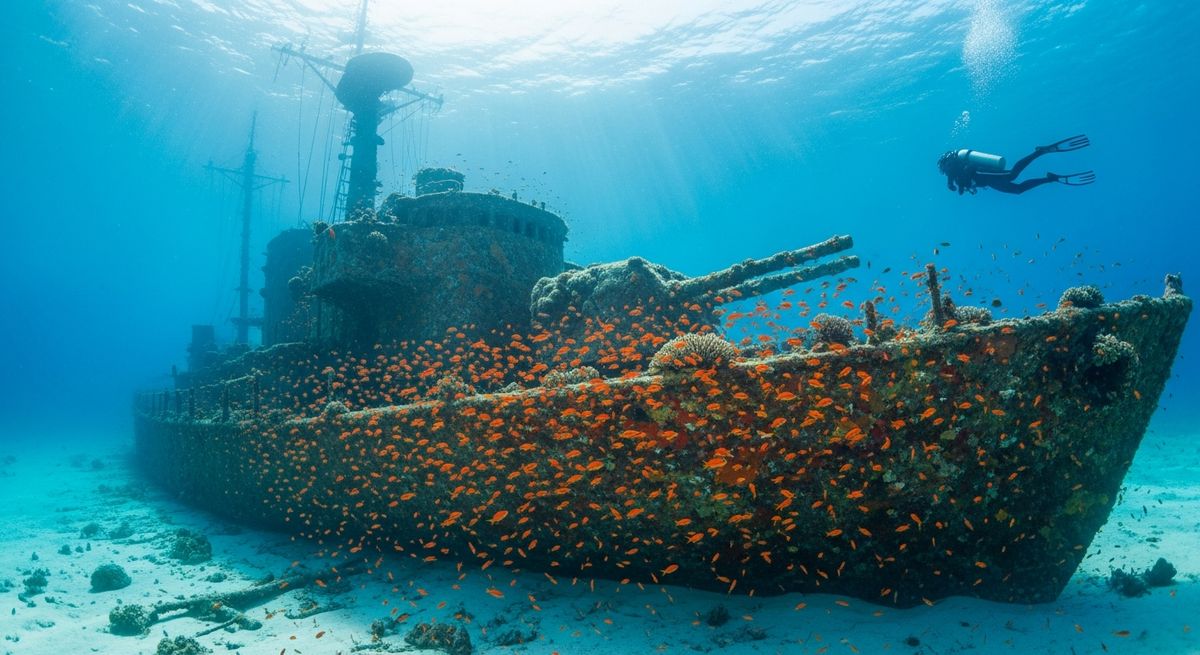
With 231+ marine species recorded in the area - including barracuda, blacktip reef sharks, blue sharks, grey reef sharks and manta rays - Fan Wall offers some of Cocos (Keeling) Islands's richest wreck diving. Water ranges 27-29°C, warmest January, February, March.
Fan Wall is a site we return to again and again in Cocos, and honestly, you don't even need to go deep to get the best of it. The top of the reef, around 15-20 meters, is where we find ourselves lingering, spotting those distinctive Redfin Butterflyfish darting between the stony corals. It’s busy up there, schools of Island Jacks and Dusky Farmerfish flitting around, making the whole place feel alive. The real draw, though, is how the wall drops away. You can hang out in the blue, watching for bigger pelagics like cruising sharks or dogtooth tuna that sometimes materialize from the deeper water. For those who can manage a deeper profile, the fans and a small cave around 24 meters are a lovely exploration, not too demanding but still rewarding. We've often seen Bumphead Parrotfish munching on the coral here, their massive jaws making an audible crunch. Visibility usually sits around 23 meters, which gives everything a lovely, clear definition. This site is great for newer divers to enjoy the shallows, while more experienced folk can appreciate the deeper wall and blue water encounters.
Safety Notes
Wreck site - avoid penetration without wreck diving certification. Watch for sharp metal and entanglement hazards.
Nearest Dive Centres to Fan Wall
Dive shops near Fan Wall
View all dive centres in Cocos (Keeling) IslandsReviews for Fan Wall
Conditions
Ocean conditions, forecast and tides for Fan Wall
Fan Wall Ocean Conditions
Monthly averages for Fan Wall, sourced from Open-Meteo marine data - nearest station: Open-Meteo marine grid (-12.09, 96.86) (1km away)
October Averages
Sea Temperature
27°C
81°F · Range: 25.6–27.8°C
Air Temperature
26°C
79°F
Wind Speed
9.53 m/s
18.5 knots
Atmospheric Pressure
1012.9 hPa
Based on 4 years of monitoring data · Data sources: Open-Meteo marine data
Plan & book
Ways to dive Cocos (Keeling) Islands, from day trips to liveaboards.
Day trips & courses
via GetYourGuideGuided dives, courses and snorkel trips with instant booking.
Find dive trips in Cocos (Keeling) IslandsPlaces to stay
via Booking.comHotels and dive resorts near Cocos (Keeling) Islands.
Search stays in Cocos (Keeling) IslandsDive insurance
Most travel insurance excludes or limits scuba. Check what you need before you go.
Dive insurance explainedPartner links: we may earn a commission if you book, at no extra cost to you. How we make money
Where to Stay near Fan Wall
Prices from Booking.com. We may earn a commission at no extra cost to you.