Lynnies Leap
Why dive here
With 231+ marine species recorded in the area - including barracuda, blacktip reef sharks, blue sharks, grey reef sharks and manta rays - Lynnies Leap offers some of Cocos (Keeling) Islands's richest reef diving. Water ranges 27-29°C, warmest January, February, March.
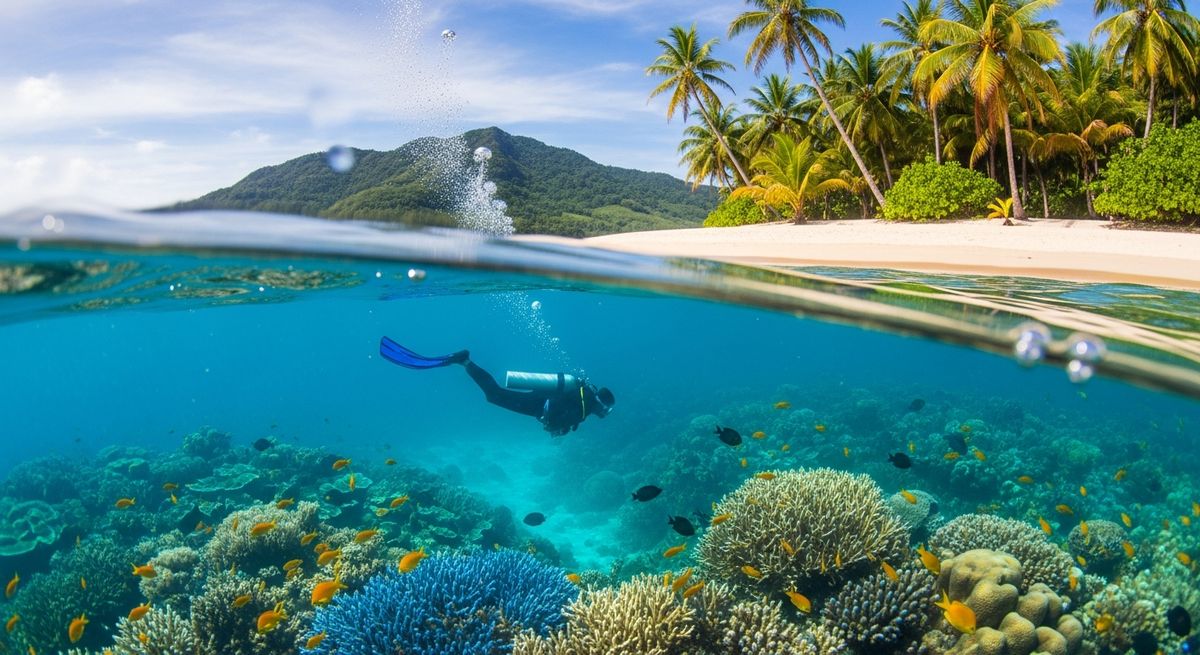
Lynnies Leap is one of those sites we always look forward to, a proper wall dive that delivers. The reef top sits around 14 metres, a gentle slope of coral leading you to the lip at 20 metres before the main event drops away. You’ll be looking down into deep blue, often with a slight chill in the water reminding you of the depth. This isn’t one for the brand new diver; currents here can play tricks, swirling in different directions throughout a single dive. But for those with a few dives under their belt, it’s a thrill. What makes Lynnies shine for us is the pelagic action, especially the whitetip reef sharks. Our guides here have a knack for calling them in, and watching them cruise up the wall is always a highlight. Beyond the sharks, expect dense schools of fusiliers, sometimes so thick they filter the sunlight. Keep an eye out for the smaller stuff on the wall face too, we’ve spotted peppered squirrelfish darting into crevices and those gorgeous lined-lip cowries clinging to the coral. The staghorn coral patches on the shallower parts are particularly pretty, and we’ve even seen red-footed boobies overhead on the surface interval. A genuinely vibrant spot.
Nearest Dive Centres to Lynnies Leap
Dive shops near Lynnies Leap
View all dive centres in Cocos (Keeling) IslandsReviews for Lynnies Leap
Conditions
Ocean conditions, forecast and tides for Lynnies Leap
Lynnies Leap Ocean Conditions
Monthly averages for Lynnies Leap, sourced from Open-Meteo marine data - nearest station: Open-Meteo marine grid (-12.09, 96.86) (1km away)
October Averages
Sea Temperature
27°C
81°F · Range: 25.6–27.8°C
Air Temperature
26°C
79°F
Wind Speed
9.53 m/s
18.5 knots
Atmospheric Pressure
1012.9 hPa
Based on 4 years of monitoring data · Data sources: Open-Meteo marine data
Plan & book
Ways to dive Cocos (Keeling) Islands, from day trips to liveaboards.
Day trips & courses
via GetYourGuideGuided dives, courses and snorkel trips with instant booking.
Find dive trips in Cocos (Keeling) IslandsPlaces to stay
via Booking.comHotels and dive resorts near Cocos (Keeling) Islands.
Search stays in Cocos (Keeling) IslandsDive insurance
Most travel insurance excludes or limits scuba. Check what you need before you go.
Dive insurance explainedPartner links: we may earn a commission if you book, at no extra cost to you. How we make money
Where to Stay near Lynnies Leap
Prices from Booking.com. We may earn a commission at no extra cost to you.