Manta Cleaning Station
Why dive here
With 231+ marine species recorded in the area - including barracuda, blacktip reef sharks, blue sharks, grey reef sharks and manta rays - Manta Cleaning Station offers some of Cocos (Keeling) Islands's richest drift diving. Water ranges 27-29°C, warmest January, February, March.
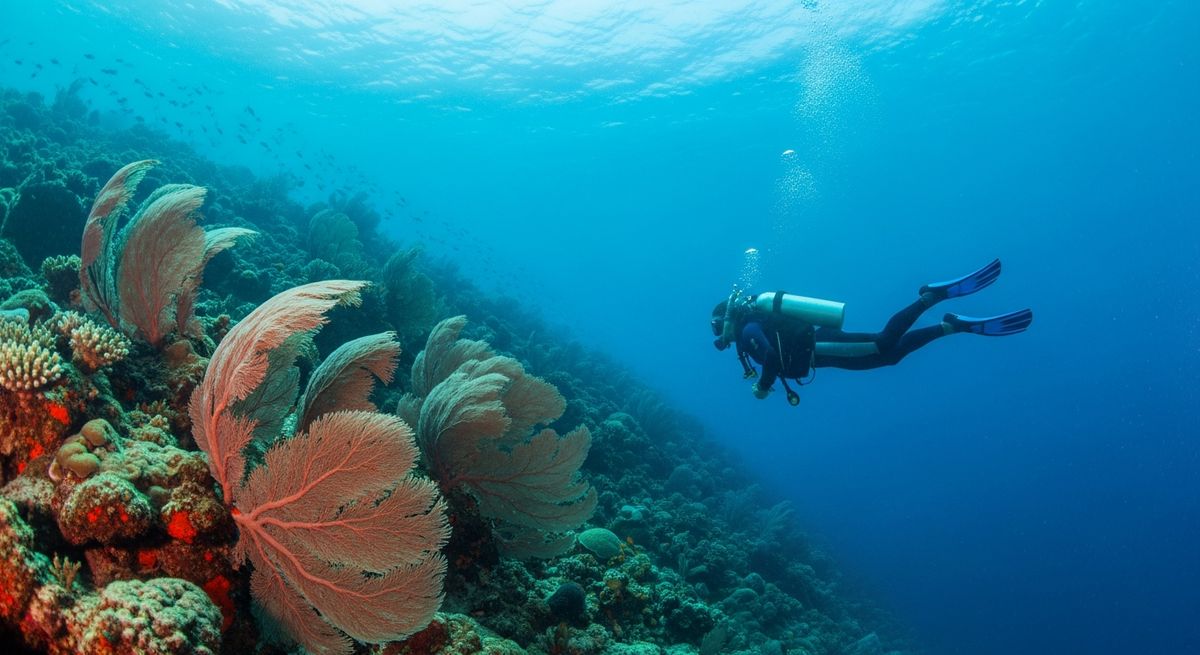
Manta Cleaning Station, just off Direction Island, often feels like hitting the lottery when it comes to mantas. We've had days here where we've seen four or five cruising overhead, gliding in for a scrub. The site itself is pretty simple: two small coral bommies at about 9m, acting as the service station for these giants. It's not about intricate reef structures or crazy colours; it's about finding a good spot, settling in, and waiting for those massive shadows to appear. Visibility here averages around 10m, sometimes a bit more, sometimes a bit less, but that never really bothers us when a manta wings past a few metres away. Our best dives have always been on an incoming tide. You feel the gentle push of the water as you hover, listening for the soft rush of a manta moving through the water column above you before you even see it. It’s a site for patience, for those who appreciate the quiet grace of big animal encounters more than a busy reef scene. If you're hoping for a close-up with a manta, this is your best bet in Cocos.
Safety Notes
Drift dive - carry a surface marker buoy (SMB) and stay with your group. Brief the current direction before entry.
Nearest Dive Centres to Manta Cleaning Station
Dive shops near Manta Cleaning Station
View all dive centres in Cocos (Keeling) IslandsReviews for Manta Cleaning Station
Conditions
Ocean conditions, forecast and tides for Manta Cleaning Station
Manta Cleaning Station Ocean Conditions
Monthly averages for Manta Cleaning Station, sourced from Open-Meteo marine data - nearest station: Open-Meteo marine grid (-12.09, 96.86) (1km away)
October Averages
Sea Temperature
27°C
81°F · Range: 25.6–27.8°C
Air Temperature
26°C
79°F
Wind Speed
9.53 m/s
18.5 knots
Atmospheric Pressure
1012.9 hPa
Based on 4 years of monitoring data · Data sources: Open-Meteo marine data
Plan & book
Ways to dive Cocos (Keeling) Islands, from day trips to liveaboards.
Day trips & courses
via GetYourGuideGuided dives, courses and snorkel trips with instant booking.
Find dive trips in Cocos (Keeling) IslandsPlaces to stay
via Booking.comHotels and dive resorts near Cocos (Keeling) Islands.
Search stays in Cocos (Keeling) IslandsDive insurance
Most travel insurance excludes or limits scuba. Check what you need before you go.
Dive insurance explainedPartner links: we may earn a commission if you book, at no extra cost to you. How we make money
Where to Stay near Manta Cleaning Station
Prices from Booking.com. We may earn a commission at no extra cost to you.