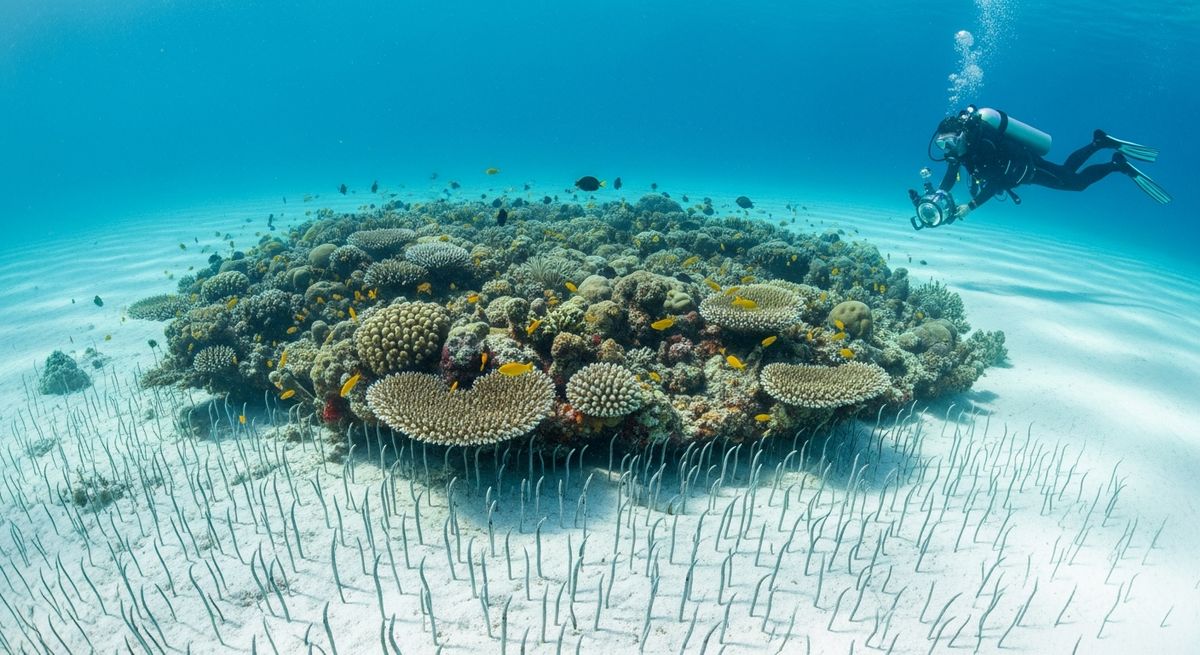
Otter Reef
Why dive here
With 154+ marine species recorded in the area - including hammerhead sharks, sea turtles, tiger sharks and napoleon wrasse - Otter Reef offers some of Great Barrier Reef's richest reef diving. Water ranges 24-30°C, warmest January, February, March.
Otter Reef, out on the Great Barrier Reef, offers a solid, dependable dive. We often find good coral formations here, with plenty of the usual reef suspects like parrotfish and small schooling fish. It’s a good choice for divers looking for a relaxed exploration of the outer reef, without any particularly challenging conditions. Expect typical GBR visibility, often around 15-20 meters.
Safety Notes
Strong currents typical this month (avg 30 cm/s). Good buoyancy control essential.
Reviews for Otter Reef
Conditions
Ocean conditions, forecast and tides for Otter Reef
Otter Reef Ocean Conditions
Monthly averages for Otter Reef, sourced from Open-Meteo marine data + Copernicus Marine (EU) - nearest station: Open-Meteo marine grid (-15.65, 145.72) (5km away)
October Averages
Sea Temperature
26°C
80°F · Range: 24.5–29°C
Current Speed
30.07 cm/s
Direction: S (183.8°)
Chlorophyll-a
0.057 mg/m³
Very clear (oligotrophic)
Salinity
35.08 PSU
Based on 4 years of monitoring data · Data sources: Open-Meteo marine data + Copernicus Marine (EU)
Plan & book
Ways to dive Great Barrier Reef, from day trips to liveaboards.
Day trips & courses
via GetYourGuideGuided dives, courses and snorkel trips with instant booking.
Find dive trips in Great Barrier ReefPlaces to stay
via Booking.comHotels and dive resorts near Great Barrier Reef.
Search stays in Great Barrier ReefDive insurance
Most travel insurance excludes or limits scuba. Check what you need before you go.
Dive insurance explainedPartner links: we may earn a commission if you book, at no extra cost to you. How we make money
Where to Stay near Otter Reef
Prices from Booking.com. We may earn a commission at no extra cost to you.