Diving in South Australia
Why dive here
South Australia offers some of Australia's richest diving, with 93+ marine species recorded in the area - including blue whales, dolphins, dwarf minke whales, great white sharks and hammerhead sharks. Water ranges 14-21°C, warmest January, February, March.
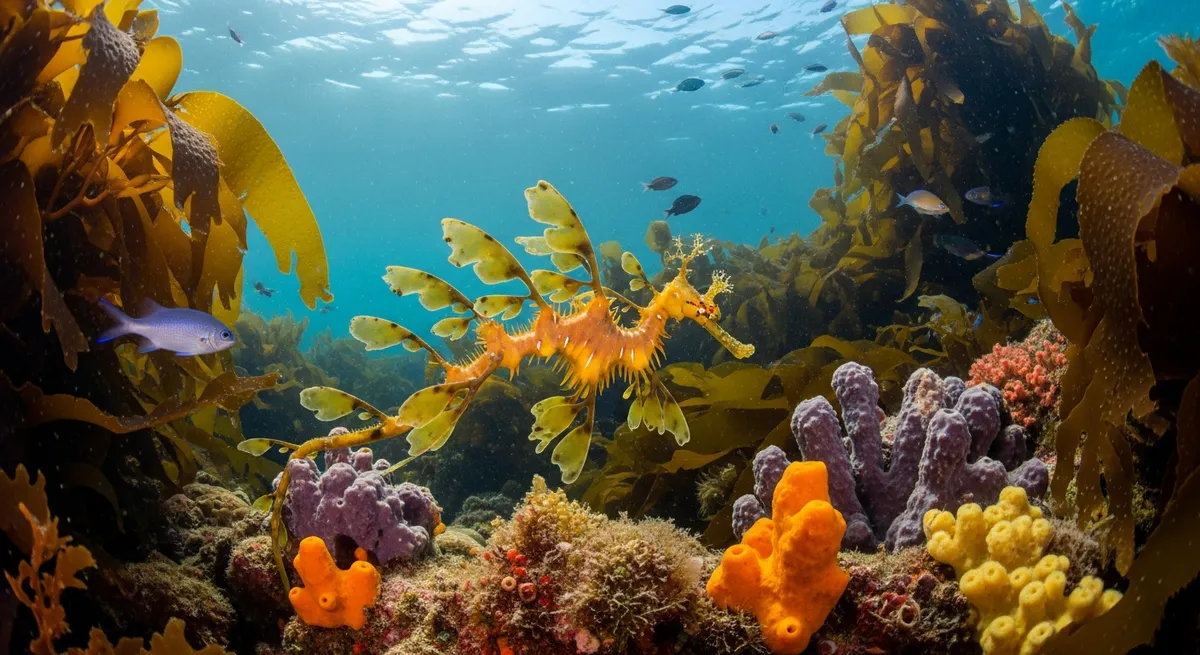
If you’re seeking something truly unique in Australian waters, South Australia delivers. Forget what you think you know about Aussie diving; this isn't about tropical sun and rainbow reefs. Here, it’s about the drama of the deep, the thrill of the hunt, and some truly bizarre, beautiful critters you won’t find elsewhere. We love the chillier waters here, particularly for the sheer diversity of temperate species. Our absolute favourite has to be the annual giant cuttlefish aggregation off Whyalla. Imagine thousands of these intelligent chameleons putting on a courtship display, flashing colours from iridescent blues to deep purples, swirling and battling for mates. It’s an otherworldly spectacle, best experienced between May and August, though dress warm for the surface interval. For something a little less dramatic but equally captivating, Rapid Bay Jetty offers incredible macro opportunities. Look closely among the pylons and you might spot the elusive leafy sea dragon, swaying gently like kelp. The surge can be a bit much sometimes, but the reward is worth the patient entry. And yes, if you’re feeling brave, the Great White shark cage diving here is as intense as it sounds. We’d suggest a few stiff drinks afterwards, but it's an undeniable adrenaline rush.
South Australia Dive Site Map
Dive sites and dive centres in South Australia
South Australia Dive Sites
29 dive sites in South Australia
Bird Reef
Bird Reef offers a glimpse into South Australia's cooler water ecosystems. Here, you'll navigate a temperate reef where southern species thrive, a different experience from tropical diving. Expect to see kelp forests swaying with the surge, and if you look closely, we often spot shy reef fish hiding amongst the fronds. It's a great spot for those keen to explore Australia's less-advertised marine environments.
Broken Bottom
Broken Bottom offers a relaxed dive in South Australia, ideal for newer divers or those looking for an easy day. We found plenty of temperate reef species, from colourful nudibranchs to small schools of banjo rays. It’s a good spot to practice buoyancy and enjoy a quiet exploration without strong currents or deep profiles. A solid choice for a second dive of the day.
Buffalo Reef
Buffalo Reef, off South Australia, offers divers a look at some unique temperate coral structures. The reef here, while not tropical, still hosts a variety of fish species adapted to cooler waters. We’ve found it’s a good spot for those looking to explore an Australian reef that’s a little different from the usual. It’s an easy dive for most skill levels, often with calm conditions.
Christies Beach Reef
Christies Beach Reef in South Australia offers a convenient shore dive, easily accessible for a quick dip. You'll find a series of low-lying reefs and scattered rocks, providing cover for cuttlefish, octopus, and various temperate fish. It’s a good spot for newer divers or those looking for an easy local explore when the conditions are calm. We'd suggest checking the tides for the best visibility.
Donnington Reef
Donnington Reef offers solid diving for those exploring South Australia's cooler waters. Expect to find a reef system with some interesting coral formations. It's a decent spot for divers looking for a straightforward dive without too much fuss, suitable for most experience levels.
Edithburgh Jetty
Edithburgh Jetty is a popular shore dive, particularly for macro enthusiasts and photographers. You’ll find an impressive variety of critters under the pylons, including leafy seadragons, various nudibranchs, and pipefish. It’s a relatively shallow, calm dive, making it suitable for beginners or those looking for a relaxed exploration. Just watch out for fishing lines.
Emmes Reef
Emmes Reef offers a straightforward dive along South Australia's coastline. We often find the reef structure itself interesting, providing plenty of nooks and crannies for resident fish to shelter. It's a solid choice for a casual dive, particularly for those looking to explore a typical temperate Australian reef system.
Encounter Reef
Encounter Reef, off the coast of South Australia, offers divers a look at temperate coral growth. We've often found small schooling fish here, sometimes even a few inquisitive cuttlefish cruising the edges of the reef. It's a solid dive for those in the region looking for a relaxed exploration of local marine life without particularly challenging conditions.
Ex-HMAS Hobart
The Ex-HMAS Hobart, scuttled off South Australia, feels less like a wreck and more like an underwater museum. We love that it’s an accessible wreck dive, sitting upright and pretty intact, with plenty of opportunities to penetrate. You can duck into the engine room, navigate the bridge, or explore the missile launcher, each section offering a different mood. Inside, the light plays through openings, illuminating schools of old wives and sweepers, while outside, big schools of yellowtail scad often swirl around the mast. Our favourite spot is probably the funnel, where you’ll frequently find a giant cuttlefish or two eyeing you curiously. It’s not just the structure; the marine life has really made it home. Nudibranchs crawl over railings, and schools of magpie perch congregate in the darker corners. We’d suggest going on a calm day; South Australian weather can be temperamental, and good visibility really enhances the experience here. It suits divers who appreciate a well-preserved wreck with some current awareness.
Glenelg Barge
Alright, let's talk about the Glenelg Barge. We know it’s not exactly the Great Barrier Reef, but this old girl, sitting just off Adelaide’s coast, has a real charm. It’s an easy, accessible dive, perfect for knocking out some bottom time when you’re in town. The wreck itself is pretty broken up, more of a scattered skeleton on the sand, but that’s precisely why we love it. The interesting thing here isn't the intact structure, but how life has completely taken over every bent plate and rusted beam. Expect to find plenty of Port Jackson sharks tucked into crevices, especially in late winter and spring. The resident cuttlefish are always a highlight, often displaying incredible colour changes as you approach. We've seen some absolutely massive western blue gropers here, often lurking under the larger sections, and the schools of old wives darting around are a constant, shimmering backdrop. It’s an ideal spot for macro photography, too – nudibranchs and small crabs are everywhere if you take the time to look. Visibility can vary, often depending on recent weather, so pick a calm day if you can. It’s a great introductory wreck dive, or just a relaxing bimble for anyone looking for something close to shore with plenty of life.
Glenelg Reef
Glenelg Reef is a bit of an enigma for us, but a genuinely rewarding one. It’s right on Adelaide’s doorstep, yet it feels like you’ve ventured much further. Forget the typical colourful coral bommies; this site is about the small, intricate dramas playing out amongst the temperate reef structure. We love how the light filters through the jetty pylons, creating a moody, atmospheric backdrop for the surprisingly abundant macro life. Diving here is less about big pelagics and more about patient observation. Our favourite finds are the widebody pipefish, often tucked into the crevices, and the smooth toadfish lurking under ledges. Keep an eye out for the banded toadfish too, they’re masters of camouflage. The reef itself isn't deep, making for comfortable bottom times, and the protection from the jetty means it’s diveable in conditions that might shut down other sites. We’d suggest going in the morning; the water often has better visibility before the afternoon breezes kick in. It’s a site that truly shines for photographers and those who appreciate the subtle beauty of a temperate ecosystem.
Godfey Islands Reef
Godfrey Islands Reef offers a decent coral dive in South Australia. We've found the visibility here can be a bit hit or miss, but on a good day, you'll see a range of temperate corals and smaller reef fish. It’s a good spot for a relaxed dive, particularly if you’re looking to explore some of the lesser-known sites in the region.
Show all 29 dive sites in South Australia
South Australia Dive Centres
4 dive shops and operators in South Australia
Ocean Wildlife in South Australia
93 species recorded in South Australia
South Australia Daylight & Sunrise/Sunset
Sunrise and sunset times for South Australia, calculated from coordinates
Today - Sunday 11 October
Sunrise
05:13
Sunset
18:00
Daylight
12h 47m
Golden Hour
17:26
First light (dawn) at 04:47 · Last light (dusk) at 18:25
Monthly Averages
| Month | Sunrise | Sunset | Daylight |
|---|---|---|---|
| Jan | 04:51 | 19:06 | 14h 16m |
| Feb | 05:23 | 18:45 | 13h 22m |
| Mar | 05:48 | 18:09 | 12h 21m |
| Apr | 06:12 | 17:26 | 11h 14m |
| May | 06:37 | 16:55 | 10h 19m |
| JunShortest | 06:56 | 16:44 | 9h 49m |
| Jul | 06:55 | 16:55 | 10h 0m |
| Aug | 06:31 | 17:17 | 10h 47m |
| Sep | 05:50 | 17:40 | 11h 50m |
| OctNow | 05:07 | 18:03 | 12h 55m |
| Nov | 04:36 | 18:32 | 13h 57m |
| DecLongest | 04:29 | 18:59 | 14h 30m |
Times are approximate local times based on longitude. Actual times may vary slightly depending on the exact timezone observed in South Australia.
Where to Stay near South Australia
Prices from Booking.com. We may earn a commission at no extra cost to you.
Marine Protected Areas near South Australia
32 protected areas near South Australia - please respect local regulations when diving
The Coorong, and Lakes Alexandrina and Albert Wetland
Southern Kangaroo Island
Sir Joseph Banks Group
Coorong
Neptune Islands
Western Kangaroo Island
Gambier Islands Group
Upper Gulf St Vincent
Adelaide International Bird Sanctuary -Winaityinaityi Pangkara
Lower Yorke Peninsula
The Pages
Franklin Harbor
Showing 12 largest of 32
Getting to South Australia
Adelaide
Kingscote Airport
Port Lincoln
Plan & book
Ways to dive South Australia, from day trips to liveaboards.
Day trips & courses
via GetYourGuideGuided dives, courses and snorkel trips with instant booking.
Find dive trips in South AustraliaPlaces to stay
via Booking.comHotels and dive resorts near South Australia.
Search stays in South AustraliaDive insurance
Most travel insurance excludes or limits scuba. Check what you need before you go.
Dive insurance explainedPartner links: we may earn a commission if you book, at no extra cost to you. How we make money