Julian Rocks
Protected Area
Cape Byron
Why dive here
With 199+ marine species recorded in the area - including blue sharks, bull sharks, dolphins, dugongs and great white sharks - Julian Rocks offers some of Sydney & New South Wales's richest wreck diving. Water ranges 18-23°C, warmest January, February, March.
Julian Rocks is our favourite kind of dive site: utterly chaotic, in the best possible way. The mixing of currents here really does deliver, not just in the sheer number of species, but in the delightful combinations you’ll often find. We’ve seen everything from schooling wobbegongs tucked into the rocky overhangs to manta rays cruising through the blue, all in a single dive. It's a place where you keep your head on a swivel, because a blotcheye soldierfish might be staring you down from a crack while a gang of dusky filefish materialises out of the haze. We often find the spitlure frogfish here, camouflaged perfectly against the sponges, and the leopard sharks are practically a guarantee in summer. Julian Rocks is best suited for divers who appreciate dynamic environments and aren't afraid of a bit of current, which can pick up quickly. Our tip: go early to beat the crowds, and always ask the skipper about the specific conditions that morning – they know the sweet spots.
Safety Notes
Wreck site - avoid penetration without wreck diving certification. Watch for sharp metal and entanglement hazards.
Julian Rocks Wreck History
Vessel Type
barge
Cause
unknown
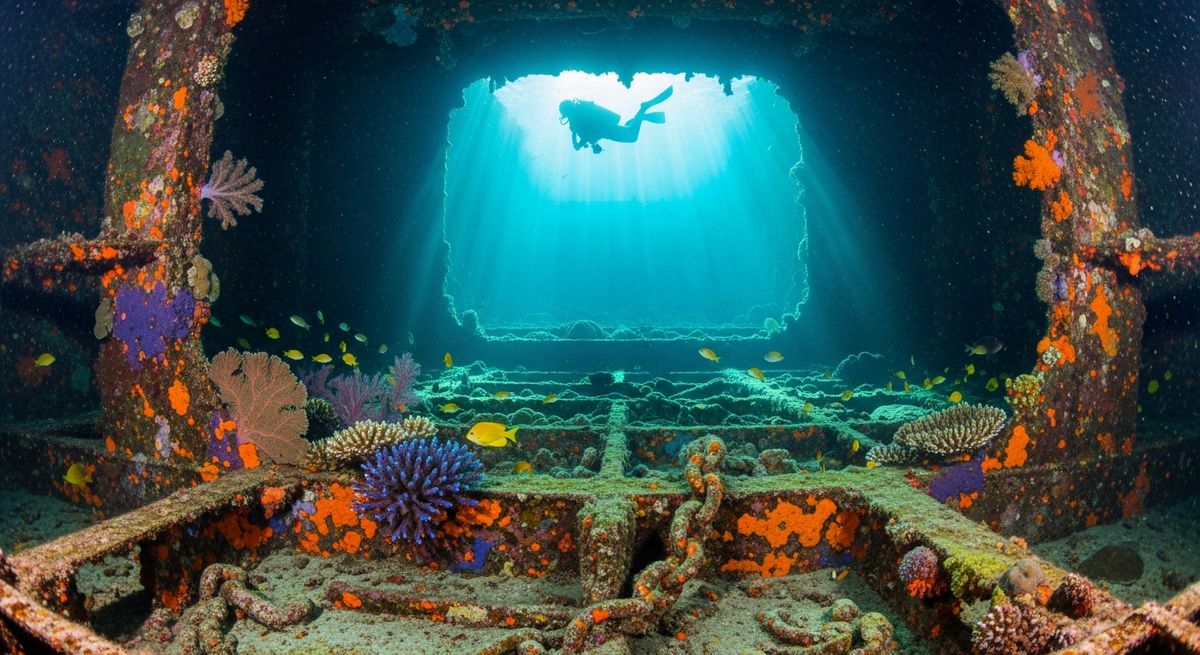
Located in the clear, protected waters of the Frioul archipelago near Marseille, the Barge de Tiboulen du Frioul is a fantastic example of how even the most modest vessel can become a thriving underwater ecosystem. Situated near the small island of Tiboulen, a well-known local diving area, this barge sank under unknown circumstances and now serves as a popular and accessible dive site. Its simple, open structure makes it a safe and enjoyable wreck to explore, perfect for newly certified wreck divers or those looking for a relaxing dive. The structure is often covered in colourful sponges and algae, providing shelter for scorpionfish, blennies, and the occasional conger eel, making it a microcosm of the rich marine life found within France's Calanques National Park.
Reviews for Julian Rocks
Conditions
Ocean conditions, forecast and tides for Julian Rocks
Julian Rocks Ocean Conditions
Monthly averages for Julian Rocks, sourced from Open-Meteo marine data - nearest station: Open-Meteo marine grid (-33.18, 151.63) (7km away)
October Averages
Sea Temperature
20°C
67°F · Range: 18.5–20.7°C
Air Temperature
17°C
63°F
Wind Speed
5.95 m/s
11.6 knots
Atmospheric Pressure
1016.2 hPa
Based on 4 years of monitoring data · Data sources: Open-Meteo marine data
Plan & book
Ways to dive Sydney & New South Wales, from day trips to liveaboards.
Day trips & courses
via GetYourGuideGuided dives, courses and snorkel trips with instant booking.
Find dive trips in Sydney & New South WalesPlaces to stay
via Booking.comHotels and dive resorts near Sydney & New South Wales.
Search stays in Sydney & New South WalesDive insurance
Most travel insurance excludes or limits scuba. Check what you need before you go.
Dive insurance explainedPartner links: we may earn a commission if you book, at no extra cost to you. How we make money
Where to Stay near Julian Rocks
Prices from Booking.com. We may earn a commission at no extra cost to you.