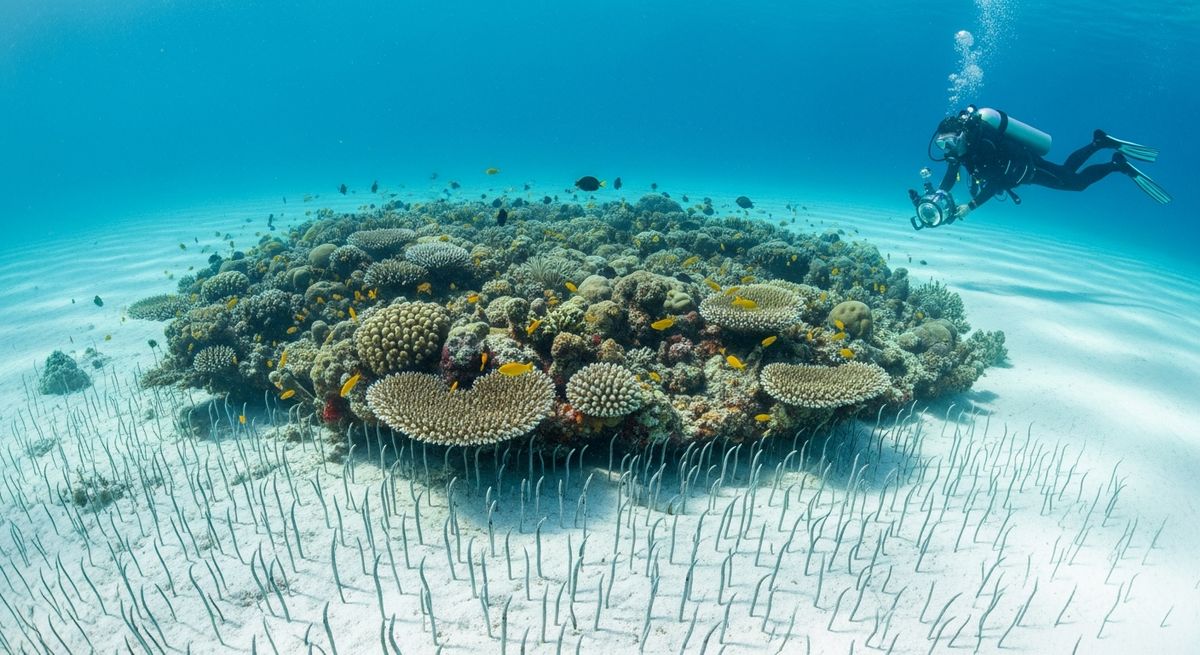
Flinders Pier
Protected Area
Mushroom Reef
Why dive here
With 129+ marine species recorded in the area - including blue sharks, blue whales, dolphins, dwarf minke whales and great white sharks - Flinders Pier offers some of Victoria's richest reef diving. Water ranges 13-20°C, warmest January, February, March.
Flinders Pier is the perfect alternative when Port Phillip is blown out due to northerly winds. This site is protected from these winds and is best dived during high tide. There is very little depth at low tide. Maximum depth: 5m. Average visibility: 7m. A great site for Weedy Sea Dragons! You will often find cuttlefish, large smooth rays and eagle rays, crabs, and plenty of other little fish and critters as well.
Safety Notes
Cold water this month (avg 15°C). Drysuit or thick wetsuit (7mm+) recommended.
Reviews for Flinders Pier
Conditions
Ocean conditions, forecast and tides for Flinders Pier
Flinders Pier Ocean Conditions
Monthly averages for Flinders Pier, sourced from Open-Meteo marine data - nearest station: Open-Meteo marine grid (-38.3, 144.7) (0km away)
October Averages
Sea Temperature
15°C
58°F · Range: 13.4–16.3°C
Based on 4 years of monitoring data · Data sources: Open-Meteo marine data
Plan & book
Ways to dive Victoria, from day trips to liveaboards.
Day trips & courses
via GetYourGuideGuided dives, courses and snorkel trips with instant booking.
Find dive trips in VictoriaPlaces to stay
via Booking.comHotels and dive resorts near Victoria.
Search stays in VictoriaDive insurance
Most travel insurance excludes or limits scuba. Check what you need before you go.
Dive insurance explainedPartner links: we may earn a commission if you book, at no extra cost to you. How we make money
Where to Stay near Flinders Pier
Prices from Booking.com. We may earn a commission at no extra cost to you.