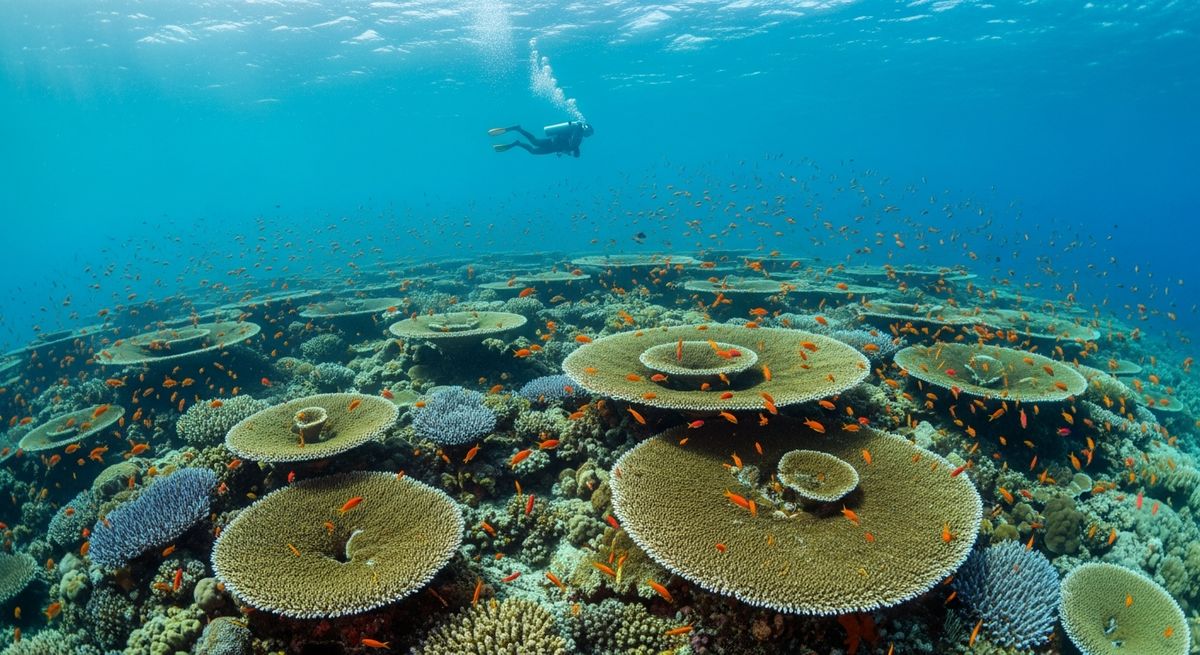
Portsea Hole - Victoria

Silver Gardens is one of those Roatán sites we always find ourselves coming back to. It’s a gentle drift along a really healthy wall, topping out at around 19 meters. The shallower sections, maybe 6-8 meters, are our favourite, full of sandy patches where you can often spot a milk conch slowly making its way across the bottom, or if you’re lucky, a pygmy filefish swaying with the soft corals. Deeper down, past the famous black coral formations, you’ll see plenty of green morays peering out from their hidey-holes and big schools of black margates hanging out in the blue. Visibility here is usually excellent, around 19 meters, so you get a great sense of the scale of the reef. We’d suggest going early in the morning before the day boats arrive; it’s a much more peaceful experience. It’s a perfect site for a relaxed second dive, or for photographers who want to take their time looking for smaller stuff like the redlip blennies or the goldspot gobies.

Location
Victoria, Australia, Australasia
Coordinates
-38.312300, 144.711500
Type
reef

Marine Protected Area: Port Phillip Heads

Nearby Dive Sites in Victoria

Marine Life in Victoria

Home to 139 recorded species including 64 reef fish, 26 sharks & rays, 17 whales & dolphins, 7 seagrass & algae, 7 other, 3 starfish.

Notable Species

Frequently Asked Questions

How deep is Portsea Hole for scuba diving?
The Portsea Hole dive site features a top at 14m, with a vertical wall dropping to sand at 27m (90ft) and a sand bowl bottoming out at 33m (110ft). While specific features reach these depths, the listed maximum depth for the site is 21m. Divers can explore these varied depths at Portsea Hole.
What marine life and underwater features can divers expect to see at Portsea Hole?
At Portsea Hole, divers can explore a unique underwater landscape featuring a 75m (250ft) long vertical wall with small overhangs, dropping from 14m to 27m, and a sand bowl that bottoms at 33m. This reef environment is teeming with a vast array of invertebrates and fish, including the beautiful Blue Devil fish. You can learn more about marine species in our wildlife database.
What is the difficulty level for diving Portsea Hole, and is it suitable for less experienced divers?
The difficulty level for diving Portsea Hole is rated as intermediate. This suggests it is suitable for divers with some experience beyond entry-level certification, but less experienced divers might find it challenging. It's always recommended to dive within your certification and comfort limits.
What is the best time of year to dive Portsea Hole for optimal conditions and visibility?
The provided data does not specify the best time of year to dive Portsea Hole for optimal conditions or visibility. However, the average visibility at the site is noted as 8m. For general guidance on seasonal diving, you can visit our When to Dive section.
What scuba diving certifications are required to dive at Portsea Hole?
The data provided does not explicitly state the specific scuba diving certifications required to dive Portsea Hole. Given its intermediate difficulty rating and depths reaching up to 33m (110ft) in the sand bowl, an Advanced Open Water certification or equivalent would generally be recommended to safely explore all features of the site. Always check with local dive operators for their specific requirements.
What are the typical current conditions and visibility at the Portsea Hole dive site?
The typical visibility at the Portsea Hole dive site is an average of 8m. The provided information does not include details regarding typical current conditions at this location. Divers should always consult local dive operators for up-to-date information on currents before planning a dive.