Passe de Mato
Protected Area
Réserve de la passe Amédée
Why dive here
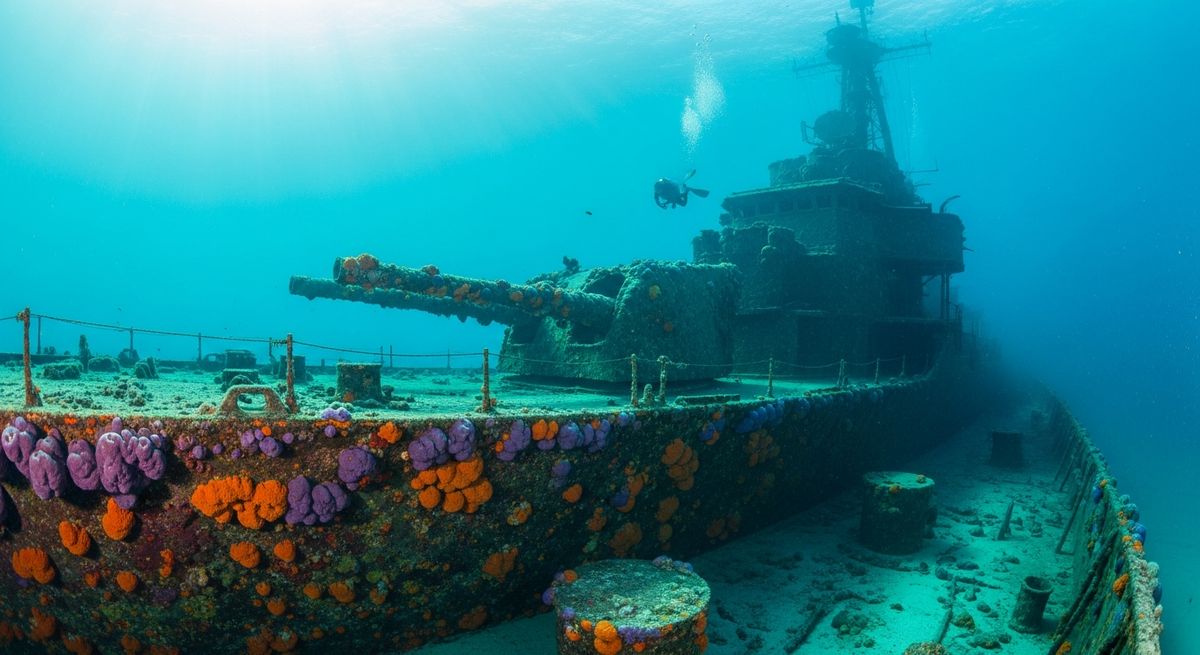
With 73+ marine species recorded in the area - including dugongs, great white sharks, humpback whales and sperm whales - Passe de Mato offers some of Prony Bay's richest wreck diving. Water ranges 22-27°C, warmest January, February, March.
Passe de Mato, two hours south of Nouméa, definitely earns its spot. It's an outer channel, so you'll feel the ocean's surge, but that energy brings the big stuff in. We love dropping onto the plateau at 10 metres, then drifting along the wall as it falls to 25 metres. The visibility here, averaging 19 metres, means you can really appreciate the scale. We've seen oceanic manta rays glide past in the blue, and there’s always a chance for a great white, though they’re shy. The reef itself is a mix of staghorn and branch corals, with plenty of macro life if you look closely: Acropora Coral Crabs scuttling, maybe a Striated Locust Lobster peeking out. This is a dive for those who enjoy a bit of current and the thrill of open ocean encounters. Expect a proper channel dive; it's less about lingering in one spot and more about a flowing exploration.
Safety Notes
Wreck site - avoid penetration without wreck diving certification. Watch for sharp metal and entanglement hazards.
Nearest Dive Centres to Passe de Mato
Dive shops near Passe de Mato
View all dive centres in Prony BayReviews for Passe de Mato
Conditions
Ocean conditions, forecast and tides for Passe de Mato
Passe de Mato Ocean Conditions
Monthly averages for Passe de Mato, sourced from Open-Meteo marine data + Copernicus Marine (EU) - nearest station: Open-Meteo marine grid (-22.43, 166.43) (4km away)
October Averages
Sea Temperature
23°C
74°F · Range: 21.8–26.2°C
Current Speed
6.71 cm/s
Direction: SW (206.6°)
Chlorophyll-a
0.061 mg/m³
Very clear (oligotrophic)
Salinity
35.39 PSU
Based on 4 years of monitoring data · Data sources: Open-Meteo marine data + Copernicus Marine (EU)
Plan & book
Ways to dive Prony Bay, from day trips to liveaboards.
Day trips & courses
via GetYourGuideGuided dives, courses and snorkel trips with instant booking.
Find dive trips in Prony BayPlaces to stay
via Booking.comHotels and dive resorts near Prony Bay.
Search stays in Prony BayDive insurance
Most travel insurance excludes or limits scuba. Check what you need before you go.
Dive insurance explainedPartner links: we may earn a commission if you book, at no extra cost to you. How we make money
Where to Stay near Passe de Mato
Prices from Booking.com. We may earn a commission at no extra cost to you.