Toho V (Wreck)
Protected Area
Parc du lagon sud: Ilot Amedee et Grand Recif Abore
Why dive here
With 73+ marine species recorded in the area - including dugongs, great white sharks, humpback whales and sperm whales - Toho V (Wreck) offers some of Prony Bay's richest reef diving. Water ranges 22-27°C, warmest January, February, March.
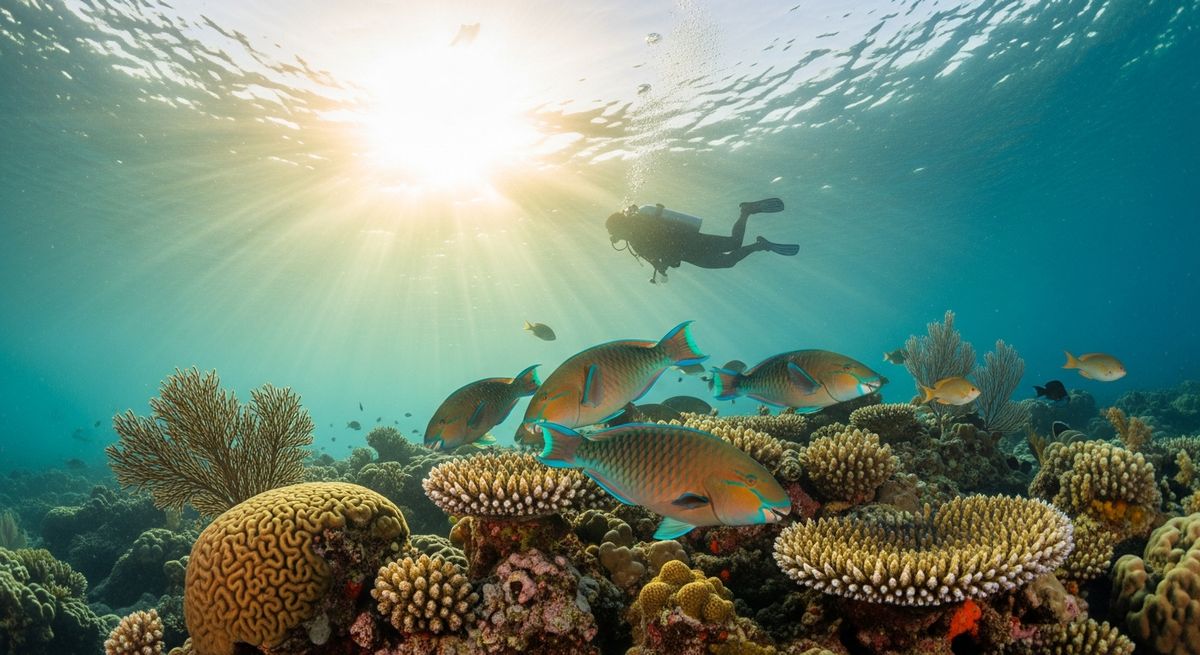
The Toho V isn't just a sunken boat; it's a bustling apartment block for a huge array of fish, and we love it for its approachability. Dropped intentionally, this 55-meter longliner sits upright on a sandy bottom at 20 meters, practically inviting you inside. We always find the wheelhouse and engine room offer fantastic swim-throughs, especially with a good torch to pick out the detail – look for the big groupers lurking in the shadows. What makes it special for us is how quickly marine life has taken over. You'll find schools of fusiliers so thick they practically obscure the wreck in places, and we've seen everything from black angelfish to spotted groupers. Dive in April, and the wreck completely vanishes under a shimmering cloud of juvenile fish – it’s genuinely spectacular. While the resident lionfish are pretty, just remember to keep a respectful distance. This site is a brilliant choice for wreck novices and experienced divers alike, offering easy penetration and plenty of life without being overly demanding.
Nearest Dive Centres to Toho V (Wreck)
Dive shops near Toho V (Wreck)
Abyss Plongée
IATOK DIVING PARADISE
STIM - Plongée
Reviews for Toho V (Wreck)
Conditions
Ocean conditions, forecast and tides for Toho V (Wreck)
Toho V (Wreck) Ocean Conditions
Monthly averages for Toho V (Wreck), sourced from Open-Meteo marine data + Copernicus Marine (EU) - nearest station: Open-Meteo marine grid (-22.43, 166.43) (4km away)
October Averages
Sea Temperature
23°C
74°F · Range: 21.8–26.2°C
Current Speed
6.71 cm/s
Direction: SW (206.6°)
Chlorophyll-a
0.061 mg/m³
Very clear (oligotrophic)
Salinity
35.39 PSU
Based on 4 years of monitoring data · Data sources: Open-Meteo marine data + Copernicus Marine (EU)
Plan & book
Ways to dive Prony Bay, from day trips to liveaboards.
Day trips & courses
via GetYourGuideGuided dives, courses and snorkel trips with instant booking.
Find dive trips in Prony BayPlaces to stay
via Booking.comHotels and dive resorts near Prony Bay.
Search stays in Prony BayDive insurance
Most travel insurance excludes or limits scuba. Check what you need before you go.
Dive insurance explainedPartner links: we may earn a commission if you book, at no extra cost to you. How we make money
Where to Stay near Toho V (Wreck)
Prices from Booking.com. We may earn a commission at no extra cost to you.