Toi Ohomai Institute of Technology - Goat Island & Hauraki Gulf
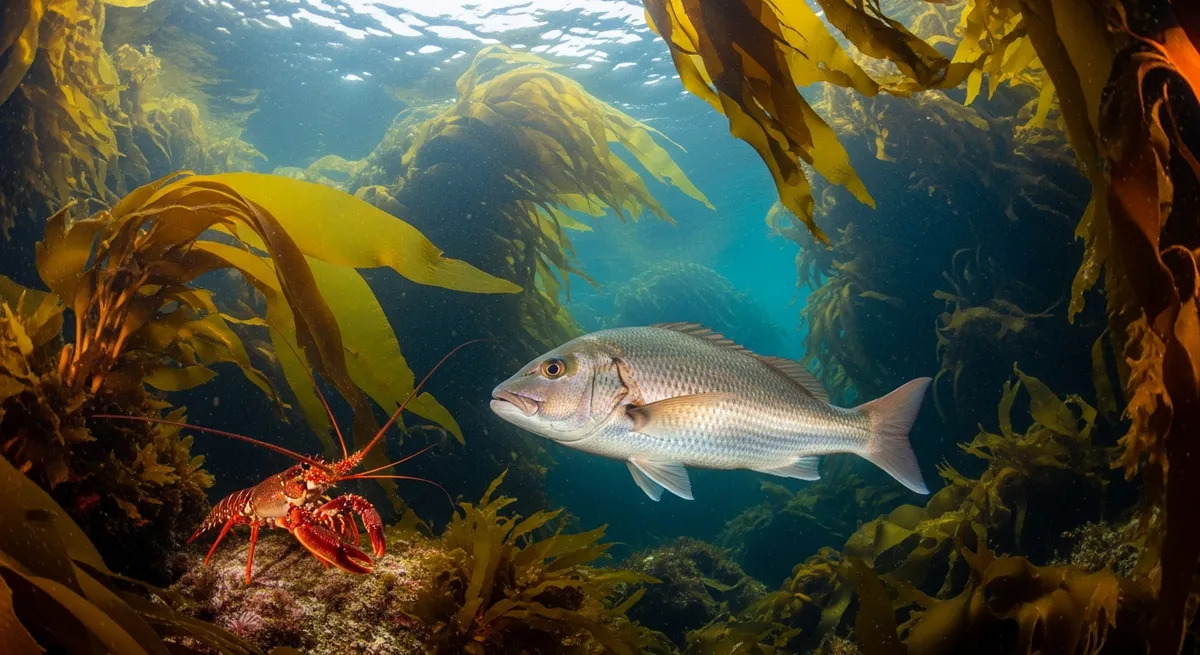
The team at Toi Ohomai Institute of Technology are a bit different, and that's precisely why we love them. This isn't your typical quick-certification mill; it’s a serious dive school embedded within a marine studies programme, offering PADI courses right up to professional levels. We think it’s perfect for divers who want to go deeper than just ticking off another card, especially those considering a career in marine conservation or research. You're learning from people who genuinely live and breathe the ocean. Operating out of Goat Island Marine Reserve, you get unparalleled access to New Zealand's oldest and busiest marine protected area. We’ve found the dive sites here are consistently good, even when the weather kicks up a fuss. Expect to see plenty of snapper, often swimming right up to your mask, alongside schools of trevally and kingfish. The sponge gardens are surprisingly colourful, a real treat on a sunny day when the light penetrates just right. Our advice? Go for an early morning dive if you can; the reserve gets pretty busy with snorkelers and glass-bottom boats later in the day, and the marine life is much more relaxed before the crowds arrive. Learning here feels less like a course and more like an immersion, both literally and figuratively.
- Location
- Goat Island & Hauraki Gulf, New Zealand, Australasia
- Coordinates
- -37.700000, 176.150000
- Phone
- +64 7 544 0920
- [email protected]
- Website
- https://www.toiohomai.ac.nz/study/subject/environmental-management
- Certification Agencies
- ["PADI"]
- Courses
- PADI Dive Center [padi:4590]
- Address
- Windmere Campus, Aquatic Centre, 70 Windermere Drive, Poike, Tauranga 3112, New Zealand
Dive Sites Near Toi Ohomai Institute of Technology
Toi Ohomai Institute of Technology provides access to 15 dive sites in Goat Island & Hauraki Gulf.
- 4 mile reef (reef)
- Acacia Bay (reef)
- Acacia Bay (reef)
- Aldermens- Bishops Hat (cave)
- Aldermens- Bishops Hat (reef)
- Aldermens- Fish Factory (wall)
- Aldermens- Fish Factory (pinnacle)
- Aldermens- HoneyComb (cave)
- Aldermens- HoneyComb (reef)
- Aldermens-Middle Middle (reef)
- Aldermens-Middle Middle (wreck)
- Aldermens- Mooring Bay (wall)
- Aldermens- Mooring Bay (reef)
- Anemone Boulders (reef)
Other Dive Centres in Goat Island & Hauraki Gulf
- Cathedral Cove Dive Ltd - ["PADI"]
- Dive Doctor
- Dive HQ Auckland - ["PADI"]
- Dive Tatapouri
- Dive Zone Tauranga - ["PADI"]
- Dive Zone Whitianga - ["PADI"]
- Epic SCUBA - SSI
- GET WET WAIKATO
- GlobalDive
- MUSA DIVING
Best Time to Dive in Goat Island & Hauraki Gulf
The warmest water temperatures in Goat Island & Hauraki Gulf occur in February, averaging 22.4°C. The coolest conditions are in August at 14.1°C.
Monthly Water Temperatures
- January: 21.4°C
- February: 22.4°C
- March: 21.8°C
- April: 19.8°C
- May: 17.4°C
- June: 15.3°C
- July: 14.1°C
- August: 14.1°C
- September: 14.7°C
- October: 16.3°C
- November: 18.5°C
- December: 20.3°C
Marine Life in Goat Island & Hauraki Gulf
Home to 77 recorded species including 43 reef fish, 11 sharks & rays, 3 whales & dolphins, 3 crabs & lobsters, 3 other, 3 sea snails & nudibranchs.
Notable Marine Life
- Snapper (Pagrus auratus) - Reef Fish
- Short-beaked Common Dolphin (Delphinus delphis) - Whales & Dolphins
- European fan-worm (Sabella spallanzanii) - Worms
- Asian paddle crab (Charybdis (Charybdis) japonica) - Crabs & Lobsters
- Red Rock Lobster (Jasus edwardsii) - Crabs & Lobsters
- Smooth hammerhead (Sphyrna zygaena) - Sharks & Rays
- Bluefin Gurnard (Chelidonichthys kumu) - Reef Fish
- Bronze whaler (Carcharhinus brachyurus) - Sharks & Rays
- dory (Zeus faber) - Reef Fish
- California Yellowtail (Seriola lalandi) - Reef Fish
Recommended Packing List for Goat Island & Hauraki Gulf
Based on average water temperature of 18.0°C, currents 2 cm/s.
- Wetsuit (3-5mm) - comfortable for 18°C water
- Mask - essential for every dive
- Fins
- BCD - buoyancy compensator
- Regulator - your most safety-critical piece of gear
- Dive Computer - tracks depth, time, and NDL
- Surface Marker Buoy (SMB) - essential for boat pickups
- Dive Torch - useful for crevices and colour at depth
- Underwater Camera - capture your diving memories