Flat Rock
Protected Area
Moturekareka Is
Why dive here
With 72+ marine species recorded in the area - including blue sharks, dolphins, hammerhead sharks, humpback whales and seahorses - Flat Rock offers some of Goat Island & Hauraki Gulf's richest cave diving. Water ranges 15-21°C, warmest January, February, March.
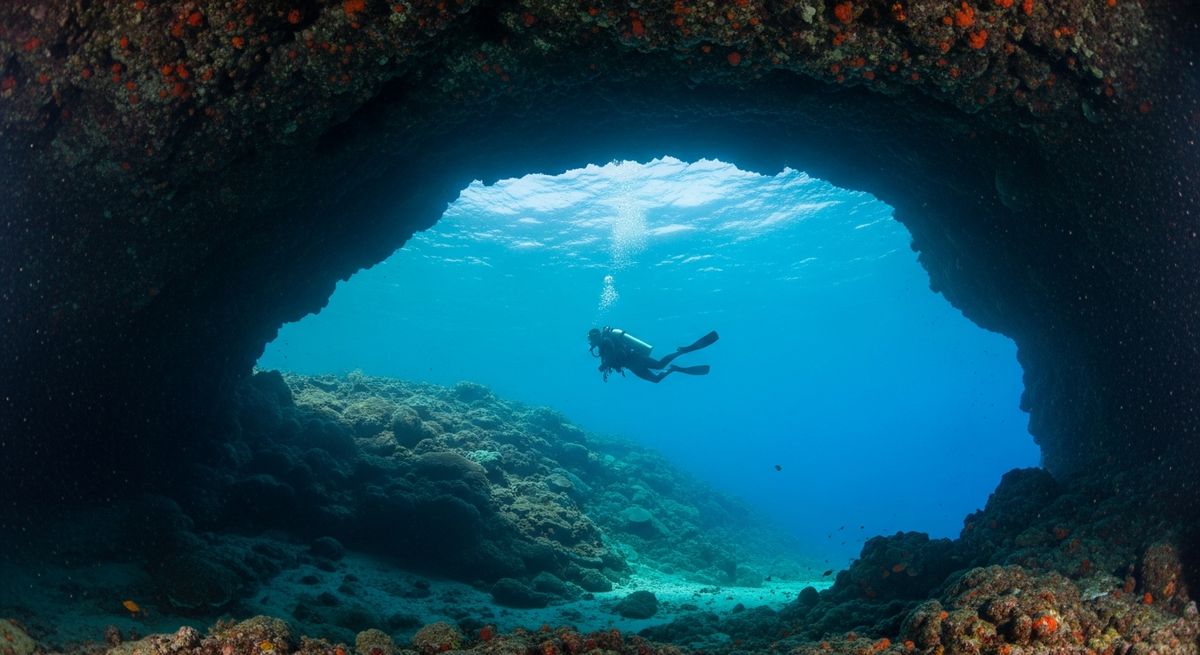
Flat Rock is a site we keep coming back to, mainly because it never quite feels the same twice. The big bouldery reef, dropping to 17 meters, is carved with these fantastic canyons and swim-throughs. If you time the current right – and that’s the trick, it can be a bit of a lottery out here – you’ll drift past walls absolutely plastered with white-striped anemones, their tentacles waving in the flow. We love dropping in and just letting the water push us gently through the bigger openings, spotting schools of kingfish and snapper holding formation in the calmer spots. It’s not uncommon to see a bronze whaler or a smooth hammerhead cruise by in the bluer water, always a thrill. For us, the best dives are in the morning before the boat traffic picks up, when the light really pierces down into those deeper crevices. Visibility averages around 12 meters, decent enough to appreciate the scale of the rock formations and the sheer number of blue maomao zipping about. This spot suits divers who are comfortable with a bit of current and enjoy a dynamic reef experience.
Typical Flat Rock Dive Profile
Illustrative profile based on site depth and type. Actual dive profiles vary - always follow your dive computer and training.
Safety Notes
Depth of 20m - Advanced Open Water certification recommended.
Overhead environment - never enter without proper cave/cavern training, redundant equipment, and a guideline.
Always perform a 3-minute safety stop at 5m before surfacing.
Nearest Dive Centres to Flat Rock
Dive shops near Flat Rock
Wettie
Performance Diver NZ Ltd
Epic SCUBA
GlobalDive
Reviews for Flat Rock
Conditions
Ocean conditions, forecast and tides for Flat Rock
Flat Rock Ocean Conditions
Monthly averages for Flat Rock, sourced from Open-Meteo marine data + Copernicus Marine (EU) - nearest station: Open-Meteo marine grid (-36.93, 175.86) (22km away)
October Averages
Sea Temperature
16°C
60°F · Range: 14.5–16.9°C
Current Speed
1.41 cm/s
Direction: SE (135°)
Chlorophyll-a
0.497 mg/m³
Moderate productivity
Salinity
34.91 PSU
Based on 4 years of monitoring data · Data sources: Open-Meteo marine data + Copernicus Marine (EU)
Plan & book
Ways to dive Goat Island & Hauraki Gulf, from day trips to liveaboards.
Day trips & courses
via GetYourGuideGuided dives, courses and snorkel trips with instant booking.
Find dive trips in Goat Island & Hauraki GulfPlaces to stay
via Booking.comHotels and dive resorts near Goat Island & Hauraki Gulf.
Search stays in Goat Island & Hauraki GulfDive insurance
Most travel insurance excludes or limits scuba. Check what you need before you go.
Dive insurance explainedPartner links: we may earn a commission if you book, at no extra cost to you. How we make money
Where to Stay near Flat Rock
Prices from Booking.com. We may earn a commission at no extra cost to you.