Lake Rotoma
Why dive here
With 72+ marine species recorded in the area - including blue sharks, dolphins, hammerhead sharks, humpback whales and seahorses - Lake Rotoma offers some of Goat Island & Hauraki Gulf's richest cave diving. Water ranges 15-21°C, warmest January, February, March.
Okay, Lake Rotoma. Forget the ocean for a bit and reset your expectations for something completely different. We love this spot for its sheer calm and the unusual thrill of diving a freshwater lake. Your objective here is the sunken dinghy, resting at a comfortable 11 metres. It’s not some grand old freighter, just a small, humble boat, but it's genuinely charming, cloaked in a fine silt that shimmers in your torch beam. We’d suggest going early, before any surface activity stirs the already delicate visibility; six metres is average, sometimes better, sometimes worse, but always a gentle kind of murky. Keep your eyes peeled for the resident koura, New Zealand’s freshwater crayfish. They grow surprisingly large here, bigger than we’ve seen anywhere else, and they're often found scuttling around the dinghy or tucked into crevices. You'll also likely encounter brown and rainbow trout, sleek and fast, darting through the water. It’s a wonderfully quiet dive, a chance to really slow down and appreciate a unique piece of New Zealand’s geology and its submerged life.
Safety Notes
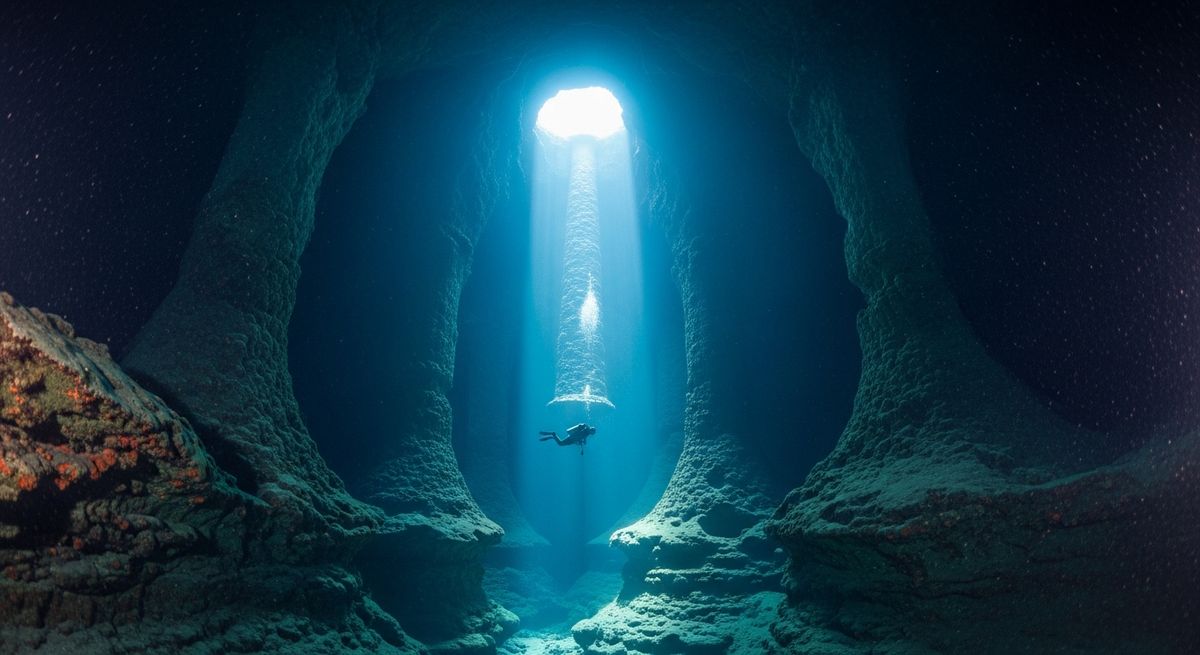
Overhead environment - never enter without proper cave/cavern training, redundant equipment, and a guideline.
Nearest Dive Centres to Lake Rotoma
Dive shops near Lake Rotoma
View all dive centres in Goat Island & Hauraki GulfReviews for Lake Rotoma
Conditions
Ocean conditions, forecast and tides for Lake Rotoma
Lake Rotoma Ocean Conditions
Monthly averages for Lake Rotoma, sourced from Open-Meteo marine data + Copernicus Marine (EU) - nearest station: Open-Meteo marine grid (-36.93, 175.86) (22km away)
October Averages
Sea Temperature
16°C
60°F · Range: 14.5–16.9°C
Current Speed
1.41 cm/s
Direction: SE (135°)
Chlorophyll-a
0.497 mg/m³
Moderate productivity
Salinity
34.91 PSU
Based on 4 years of monitoring data · Data sources: Open-Meteo marine data + Copernicus Marine (EU)
Plan & book
Ways to dive Goat Island & Hauraki Gulf, from day trips to liveaboards.
Day trips & courses
via GetYourGuideGuided dives, courses and snorkel trips with instant booking.
Find dive trips in Goat Island & Hauraki GulfPlaces to stay
via Booking.comHotels and dive resorts near Goat Island & Hauraki Gulf.
Search stays in Goat Island & Hauraki GulfDive insurance
Most travel insurance excludes or limits scuba. Check what you need before you go.
Dive insurance explainedPartner links: we may earn a commission if you book, at no extra cost to you. How we make money
Where to Stay near Lake Rotoma
Prices from Booking.com. We may earn a commission at no extra cost to you.