STANLEY ISLAND
Protected Area
Rabbit Island
Why dive here
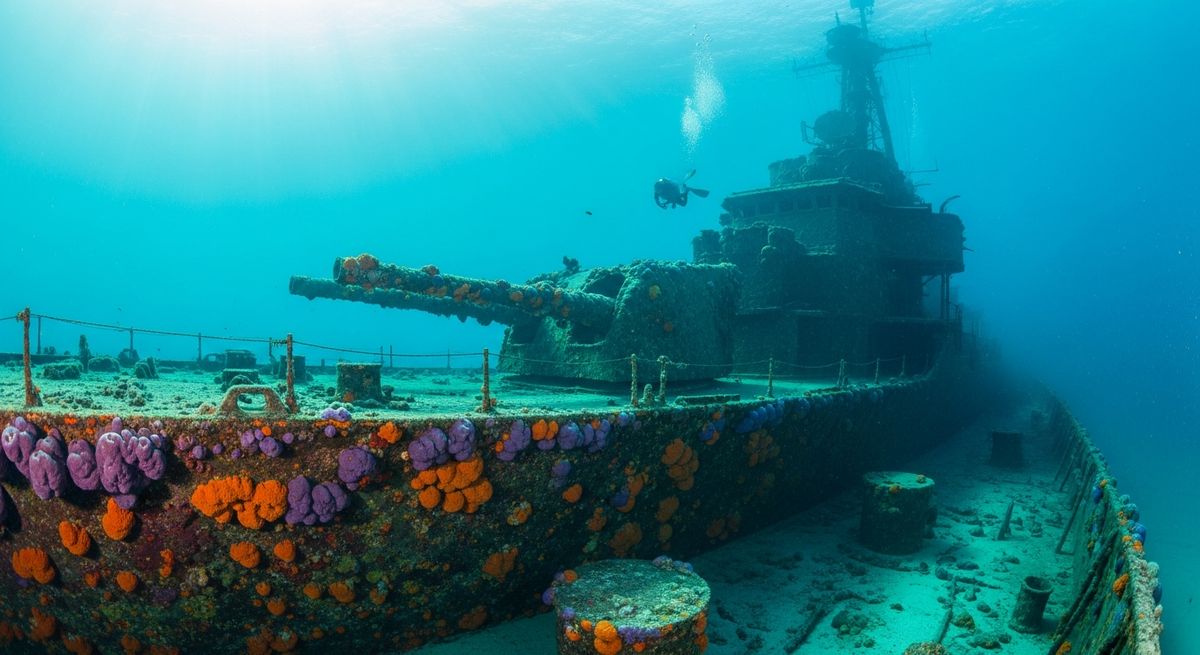
With 72+ marine species recorded in the area - including blue sharks, dolphins, hammerhead sharks, humpback whales and seahorses - STANLEY ISLAND offers some of Goat Island & Hauraki Gulf's richest wreck diving. Water ranges 15-21°C, warmest January, February, March.
Stanley Island, for us, is a perfect example of why we love diving in the Hauraki Gulf. It’s not about huge pelagics or endless visibility, though we’ve had some cracking days here. It’s about the texture of the place. We’ve drifted along the ‘Great Wall’ on the western side, watching the light play on the sponges and anemones that coat the rock face. The max depth here is 16m, so there’s plenty of bottom time to really explore. On the eastern side, we often poke around the two small caves. They aren’t huge, more like swim-throughs, but they’re big enough to give you that cool, enclosed feeling, and we’ve found green rock lobsters tucked away in there more than once. The schools of Pacific sardines can be mesmerising, shifting like quicksilver, and we’ve had barracouta shoot through them on occasion. Visibility averages around 12m, but can vary. We always suggest hitting it on a calm day, especially if you want to properly explore the cave entrances. Stanley Island suits divers who appreciate detailed reef exploration and don't necessarily need dramatic drop-offs. It's a forgiving site, good for knocking off some rust or for a relaxed day out, offering engaging visuals without demanding deep dives. You’ll see plenty of New Zealand’s common reef fish, like pigfish and wrasse, along with the occasional pelagic passing through.
Typical STANLEY ISLAND Dive Profile
Illustrative profile based on site depth and type. Actual dive profiles vary - always follow your dive computer and training.
Safety Notes
Wreck site - avoid penetration without wreck diving certification. Watch for sharp metal and entanglement hazards.
Always perform a 3-minute safety stop at 5m before surfacing.
Nearest Dive Centres to STANLEY ISLAND
Dive shops near STANLEY ISLAND
Salt Aotearoa
Cathedral Cove Dive Ltd
Dive Zone Whitianga
Reviews for STANLEY ISLAND
Conditions
Ocean conditions, forecast and tides for STANLEY ISLAND
STANLEY ISLAND Ocean Conditions
Monthly averages for STANLEY ISLAND, sourced from Open-Meteo marine data + Copernicus Marine (EU) - nearest station: Open-Meteo marine grid (-36.93, 175.86) (22km away)
October Averages
Sea Temperature
16°C
60°F · Range: 14.5–16.9°C
Current Speed
1.41 cm/s
Direction: SE (135°)
Chlorophyll-a
0.497 mg/m³
Moderate productivity
Salinity
34.91 PSU
Based on 4 years of monitoring data · Data sources: Open-Meteo marine data + Copernicus Marine (EU)
Plan & book
Ways to dive Goat Island & Hauraki Gulf, from day trips to liveaboards.
Day trips & courses
via GetYourGuideGuided dives, courses and snorkel trips with instant booking.
Find dive trips in Goat Island & Hauraki GulfPlaces to stay
via Booking.comHotels and dive resorts near Goat Island & Hauraki Gulf.
Search stays in Goat Island & Hauraki GulfDive insurance
Most travel insurance excludes or limits scuba. Check what you need before you go.
Dive insurance explainedPartner links: we may earn a commission if you book, at no extra cost to you. How we make money
Where to Stay near STANLEY ISLAND
Prices from Booking.com. We may earn a commission at no extra cost to you.