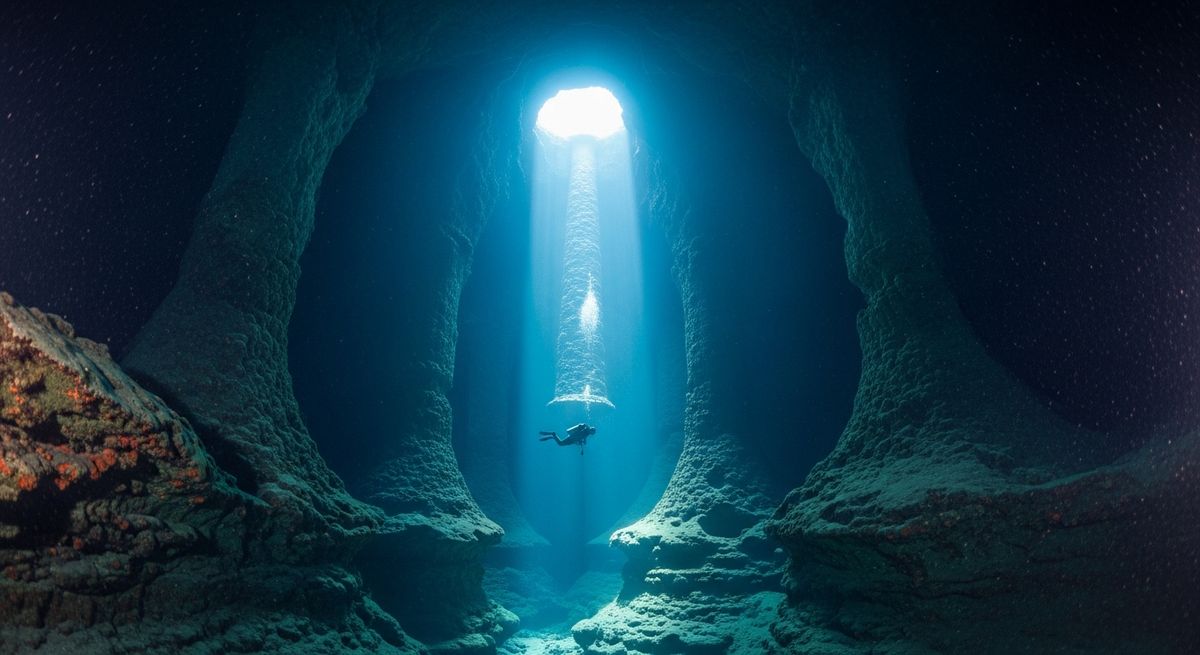
The Golf ball/ Car Park
Protected Area
Whanganui A Hei
Why dive here
With 72+ marine species recorded in the area - including blue sharks, dolphins, hammerhead sharks, humpback whales and seahorses - The Golf ball/ Car Park offers some of Goat Island & Hauraki Gulf's richest cave diving. Water ranges 15-21°C, warmest January, February, March.
The Golf Ball, or Car Park as we often call it, is a bit of a local secret, tucked away near Goat Island. Forget the name, it's not about sunken cars or lost golf balls. This site is all about the wall dive, a proper drop-off that takes you from the kelp-lined shallows down to around 14 metres, sometimes a little deeper if you poke around the corners of Waipapa Island. We love dropping in on the sand patch in the middle of Boat Harbour, then following the island’s edge. That’s where the wall starts to get interesting. You’ll find schools of pacific sardines flickering in the blue, occasionally getting buzzed by a passing king wrasse. Keep your eyes peeled for short-tail stingrays buried in the sand as you transition from the wall’s base. It’s a great spot for spotting blue moki, a fish we don’t see as often as we’d like in other New Zealand spots. Look closely in the kelp fronds for the yellow-and-black triplefins. Visibility averages around 9 metres, which is decent for a New Zealand shore dive, but on a good day after an easterly, it can push to 15 metres. It’s an easy, relaxed dive, perfect for a long bottom time, exploring crevices, and just soaking in the temperate reef feel. This site suits divers who appreciate the subtler beauty of a temperate reef, those who enjoy searching for smaller creatures among the kelp and along a gentle wall. It’s a comfortable dive for anyone from newly certified to experienced, as long as you’re happy navigating a good wall.
Typical The Golf ball/ Car Park Dive Profile
Illustrative profile based on site depth and type. Actual dive profiles vary - always follow your dive computer and training.
Safety Notes
Overhead environment - never enter without proper cave/cavern training, redundant equipment, and a guideline.
Nearest Dive Centres to The Golf ball/ Car Park
Dive shops near The Golf ball/ Car Park
Cathedral Cove Dive Ltd
Dive Zone Whitianga
Salt Aotearoa
Reviews for The Golf ball/ Car Park
Conditions
Ocean conditions, forecast and tides for The Golf ball/ Car Park
The Golf ball/ Car Park Ocean Conditions
Monthly averages for The Golf ball/ Car Park, sourced from Open-Meteo marine data + Copernicus Marine (EU) - nearest station: Open-Meteo marine grid (-36.93, 175.86) (22km away)
October Averages
Sea Temperature
16°C
60°F · Range: 14.5–16.9°C
Current Speed
1.41 cm/s
Direction: SE (135°)
Chlorophyll-a
0.497 mg/m³
Moderate productivity
Salinity
34.91 PSU
Based on 4 years of monitoring data · Data sources: Open-Meteo marine data + Copernicus Marine (EU)
Plan & book
Ways to dive Goat Island & Hauraki Gulf, from day trips to liveaboards.
Day trips & courses
via GetYourGuideGuided dives, courses and snorkel trips with instant booking.
Find dive trips in Goat Island & Hauraki GulfPlaces to stay
via Booking.comHotels and dive resorts near Goat Island & Hauraki Gulf.
Search stays in Goat Island & Hauraki GulfDive insurance
Most travel insurance excludes or limits scuba. Check what you need before you go.
Dive insurance explainedPartner links: we may earn a commission if you book, at no extra cost to you. How we make money
Where to Stay near The Golf ball/ Car Park
Prices from Booking.com. We may earn a commission at no extra cost to you.