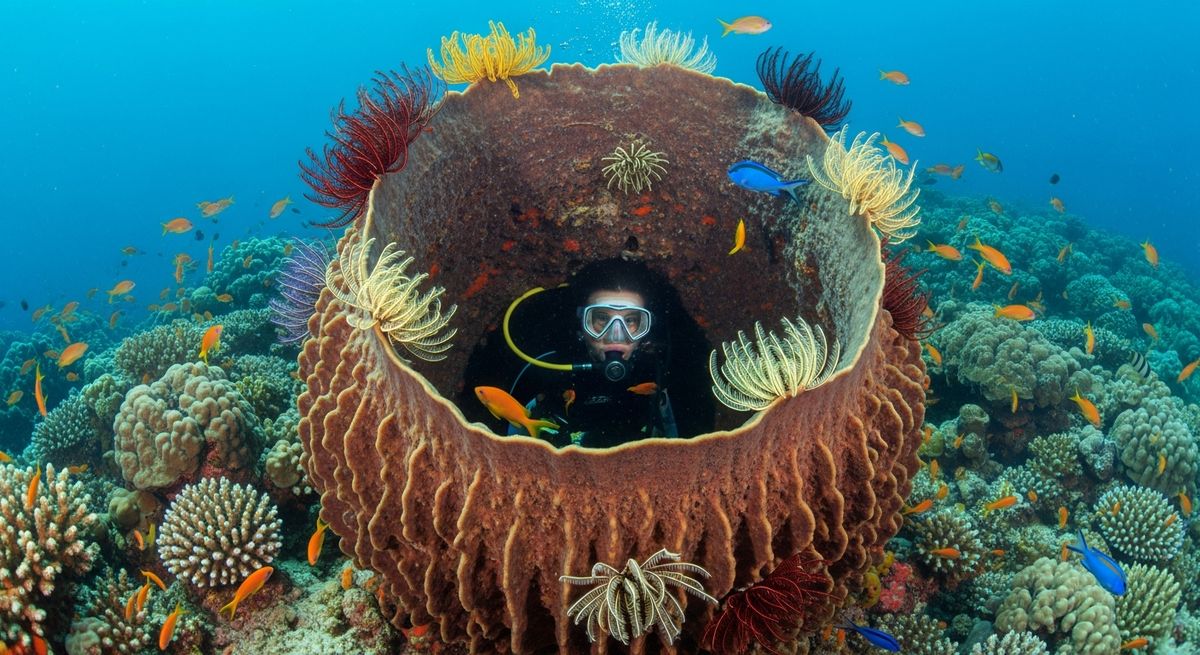
Wharewaka Point
Why dive here
With 72+ marine species recorded in the area - including blue sharks, dolphins, hammerhead sharks, humpback whales and seahorses - Wharewaka Point offers some of Goat Island & Hauraki Gulf's richest reef diving. Water ranges 15-21°C, warmest January, February, March.
Wharewaka Point is a straightforward shore dive near Goat Island, offering a convenient setup for a relaxed afternoon. You’ve got easy access from a grassy area, right into a sandy, stony bottom that gradually slopes deeper. The dive generally follows a gentle wall, sometimes silty, with a max depth of 16 meters. Visibility averages around 8 meters, making it a good spot for newer divers or those looking for an easy-going dip. We've often seen schools of demoiselles flickering around, and if you’re lucky, you might even spot a flounder camouflaged on the sand. Look out for the resident cormorants drying their wings on the rocks nearby too. It's a nice, low-key option when the easterlies are light, under 8 knots.
Typical Wharewaka Point Dive Profile
Illustrative profile based on site depth and type. Actual dive profiles vary - always follow your dive computer and training.
Reviews for Wharewaka Point
Conditions
Ocean conditions, forecast and tides for Wharewaka Point
Wharewaka Point Ocean Conditions
Monthly averages for Wharewaka Point, sourced from Open-Meteo marine data + Copernicus Marine (EU) - nearest station: Open-Meteo marine grid (-36.93, 175.86) (22km away)
October Averages
Sea Temperature
16°C
60°F · Range: 14.5–16.9°C
Current Speed
1.41 cm/s
Direction: SE (135°)
Chlorophyll-a
0.497 mg/m³
Moderate productivity
Salinity
34.91 PSU
Based on 4 years of monitoring data · Data sources: Open-Meteo marine data + Copernicus Marine (EU)
Plan & book
Ways to dive Goat Island & Hauraki Gulf, from day trips to liveaboards.
Day trips & courses
via GetYourGuideGuided dives, courses and snorkel trips with instant booking.
Find dive trips in Goat Island & Hauraki GulfPlaces to stay
via Booking.comHotels and dive resorts near Goat Island & Hauraki Gulf.
Search stays in Goat Island & Hauraki GulfDive insurance
Most travel insurance excludes or limits scuba. Check what you need before you go.
Dive insurance explainedPartner links: we may earn a commission if you book, at no extra cost to you. How we make money
Where to Stay near Wharewaka Point
Prices from Booking.com. We may earn a commission at no extra cost to you.