Dive Now - Poor Knights Islands

Ilha Mae’s Ponta Sul is our quiet escape in Arraial do Cabo. Forget chasing depth here, this is a site for slowing down and really looking. We’ve spent whole dives just combing the sandy bottom, spotting little things you’d miss at a faster pace. The Drummer Boy fish are a regular highlight, those striking stripes really pop against the sand. You’ll often find butterfly rays gliding past, sometimes a nail ray half-buried, and if luck’s on your side, an eagle ray might cruise through the blue. Visibility averages around five metres, so it’s not always gin-clear, but that lower vis actually adds to the intimacy, making you focus on the immediate surroundings. It’s wonderfully calm, sheltered enough for newer divers to feel comfortable, yet there’s still plenty to keep the seasoned diver engaged. We love it for macro photography, or just a really relaxed, contemplative dive. Go early in the morning before any crowds, that’s when it feels most peaceful.

Location
Poor Knights Islands, New Zealand, Australasia
Coordinates
-35.728000, 174.322000

Marine Protected Area: Whangarei Harbour Wildlife Refuge

Best Time to Dive in Poor Knights Islands

The warmest water temperatures in Poor Knights Islands occur in February, averaging 21.9°C. The coolest conditions are in August at 15.8°C.

Monthly Water Temperatures

  • January: 21.4°C
  • February: 21.9°C
  • March: 21.7°C
  • April: 20.6°C
  • May: 19.1°C
  • June: 17.6°C
  • July: 16.5°C
  • August: 15.8°C
  • September: 15.9°C
  • October: 16.6°C
  • November: 18.2°C
  • December: 19.8°C

Nearby Dive Sites in Poor Knights Islands

Nearest Dive Centres to Dive Now

Marine Life in Poor Knights Islands

Home to 84 recorded species including 53 reef fish, 11 sharks & rays, 4 whales & dolphins, 4 other, 3 crabs & lobsters, 2 sea urchins.

Notable Species

Recommended Packing List for Dive Now

Based on average water temperature of 18.8°C, currents 12 cm/s.

  • Wetsuit (3-5mm) - comfortable for 19°C water
  • Mask - essential for every dive
  • Fins
  • BCD - buoyancy compensator
  • Regulator - your most safety-critical piece of gear
  • Dive Computer - tracks depth, time, and NDL
  • Surface Marker Buoy (SMB) - essential for boat pickups
  • Dive Torch - useful for crevices and colour at depth
  • Underwater Camera - capture your diving memories

Frequently Asked Questions

What are the typical dive depths at Dive Now, and are there options for deeper dives?
The dive site Dive Now offers a maximum depth of 7m, providing a shallow and accessible reef environment for exploration. For training purposes, an on-site heated indoor pool is available with a deep area reaching 3.5m. This makes it suitable for various skill practices and equipment trials before heading to the main site.
What kind of marine life and underwater features can I expect to see when diving at Dive Now?
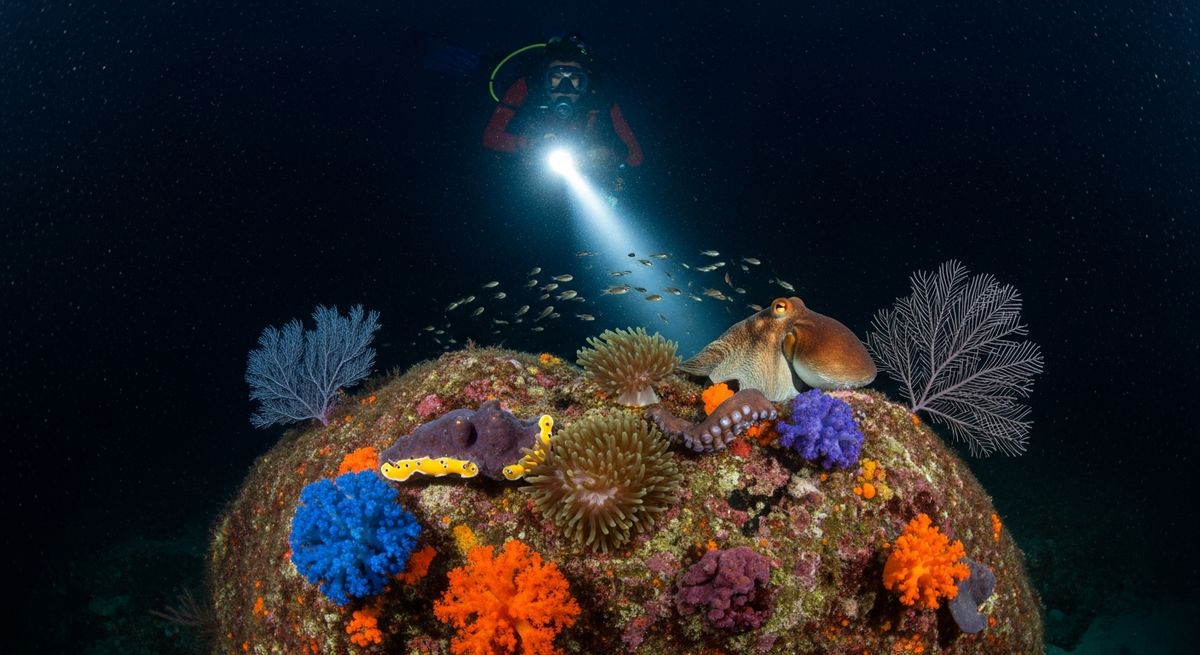
As a reef dive site, Dive Now likely features typical reef structures and associated marine life found in the Poor Knights Islands region. While specific species are not detailed, divers can anticipate exploring diverse underwater features common to a reef environment at this location.
How challenging are the dive sites at Dive Now, and are they suitable for beginner divers?
The Dive Now site is classified with an intermediate difficulty, suggesting it's best suited for divers with some experience. While the associated training pool is ideal for skill practice and equipment trials, the main dive site's conditions may be more challenging than those typically encountered by beginners.
What is the best time of year to dive at Dive Now for optimal conditions and marine encounters?
The provided data does not specify the best time of year to dive at Dive Now for optimal conditions or marine encounters. For general guidance on seasonal diving in New Zealand, you might consult our When to Dive section for broader recommendations.
What scuba diving certifications are required to dive at Dive Now?
The specific scuba diving certifications required to dive at Dive Now are not detailed in the provided information. Given its intermediate difficulty, it is generally recommended that divers hold at least an Advanced Open Water certification or equivalent experience for such sites to ensure safety and enjoyment.
What are the usual current conditions and water visibility like at Dive Now?
At the Dive Now site, divers can expect an average visibility of 10m, offering clear views of the underwater environment. Information regarding typical current conditions is not provided in the available data. For comfortable training, an on-site heated indoor pool maintains a warm temperature of around 24 degrees C.