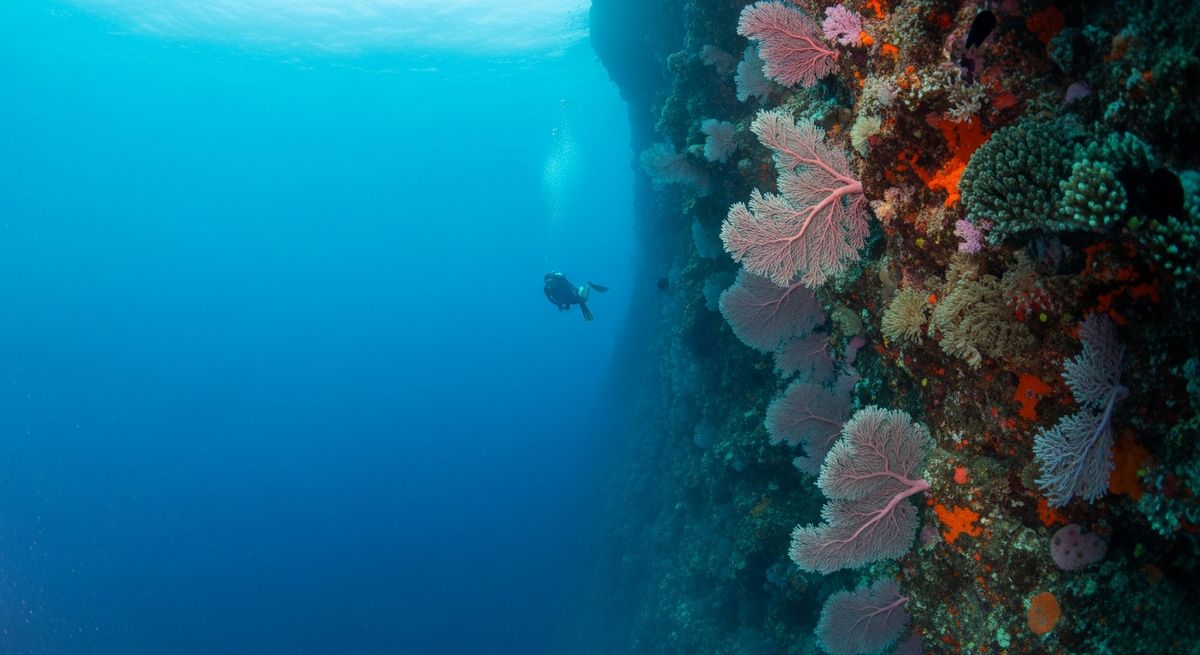
HMNZS Waikato wreck
Protected Area
Tutukaka
Why dive here
With 79+ marine species recorded in the area - including blue sharks, dolphins, hammerhead sharks, humpback whales and orcas - HMNZS Waikato wreck offers some of Poor Knights Islands's richest wall diving. Water ranges 15-22°C, warmest January, February, March.
Dropping down onto the HMNZS Waikato, you immediately feel the scale of her. This isn't just a pile of metal, it’s a proper ship, though now split into two main sections. We love following the sheer length of her hull, often shadowed by schools of blue maomao so thick they ripple like a living curtain. The deck guns are still there, overgrown with soft corals, and it’s always fun to poke around the bridge or the engine room, even with the bow section having snapped off from the stern. You’ll definitely be greeted by inquisitive snapper and, if you’re lucky, a big yellowtail kingfish might cruise by, inspecting your bubbles. She lies at a comfortable 27 metres, making for a good long dive. Visibility averages around 11 metres, which is decent for a wreck and often creates a wonderfully atmospheric gloom around the deeper sections. Currents can pick up here, especially around the Poor Knights, so check with your dive operator about conditions. Our favourite part is lingering on the main deck, imagining the ship's active days while watching the countless triplefins dart through the new growth. This wreck suits divers who appreciate history and enjoy exploring large structures, rather than just drifting past a reef.
Nearest Dive Centres to HMNZS Waikato wreck
Dive shops near HMNZS Waikato wreck
Dive! Tutukaka
Moana Futures Ltd
DIVE NOW
Northland Dive
Reviews for HMNZS Waikato wreck
Conditions
Ocean conditions, forecast and tides for HMNZS Waikato wreck
HMNZS Waikato wreck Ocean Conditions
Monthly averages for HMNZS Waikato wreck, sourced from Open-Meteo marine data + Copernicus Marine (EU) - nearest station: Open-Meteo marine grid (-35.84, 174.61) (14km away)
October Averages
Sea Temperature
16°C
60°F · Range: 14.8–17.1°C
Current Speed
11.4 cm/s
Direction: SE (142.1°)
Chlorophyll-a
0.388 mg/m³
Moderate productivity
Salinity
35.44 PSU
Based on 4 years of monitoring data · Data sources: Open-Meteo marine data + Copernicus Marine (EU)
Plan & book
Ways to dive Poor Knights Islands, from day trips to liveaboards.
Day trips & courses
via GetYourGuideGuided dives, courses and snorkel trips with instant booking.
Find dive trips in Poor Knights IslandsPlaces to stay
via Booking.comHotels and dive resorts near Poor Knights Islands.
Search stays in Poor Knights IslandsDive insurance
Most travel insurance excludes or limits scuba. Check what you need before you go.
Dive insurance explainedPartner links: we may earn a commission if you book, at no extra cost to you. How we make money
Where to Stay near HMNZS Waikato wreck
Prices from Booking.com. We may earn a commission at no extra cost to you.