Northern Arch
Protected Area
Poor Knights Islands
Why dive here
With 79+ marine species recorded in the area - including blue sharks, dolphins, hammerhead sharks, humpback whales and orcas - Northern Arch offers some of Poor Knights Islands's richest wreck diving. Water ranges 15-22°C, warmest January, February, March.
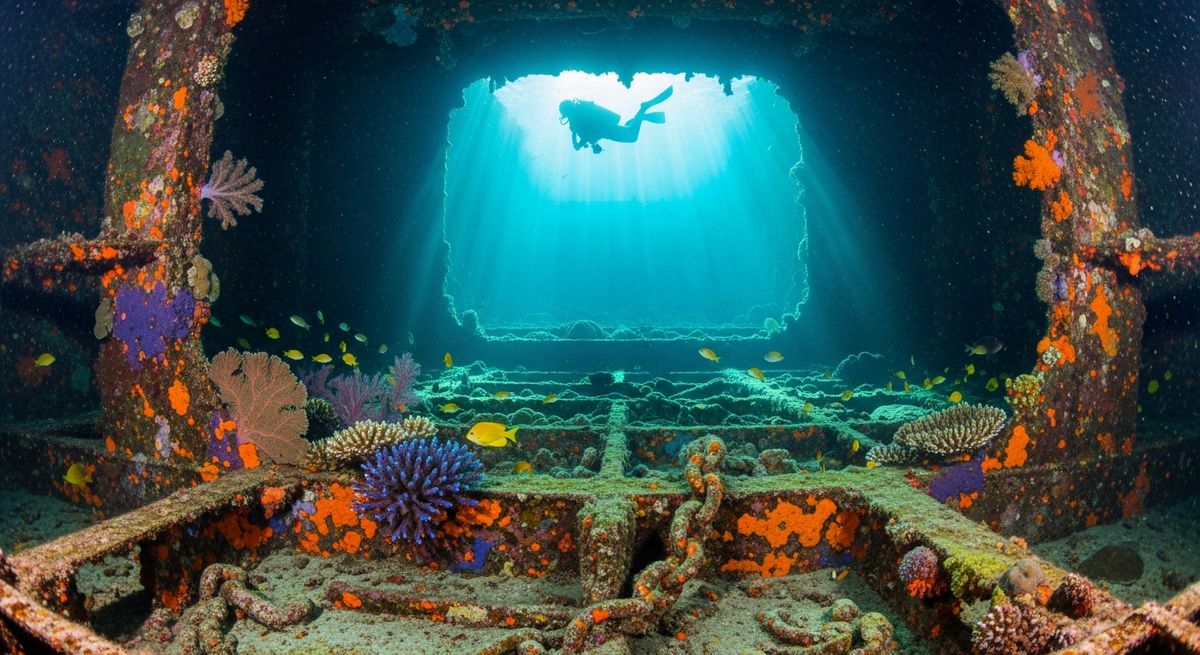
Northern Arch is quintessential Poor Knights. We love this site for its sheer drama, an enormous cut through the island that often funnels current, bringing in the bigger stuff. Dropping into the sun-dappled entrance, you're immediately hit with the scale of the place. The walls are encrusted with sponges, a painter's palette of orange and purple against the dark rock. Look up, and schools of blue maomao swirl overhead, so thick they almost blot out the light filtering down. We've seen kingfish here that make you question your depth perception, cruising through with a casual power, particularly in summer. Black stingrays often settle on the sandy bottom inside the arch, sometimes joined by the occasional eagle ray gliding past. The arch itself bottoms out around 25m, but the northern side just keeps sloping away, hinting at deeper adventures if you’re equipped for it. We always suggest keeping an eye out into the blue beyond the arch; that’s where the real surprises often show up. It’s a site for divers who appreciate a grand stage and aren’t afraid of a bit of movement in the water, offering those unforgettable moments where the ocean truly feels wild.
Safety Notes
Wreck site - avoid penetration without wreck diving certification. Watch for sharp metal and entanglement hazards.
Nearest Dive Centres to Northern Arch
Dive shops near Northern Arch
Dive! Tutukaka
Northland Dive
Moana Futures Ltd
DIVE NOW
Reviews for Northern Arch
Conditions
Ocean conditions, forecast and tides for Northern Arch
Northern Arch Ocean Conditions
Monthly averages for Northern Arch, sourced from Open-Meteo marine data + Copernicus Marine (EU) - nearest station: Open-Meteo marine grid (-35.84, 174.61) (14km away)
October Averages
Sea Temperature
16°C
60°F · Range: 14.8–17.1°C
Current Speed
11.4 cm/s
Direction: SE (142.1°)
Chlorophyll-a
0.388 mg/m³
Moderate productivity
Salinity
35.44 PSU
Based on 4 years of monitoring data · Data sources: Open-Meteo marine data + Copernicus Marine (EU)
Plan & book
Ways to dive Poor Knights Islands, from day trips to liveaboards.
Day trips & courses
via GetYourGuideGuided dives, courses and snorkel trips with instant booking.
Find dive trips in Poor Knights IslandsPlaces to stay
via Booking.comHotels and dive resorts near Poor Knights Islands.
Search stays in Poor Knights IslandsDive insurance
Most travel insurance excludes or limits scuba. Check what you need before you go.
Dive insurance explainedPartner links: we may earn a commission if you book, at no extra cost to you. How we make money
Where to Stay near Northern Arch
Prices from Booking.com. We may earn a commission at no extra cost to you.