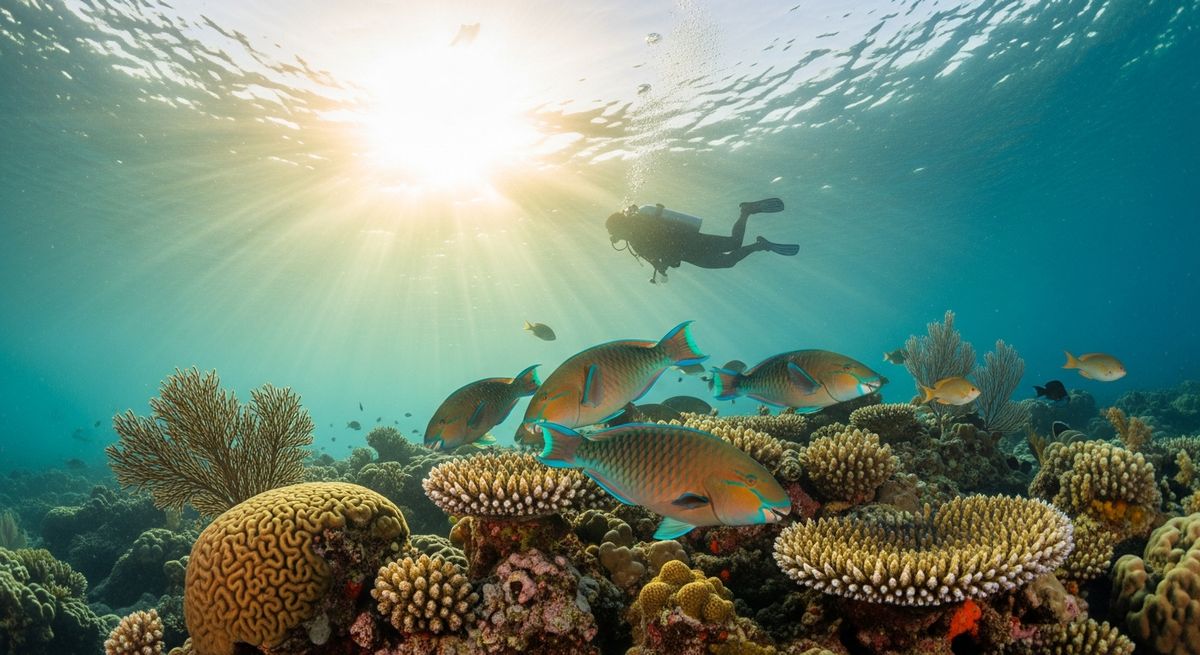
Riko Riko cave
Protected Area
Poor Knights Islands
Why dive here
With 79+ marine species recorded in the area - including blue sharks, dolphins, hammerhead sharks, humpback whales and orcas - Riko Riko cave offers some of Poor Knights Islands's richest reef diving. Water ranges 15-22°C, warmest January, February, March.
Riko Riko isn't just a cave, it’s an experience. We’ve been through it a few times, and the sheer scale still makes us feel tiny, even knowing it's the largest sea cave in the Southern Hemisphere. Entering, the light changes dramatically, the usual bright blues shifting to deep emeralds and then inky blackness. It’s a sensory overload in the best way. We love dropping down into the cave mouth, watching the schools of Blue Maomao swirl and dart, their scales catching the last of the sun. Our favourite spot is right at the back; the water there is usually calm, and if you let your eyes adjust, you'll start picking out the tiny, colourful nudibranchs on the walls. If you can arrange a night dive, do it. The cave truly comes alive after dark, and with a good torch, you'll spot hardshell shrimp and mottled triplefins you'd miss during the day. It’s a great dive for anyone comfortable in low light, offering something really unique beyond the usual reef cruise.
Nearest Dive Centres to Riko Riko cave
Dive shops near Riko Riko cave
Dive! Tutukaka
Moana Futures Ltd
Northland Dive
DIVE NOW
Reviews for Riko Riko cave
Conditions
Ocean conditions, forecast and tides for Riko Riko cave
Riko Riko cave Ocean Conditions
Monthly averages for Riko Riko cave, sourced from Open-Meteo marine data + Copernicus Marine (EU) - nearest station: Open-Meteo marine grid (-35.84, 174.61) (14km away)
October Averages
Sea Temperature
16°C
60°F · Range: 14.8–17.1°C
Current Speed
11.4 cm/s
Direction: SE (142.1°)
Chlorophyll-a
0.388 mg/m³
Moderate productivity
Salinity
35.44 PSU
Based on 4 years of monitoring data · Data sources: Open-Meteo marine data + Copernicus Marine (EU)
Plan & book
Ways to dive Poor Knights Islands, from day trips to liveaboards.
Day trips & courses
via GetYourGuideGuided dives, courses and snorkel trips with instant booking.
Find dive trips in Poor Knights IslandsPlaces to stay
via Booking.comHotels and dive resorts near Poor Knights Islands.
Search stays in Poor Knights IslandsDive insurance
Most travel insurance excludes or limits scuba. Check what you need before you go.
Dive insurance explainedPartner links: we may earn a commission if you book, at no extra cost to you. How we make money
Where to Stay near Riko Riko cave
Prices from Booking.com. We may earn a commission at no extra cost to you.