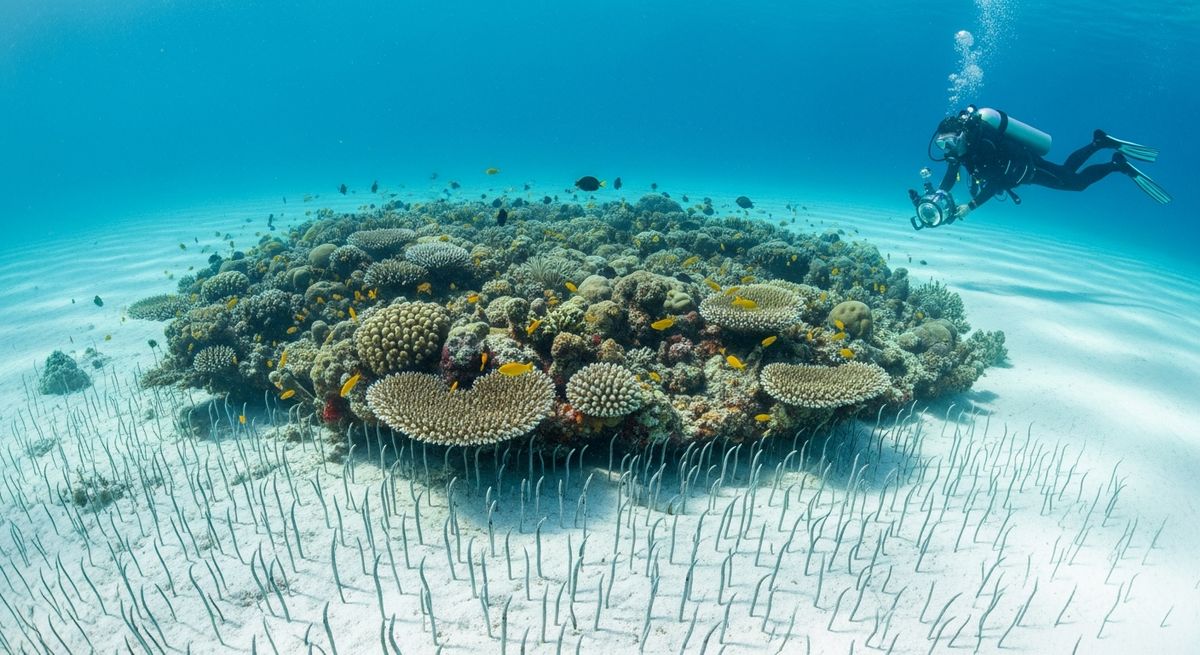
Waterfall Reef
Protected Area
Cape Rodney-Okakari Point
Why dive here
With 79+ marine species recorded in the area - including blue sharks, dolphins, hammerhead sharks, humpback whales and orcas - Waterfall Reef offers some of Poor Knights Islands's richest reef diving. Water ranges 15-22°C, warmest January, February, March.
Waterfall Reef isn't always top of mind when you’re heading out to the Poor Knights, but we’ve had some truly magical dives here. It’s tucked away on the channel's eastern edge, and while the maximum depth is only 12 metres, it packs a punch. We love the tall kelp formations that sway with the surge, creating a moody, dramatic feel, especially when the light filters through. Beneath the kelp, the sandy, shell-strewn bottom is a great place to spot some more unusual residents. We’ve found Spotted Stargazers here, just their eyes peeking out, and the flash of a Bluefin Gurnard’s fins as it scuttles away. The key to Waterfall Reef is timing. Easterly winds and swell can really whip up the currents, making it a bit of a workout. We always aim for an incoming to slack tide – it makes getting back to the boat a lot less strenuous. Visibility averages around 7 metres, which might not sound like much, but it often enhances the intimate feel of the site. You’re not looking for grand vistas here, but rather focusing on the smaller details. Keep an eye out for seals in winter, too; we’ve had some playful encounters. This site is perfect for divers who appreciate a more subtle, introspective dive. You’ll spend your time exploring crevices for Crested Blennies and peering under ledges for Kina. It's a fantastic spot for macro photography or for simply enjoying the rich texture of the reef, away from the bigger crowds.
Nearest Dive Centres to Waterfall Reef
Dive shops near Waterfall Reef
GOAT ISLAND DIVE and SNORKEL
NEW ZEALAND DIVING
Auckland Scuba - Silverdale
Reviews for Waterfall Reef
Conditions
Ocean conditions, forecast and tides for Waterfall Reef
Waterfall Reef Ocean Conditions
Monthly averages for Waterfall Reef, sourced from Open-Meteo marine data + Copernicus Marine (EU) - nearest station: Open-Meteo marine grid (-35.84, 174.61) (14km away)
October Averages
Sea Temperature
16°C
60°F · Range: 14.8–17.1°C
Current Speed
11.4 cm/s
Direction: SE (142.1°)
Chlorophyll-a
0.388 mg/m³
Moderate productivity
Salinity
35.44 PSU
Based on 4 years of monitoring data · Data sources: Open-Meteo marine data + Copernicus Marine (EU)
Plan & book
Ways to dive Poor Knights Islands, from day trips to liveaboards.
Day trips & courses
via GetYourGuideGuided dives, courses and snorkel trips with instant booking.
Find dive trips in Poor Knights IslandsPlaces to stay
via Booking.comHotels and dive resorts near Poor Knights Islands.
Search stays in Poor Knights IslandsDive insurance
Most travel insurance excludes or limits scuba. Check what you need before you go.
Dive insurance explainedPartner links: we may earn a commission if you book, at no extra cost to you. How we make money
Where to Stay near Waterfall Reef
Prices from Booking.com. We may earn a commission at no extra cost to you.