Whangarei Heads Old Women
Protected Area
Bream Islands
Why dive here
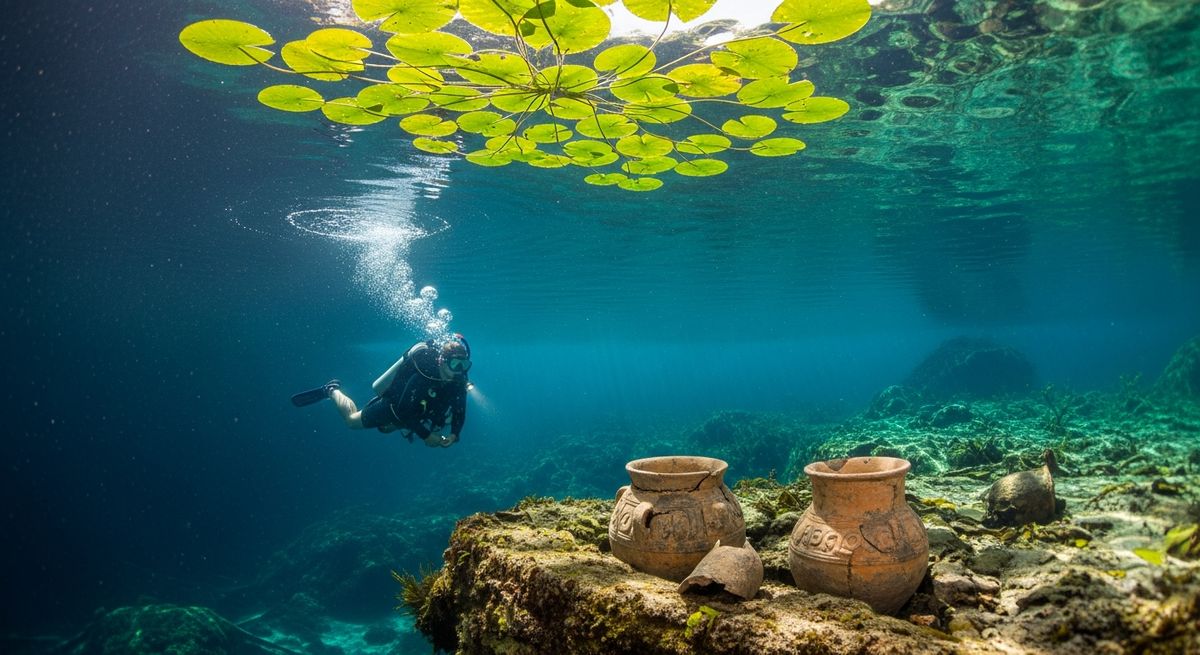
With 79+ marine species recorded in the area - including blue sharks, dolphins, hammerhead sharks, humpback whales and orcas - Whangarei Heads Old Women offers some of Poor Knights Islands's richest cenote diving. Water ranges 15-22°C, warmest January, February, March.
Whangarei Heads Old Women might sound a bit like a local pub, but trust us, it’s a spot worth the boat ride. We’re only talking 13 metres deep here, so it’s a brilliant one for extending your bottom time, especially if you’re into the macro stuff. Picture a sloping kelp forest, thick and swaying in the subtle surge, dropping onto a sandy bottom. There are these cool rocky pinnacles here, some with swim-throughs that are just begging to be explored. Sunlight filters down through the kelp canopy, dappling the rock walls. Keep an eye out for the crumb-of-bread sponge, its texture really stands out against the darker rock. Our favourite trick here is to hug the sand line – that’s where you’ll start seeing some of the bigger fish like snapper and schools of parore moving through. The visibility averages around seven metres, so it's not always gin-clear, but that just adds to the atmospheric feel of exploring a kelp forest. It's a classic Poor Knights dive, ideal for photographers wanting to slow down and find the details, or anyone who just loves the feeling of being immersed in a healthy, vibrant ecosystem.
Safety Notes
Overhead environment - never enter without proper cave/cavern training, redundant equipment, and a guideline.
Nearest Dive Centres to Whangarei Heads Old Women
Dive shops near Whangarei Heads Old Women
DIVE NOW
Dive! Tutukaka
Moana Futures Ltd
Reviews for Whangarei Heads Old Women
Conditions
Ocean conditions, forecast and tides for Whangarei Heads Old Women
Whangarei Heads Old Women Ocean Conditions
Monthly averages for Whangarei Heads Old Women, sourced from Open-Meteo marine data + Copernicus Marine (EU) - nearest station: Open-Meteo marine grid (-35.84, 174.61) (14km away)
October Averages
Sea Temperature
16°C
60°F · Range: 14.8–17.1°C
Current Speed
11.4 cm/s
Direction: SE (142.1°)
Chlorophyll-a
0.388 mg/m³
Moderate productivity
Salinity
35.44 PSU
Based on 4 years of monitoring data · Data sources: Open-Meteo marine data + Copernicus Marine (EU)
Plan & book
Ways to dive Poor Knights Islands, from day trips to liveaboards.
Day trips & courses
via GetYourGuideGuided dives, courses and snorkel trips with instant booking.
Find dive trips in Poor Knights IslandsPlaces to stay
via Booking.comHotels and dive resorts near Poor Knights Islands.
Search stays in Poor Knights IslandsDive insurance
Most travel insurance excludes or limits scuba. Check what you need before you go.
Dive insurance explainedPartner links: we may earn a commission if you book, at no extra cost to you. How we make money
Where to Stay near Whangarei Heads Old Women
Prices from Booking.com. We may earn a commission at no extra cost to you.