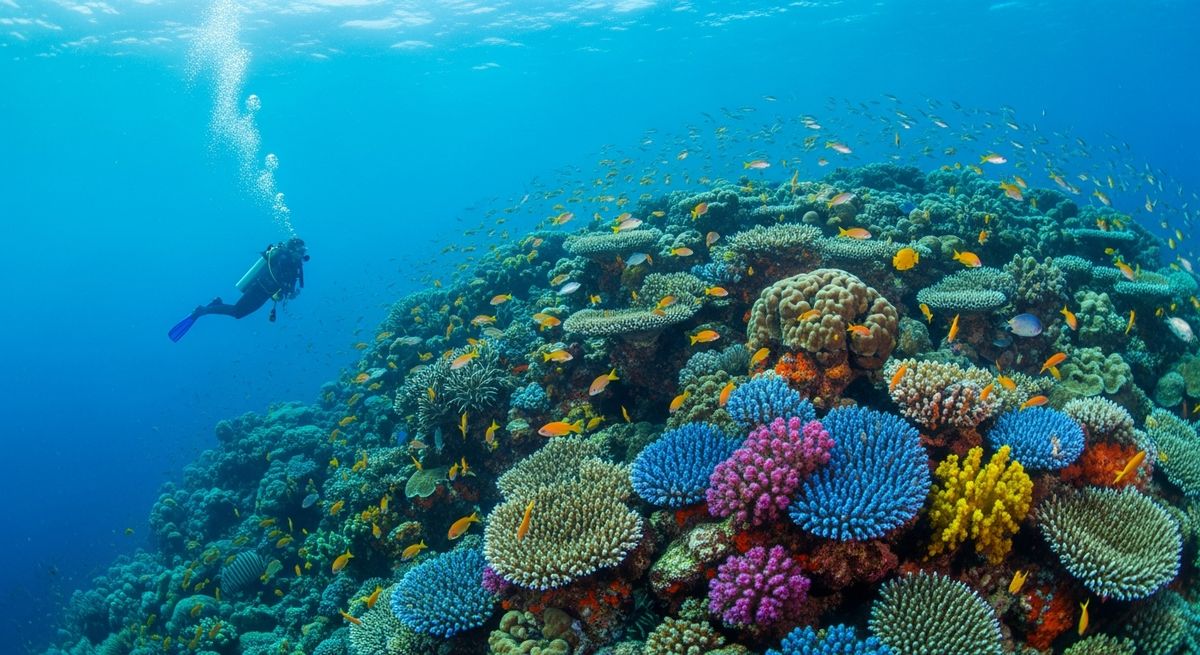
Whangaumu Bay
Protected Area
Tutukaka
Why dive here
With 79+ marine species recorded in the area - including blue sharks, dolphins, hammerhead sharks, humpback whales and orcas - Whangaumu Bay offers some of Poor Knights Islands's richest reef diving. Water ranges 15-22°C, warmest January, February, March.
Whangaumu Bay, a short drive from Tutukaka, is a spot we really appreciate for its quiet charm and ease of access. Forget deep dives here. This is all about exploring the nooks and crannies of the rocky shallows, typically hovering around 4-7 metres. We often see long-tailed stingrays gliding across the sandy patches and the occasional eagle ray flapping past, especially if you get in early. Our favourite approach here is kayak diving. You can paddle out, drop in, and let the gentle surge push you along the rock walls. The visibility averages around 4 metres, which means you’re always right on top of the action. Keep an eye out for snapper darting in and out of the kelp, and the vibrant colours of olive anemones clinging to the rocks. It’s not about big pelagics here, though a bronze whaler isn't unheard of. Instead, it’s about the smaller wonders: the nudibranchs, the small crayfish tucked into crevices, and the surprisingly intricate world of the kina and starfish. This is a brilliant site for newer divers or those who just want a relaxed, unpressured snorkel or shallow dive, focusing on macro life and the simple beauty of the New Zealand coast.
Nearest Dive Centres to Whangaumu Bay
Dive shops near Whangaumu Bay
Dive! Tutukaka
Moana Futures Ltd
DIVE NOW
Northland Dive
Reviews for Whangaumu Bay
Conditions
Ocean conditions, forecast and tides for Whangaumu Bay
Whangaumu Bay Ocean Conditions
Monthly averages for Whangaumu Bay, sourced from Open-Meteo marine data + Copernicus Marine (EU) - nearest station: Open-Meteo marine grid (-35.84, 174.61) (14km away)
October Averages
Sea Temperature
16°C
60°F · Range: 14.8–17.1°C
Current Speed
11.4 cm/s
Direction: SE (142.1°)
Chlorophyll-a
0.388 mg/m³
Moderate productivity
Salinity
35.44 PSU
Based on 4 years of monitoring data · Data sources: Open-Meteo marine data + Copernicus Marine (EU)
Plan & book
Ways to dive Poor Knights Islands, from day trips to liveaboards.
Day trips & courses
via GetYourGuideGuided dives, courses and snorkel trips with instant booking.
Find dive trips in Poor Knights IslandsPlaces to stay
via Booking.comHotels and dive resorts near Poor Knights Islands.
Search stays in Poor Knights IslandsDive insurance
Most travel insurance excludes or limits scuba. Check what you need before you go.
Dive insurance explainedPartner links: we may earn a commission if you book, at no extra cost to you. How we make money
Where to Stay near Whangaumu Bay
Prices from Booking.com. We may earn a commission at no extra cost to you.