Wild Beast Point
Protected Area
Poor Knights Islands
Why dive here
With 79+ marine species recorded in the area - including blue sharks, dolphins, hammerhead sharks, humpback whales and orcas - Wild Beast Point offers some of Poor Knights Islands's richest diving. Water ranges 15-22°C, warmest January, February, March.
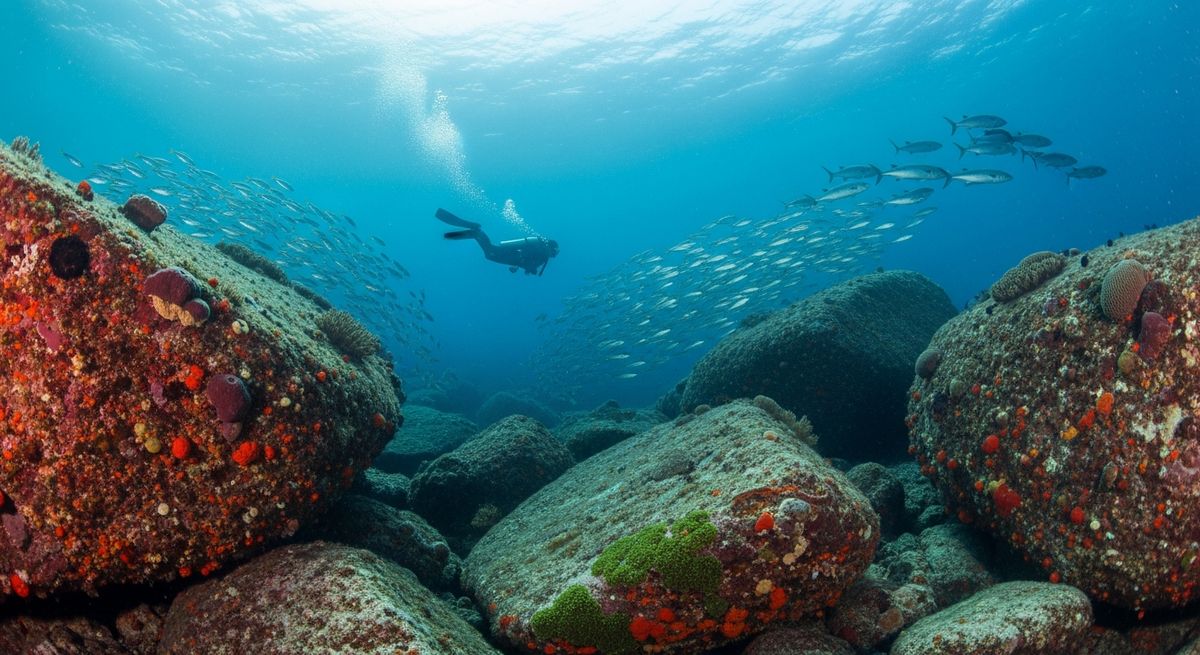
Wild Beast Point feels exactly like its name suggests: a wild, untamed corner of the Poor Knights. We’re talking proper drift diving here, where the currents dictate your journey, sweeping you past walls painted in hues of orange and purple. The maximum depth is only 17m, but it’s the constant flow of water that makes this place so exhilarating. You’ll often find yourself eye-level with schools of snapper or barracuda, their silver scales flashing as they hold their position in the current. We love this spot for its raw energy; it’s not a place for leisurely pottering. Instead, you're on the move, soaring along a vibrant reef face. Keep an eye out for the resident banded morwong and the occasional green wrasse darting between the crevices. Visibility can be a bit hit-or-miss, sometimes dropping to three metres, but even then, the sheer volume of life makes up for it. This dive suits those who embrace a bit of a thrill and aren't afraid to let the ocean take them where it wants to go. It’s a good one for anyone chasing pelagic encounters, even if a manta ray is a rare sight here, the possibility keeps you scanning the blue.
Nearest Dive Centres to Wild Beast Point
Dive shops near Wild Beast Point
Dive! Tutukaka
Northland Dive
Moana Futures Ltd
DIVE NOW
Reviews for Wild Beast Point
Conditions
Ocean conditions, forecast and tides for Wild Beast Point
Wild Beast Point Ocean Conditions
Monthly averages for Wild Beast Point, sourced from Open-Meteo marine data + Copernicus Marine (EU) - nearest station: Open-Meteo marine grid (-35.84, 174.61) (14km away)
October Averages
Sea Temperature
16°C
60°F · Range: 14.8–17.1°C
Current Speed
11.4 cm/s
Direction: SE (142.1°)
Chlorophyll-a
0.388 mg/m³
Moderate productivity
Salinity
35.44 PSU
Based on 4 years of monitoring data · Data sources: Open-Meteo marine data + Copernicus Marine (EU)
Plan & book
Ways to dive Poor Knights Islands, from day trips to liveaboards.
Day trips & courses
via GetYourGuideGuided dives, courses and snorkel trips with instant booking.
Find dive trips in Poor Knights IslandsPlaces to stay
via Booking.comHotels and dive resorts near Poor Knights Islands.
Search stays in Poor Knights IslandsDive insurance
Most travel insurance excludes or limits scuba. Check what you need before you go.
Dive insurance explainedPartner links: we may earn a commission if you book, at no extra cost to you. How we make money
Where to Stay near Wild Beast Point
Prices from Booking.com. We may earn a commission at no extra cost to you.