Andes Wreck
Protected Area
Nelson's Dockyard
Why dive here
With 229+ marine species recorded in the area - including barracuda, dolphins, dwarf minke whales, humpback whales and orcas - Andes Wreck offers some of Antigua South Coast's richest wreck diving. Water ranges 27-30°C, warmest August, September, October.
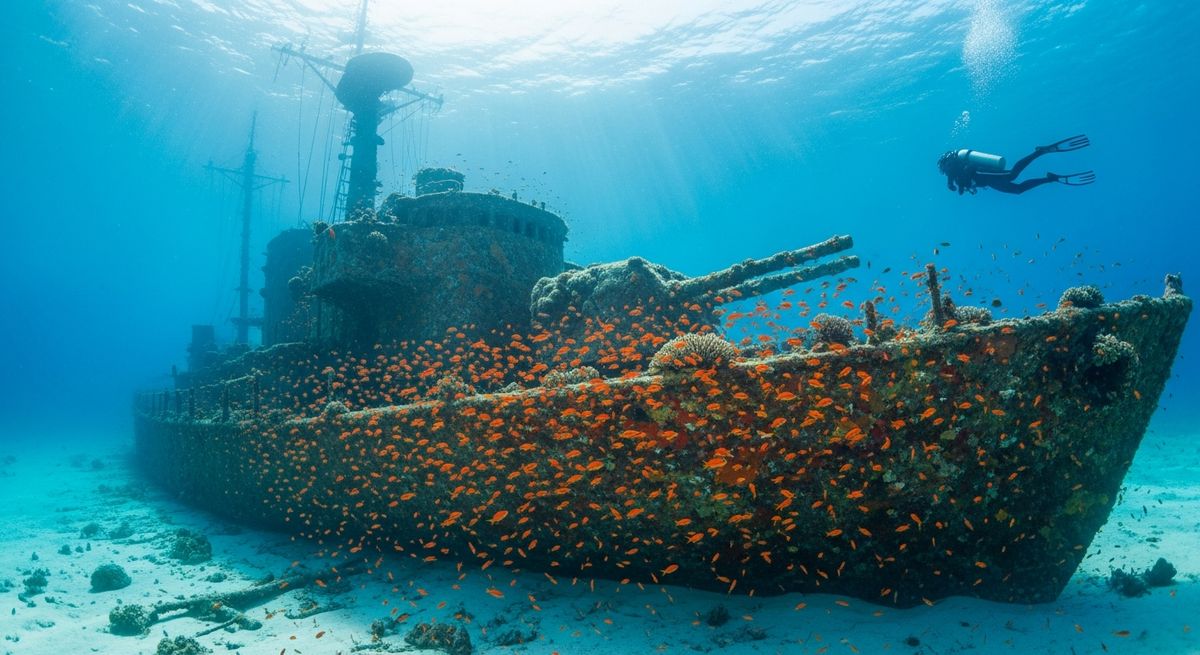
The Andes Wreck sits just off Antigua’s south coast, a three-masted bark that went down in 1905. It’s a great introduction to wreck diving, with a maximum depth of 20 metres, and truly beginner-friendly. We love how much of the original ship is still discernible, especially the stern. You can make out the deck structure, even some of the cabins, all heavily draped in soft corals and sponges now. We usually drop in and spend a good portion of the dive poking around the bow, which has fragmented into some interesting swim-throughs. Keep an eye out for Banded Cleaner Shrimp in the crevices, and we’ve often spotted a Marbled Moray or two peeking from the darker recesses. Visibility here is consistently decent, rarely dipping below 15 metres, which really lets you appreciate the scale of the wreck as you approach. Our favourite time to dive it is first thing in the morning; the light filters down beautifully through the masts, creating some dramatic silhouettes. This site just has a very peaceful, ancient feel to it, perfect for anyone looking to connect with a bit of maritime history, or just enjoy a relaxed exploration.
Typical Andes Wreck Dive Profile
Illustrative profile based on site depth and type. Actual dive profiles vary - always follow your dive computer and training.
Safety Notes
Wreck site - avoid penetration without wreck diving certification. Watch for sharp metal and entanglement hazards.
Andes Wreck Wreck History
Year Sunk
1905
Vessel Type
cargo ship
Cause
fire
Tonnage
1,315 GRT
The Andes was a proud, three-masted iron barque built in Glasgow in 1874, a testament to the golden age of sail. For decades, she plied the world's oceans, carrying cargo between continents. Her final voyage began in Trinidad in June 1905, her holds filled with a highly volatile cargo: 1,330 barrels of pitch destined for paving roads in Chile. This flammable material would ultimately seal her fate.
While at sea, the pitch cargo spontaneously combusted, and a fire broke out deep within the ship's hold. The crew fought bravely to contain the blaze, but the intense heat and flammable nature of the pitch made it an impossible battle. The captain steered the burning vessel towards Antigua, aiming for the safety of Deep Bay. The crew was forced to abandon ship as the fire raged, turning the Andes into a floating inferno. She burned for several days before finally succumbing and sinking into the calm waters of the bay.
Today, the wreck of the Andes is one of Antigua's most popular and beloved dive sites. Resting in shallow water between 8 and 20 meters, her broken hull is easily accessible to divers of all levels. Over a century beneath the waves has transformed the iron structure into a vibrant artificial reef. The ship's ribs and scattered plates are now encrusted with colorful corals and sponges, providing a home for schools of fish, moray eels, and countless crustaceans. It's a beautifully tragic site, where maritime history and marine life intertwine.
Nearest Dive Centres to Andes Wreck
Dive shops near Andes Wreck
View all dive centres in Antigua South CoastReviews for Andes Wreck
Conditions
Ocean conditions, forecast and tides for Andes Wreck
Andes Wreck Ocean Conditions
Monthly averages for Andes Wreck, sourced from Open-Meteo marine data - nearest station: Open-Meteo marine grid (17.01, -61.92) (1km away)
October Averages
Sea Temperature
30°C
86°F · Range: 28.7–31°C
Air Temperature
28°C
82°F
Wind Speed
5.82 m/s
11.3 knots
Atmospheric Pressure
1013 hPa
Based on 4 years of monitoring data · Data sources: Open-Meteo marine data
Plan & book
Ways to dive Antigua South Coast, from day trips to liveaboards.
Day trips & courses
via GetYourGuideGuided dives, courses and snorkel trips with instant booking.
Find dive trips in Antigua South CoastPlaces to stay
via Booking.comHotels and dive resorts near Antigua South Coast.
Search stays in Antigua South CoastDive insurance
Most travel insurance excludes or limits scuba. Check what you need before you go.
Dive insurance explainedPartner links: we may earn a commission if you book, at no extra cost to you. How we make money
Where to Stay near Andes Wreck
Prices from Booking.com. We may earn a commission at no extra cost to you.