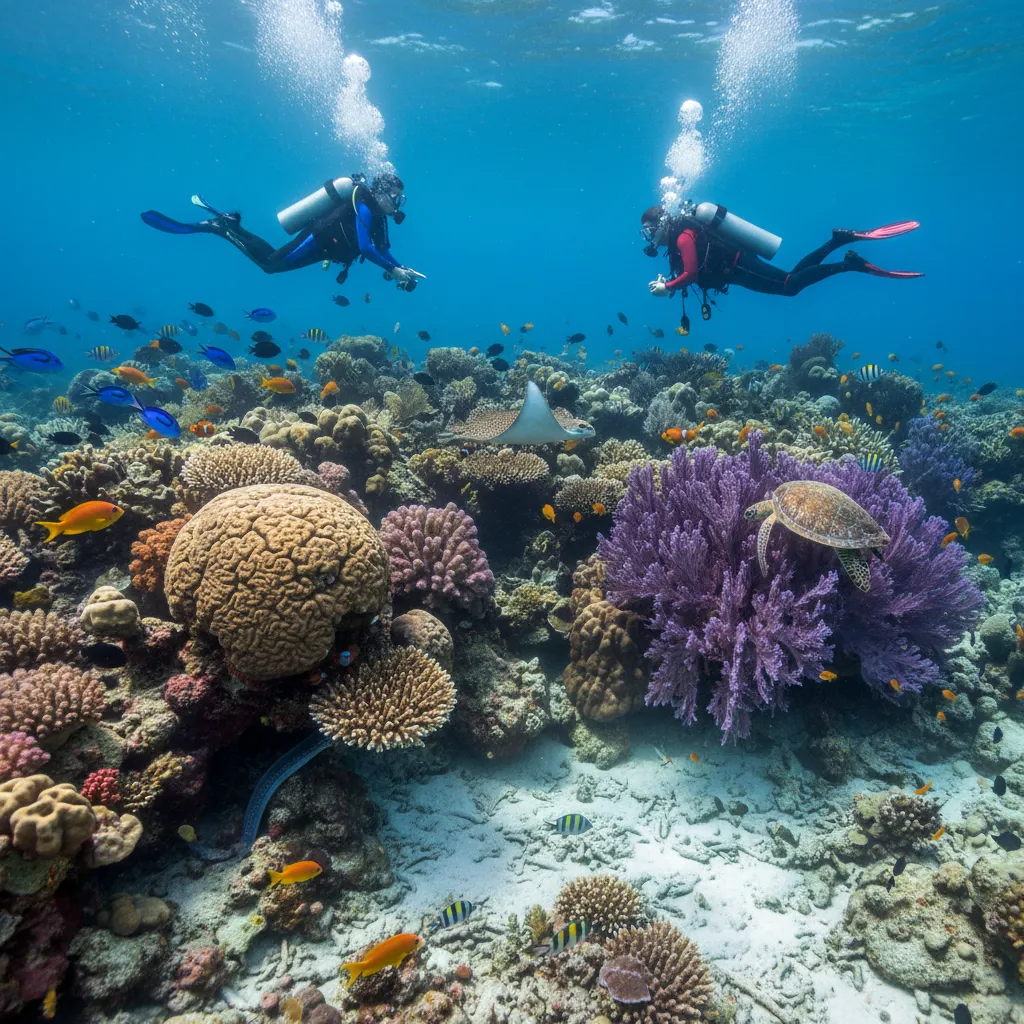
Diving in Antigua South Coast
Why dive here
Antigua South Coast offers some of Antigua & Barbuda's richest diving, with 229+ marine species recorded in the area - including barracuda, dolphins, dwarf minke whales, humpback whales and orcas. Water ranges 27-30°C, warmest August, September, October.
The Antigua South Coast is our pick for a more varied dive experience on the island, especially if you’re into poking around old wrecks. You get a solid mix here, from shallow patch reefs perfect for beginners to a few decent wrecks that offer a bit more to explore. We’ve always appreciated the calm conditions inside the bays, making for some truly relaxed dives. You'll find the usual Caribbean suspects-parrotfish grazing, angelfish darting through the gorgonians-but what really grabs our attention are the little guys. We often spot things like the Bluegold Goby perched on coral heads, or the tiny, elusive American Pugnose Pipefish if you really slow down and look. Our favourite site has to be the wreck of the *Andes*. It’s not a deep dive, around 8-10 meters, so you get heaps of bottom time. The ship is draped in soft corals, and we’ve seen schools of Grey Snapper swirling around the superstructure. Visibility averages around 15-20 metres, dropping a bit after heavy rain, but generally, it’s a bright, welcoming kind of dive. Stronger currents can be a factor further out, but most of the main sites are pretty sheltered. If you want a break from just reef, this is a good bet.
Antigua South Coast Dive Site Map
Dive sites and dive centres in Antigua South Coast
Antigua South Coast Dive Sites
18 dive sites in Antigua South Coast
Andes (Wreck)
The Andes wreck is probably our favourite shallow dive on Antigua’s south coast. It’s an old barque, sunk back in 1905, and now sits broken up across the seabed in Deep Bay, maxing out at 13 metres. We love how accessible it is; even with modest air consumption, you can really take your time poking around the ribs and hull plates that scatter the sandy bottom. You’ll find schools of grunts and snapper often hanging motionless inside the larger sections of the wreck, almost like they’re still sheltering in the cargo hold. Look closely on the coral-encrusted metalwork for little nudibranchs and flatworms. The resident batfish often sit camouflaged against the sand nearby, and we’ve often spotted stingrays fanning themselves into the sediment, so keep an eye out for their tell-tale outlines. Visibility averages around 11 metres, which is usually enough to appreciate the scale of the wreckage. It’s an easy, relaxing dive, perfect for photographers or anyone who enjoys a leisurely explore of a historic site without the pressure of depth or strong currents.
Andes (Wreck)
The Andes wreck is probably our favourite shallow dive on Antigua’s south coast. It’s an old barque, sunk back in 1905, and now sits broken up across the seabed in Deep Bay, maxing out at 13 metres. We love how accessible it is; even with modest air consumption, you can really take your time poking around the ribs and hull plates that scatter the sandy bottom. You’ll find schools of grunts and snapper often hanging motionless inside the larger sections of the wreck, almost like they’re still sheltering in the cargo hold. Look closely on the coral-encrusted metalwork for little nudibranchs and flatworms. The resident batfish often sit camouflaged against the sand nearby, and we’ve often spotted stingrays fanning themselves into the sediment, so keep an eye out for their tell-tale outlines. Visibility averages around 11 metres, which is usually enough to appreciate the scale of the wreckage. It’s an easy, relaxing dive, perfect for photographers or anyone who enjoys a leisurely explore of a historic site without the pressure of depth or strong currents.
Andes Wreck
The Andes Wreck sits just off Antigua’s south coast, a three-masted bark that went down in 1905. It’s a great introduction to wreck diving, with a maximum depth of 20 metres, and truly beginner-friendly. We love how much of the original ship is still discernible, especially the stern. You can make out the deck structure, even some of the cabins, all heavily draped in soft corals and sponges now. We usually drop in and spend a good portion of the dive poking around the bow, which has fragmented into some interesting swim-throughs. Keep an eye out for Banded Cleaner Shrimp in the crevices, and we’ve often spotted a Marbled Moray or two peeking from the darker recesses. Visibility here is consistently decent, rarely dipping below 15 metres, which really lets you appreciate the scale of the wreck as you approach. Our favourite time to dive it is first thing in the morning; the light filters down beautifully through the masts, creating some dramatic silhouettes. This site just has a very peaceful, ancient feel to it, perfect for anyone looking to connect with a bit of maritime history, or just enjoy a relaxed exploration.
Cades Reef
Cades Reef. Now, this is what we mean when we talk about Caribbean diving. It’s a proper barrier reef, running for miles, and we always suggest hitting a few different spots along its length. We usually head out in the morning, when the light really punches through the water, especially over the shallower patches. What you get here is pure, unadulterated reef action. We've seen schools of snapper so thick they cast shadows, and the barracuda here are some of the biggest we’ve encountered in the Lesser Antilles – proper torpedoes just hanging in the blue. Keep an eye out for the smaller stuff too; those tiny Pearl Blennies are always a joy to find peeking out of the coral. The drift along the wall is gentle most days, making it a relaxing dive but still engaging enough that you feel like you’re really covering some ground. It’s a great pick for intermediate divers who want to immerse themselves in a healthy, sprawling reef ecosystem without battling big currents.
Cades Reef
Cades Reef is a proper Caribbean classic, and it’s always one of our first stops when we’re back in Antigua. It’s a long barrier reef, a really healthy stretch of hard corals that starts shallow and slopes down to about 25 metres. We love that it’s usually pretty calm here, making it perfect for newer divers or anyone who just wants to drift along and take it all in without too much effort. Our favourite part has to be the sheer volume of schooling fish. You’ll fin through clouds of grunts and snappers, and the way the light filters through them is just magic. Keep an eye out for green turtles munching on the seagrass in the shallows; they’re often completely unfazed by divers. We’ve also had some cracking encounters with nurse sharks tucked under ledges, and the morays here, particularly the mottled congers, seem a bit bolder than elsewhere. The reef itself has some lovely overhangs and swim-throughs, not complex, but enough to make it interesting. Go early in the morning before the day boats arrive for the quietest dive.
CHRISTIANA
The Christiana wreck, just off Curtain Bluff, is one of our favourite shallow dives on Antigua’s south coast. It’s a 13-meter runabout, sunk in '76, and honestly, it’s just a lovely, relaxed dive. We love the way the light filters down through the three-meter shallows, dappling the deck. You can really get a sense of the boat, even though it’s broken up now; the bow and stern are pretty distinct. What we really enjoy here is the resident population of squirrelfish, their big eyes watching you from the shadows, and we always spot a few lobsters tucked away. The whole wreck is encrusted with sponges and corals – purples, yellows, and oranges making it incredibly photogenic. It’s a perfect spot for newer divers, or anyone who just wants a chill dive without strong currents. We’d suggest going in the morning; the light is best then, and you often have the place to yourself.
DELORIS
The Deloris isn’t deep, not by any stretch. We’re talking a metre or so, a snorkel site really, but what a snorkel site. This 39-metre motor vessel ran aground back in ‘85 and she’s been slowly coming apart ever since, creating this fascinating playground just below the surface. You’ll fin over twisted metal, sections of hull now completely colonised by small corals and sponges. Sunlight slices through the water, illuminating schools of tiny baitfish that shimmer around the wreck’s remaining structure. We love exploring the exposed ribs of the Deloris, imagining her full form while watching parrotfish graze on the algae coating her. Look closely and you’ll spot juvenile snapper darting in and out of the crevices. It’s not about grand marine encounters here, it’s about the intimate details, the way the ocean reclaims man-made objects. For photographers, especially wide-angle snappers, the light play is just fantastic. Go early in the morning for the best visibility and fewer other snorkelers. It’s a gentle spot, perfect for a relaxed dip after a more strenuous dive.
ELCO
Okay, so the ELCO is a bit of a departure from your typical Antiguan reef dive. This dredger, scuttled back in '89, sits right in the shallows, making it more of a snorkel or very, very shallow dive site. We’re talking a meter or less of depth here, so leave the heavy gear on the boat. What you get instead is a fantastic opportunity to really poke around the superstructure, which still has some decent integrity despite the years. Small fish dart in and out of the metalwork, and we've seen everything from juvenile snapper to tiny crabs making homes in the nooks. It's an ideal spot for macro photography, or for less experienced snorkelers to get a feel for exploring a wreck without any depth concerns.
Horse Shoe Reef
Horse Shoe Reef on Antigua’s south coast is one of those spots we always try to hit. It’s not just the sheer number of species here, over 340 last we checked, it’s the way the reef is laid out. You’ve got these gentle slopes where the Finger Coral grows in thick, almost like an underwater garden. We’ve drifted along, spotting Sharpnose Pufferfish peeking from crevices and the occasional Mottled Conger Moray slinking back into its hole. What really makes it for us, though, are the tiny, often overlooked critters. Keep your eyes peeled for Diamond Blennies, they’re usually perched on coral heads, tiny little faces watching you pass. And the Stargazers – both Arrow and Saddle – often just partially buried, eyes poking up from the sand. We usually find them near the reef’s edge, where the sand meets the coral. Look for the faint outline in the sand. This site is perfect for divers who appreciate taking their time and really observing the smaller details rather than just whizzing past. You’ll see plenty of Jacks and Grey Snappers schooling too, but our favourite moments here are always with the little guys. It’s generally a pretty relaxed dive, so great for extending your bottom time and just soaking it all in.
JETIAS (POSSIBLY)
The JETIAS, or what we strongly suspect is the JETIAS, sits right there on Antigua’s south coast, barely below the surface. A peculiar spot, given its reported status as a ‘dangerous wreck’, yet its deepest point barely skims two metres. This isn't a deep dive, not even a dive by many definitions, but it’s a brilliant snorkel or free-diving playground. We love it for its accessibility; you can practically reach out and touch it from a paddleboard. What you're really looking at is a barge, long since given over to the sea. Rusting metal plates have become a makeshift apartment block for juvenile snapper and sergeant majors. Sunlight dapples through the shallow water, illuminating the wreck's skeletal remains, highlighting every barnacle and the occasional curious parrotfish nibbling at algae. It’s perfect for practicing breath-hold dives, or just floating above, watching the resident critters dart in and out of the corroded hull. Our favourite detail is how the light plays on the metal, creating these shimmering, almost kaleidoscopic patterns on the seafloor beneath. It’s a quiet, reflective spot, ideal for an afternoon when you want something less structured than a traditional dive.
Middle Reef
Middle Reef is one of those places you’ll want to revisit, especially if you’re staying on Antigua’s south coast. It’s got a bit of everything we look for in a good Caribbean reef dive: a healthy spread of stony corals, some decent relief, and a consistent cast of characters. We particularly love the shallower sections here, around 10 to 12 metres. That’s where you’ll find the blackcheek blennies popping their heads out of tiny holes, and the eyed flounders, masters of camouflage, waiting on sandy patches. Head a little deeper, and the fire coral starts to make its presence known – a good reminder to watch your buoyancy, though it adds a nice splash of orange and yellow to the landscape. Schools of snapper often hold steady against the gentle surge, and we’ve often spotted coney and greater soapfish hovering near coral heads. For the macro lovers, keep an eye out for the frecklefin gobies and pearl blennies; they’re small, but they’re there. The visibility here is usually pretty reliable, making it a relaxed dive that’s good for shaking off the rust or just enjoying a calm afternoon underwater.
Mill Reef Club
Mill Reef Club always feels like a bit of a secret, tucked away on Antigua's south coast. We love it for the sheer density of interesting, smaller critters you’ll spot if you just slow down. Forget the big pelagics here; this site is all about the details. We've often spent twenty minutes just watching a dwarf frogfish blend seamlessly into the sponge, or laughing at the antics of a pair of mottled jawfish popping their heads out of their burrows. The coral itself is a healthy mix, some robust golfball corals forming a good backdrop. Keep an eye out for the blennies – we've seen Redlip, Spinyhead, and Pearl Blennies all tucked into crevices. The fringed filefish here are particularly bold, letting you get close enough to see the texture of their skin. Dive this site mid-morning, when the sun angle really brings out the colours and makes spotting those camouflaged creatures a little easier. It's a relaxed dive, usually with minimal current, perfect for photographers or anyone who appreciates the quieter side of reef life.
Show all 18 dive sites in Antigua South Coast
Antigua South Coast Dive Centres
2 dive shops and operators in Antigua South Coast
Ocean Wildlife in Antigua South Coast
229 species recorded in Antigua South Coast
Antigua South Coast Daylight & Sunrise/Sunset
Sunrise and sunset times for Antigua South Coast, calculated from coordinates
Today - Sunday 11 October
Sunrise
06:00
Sunset
17:51
Daylight
11h 51m
Golden Hour
17:22
First light (dawn) at 05:38 · Last light (dusk) at 18:12
Monthly Averages
| Month | Sunrise | Sunset | Daylight |
|---|---|---|---|
| Jan | 06:41 | 17:54 | 11h 13m |
| Feb | 06:35 | 18:10 | 11h 35m |
| Mar | 06:17 | 18:18 | 12h 1m |
| Apr | 05:53 | 18:24 | 12h 30m |
| May | 05:37 | 18:32 | 12h 55m |
| JunLongest | 05:35 | 18:43 | 13h 8m |
| Jul | 05:42 | 18:46 | 13h 3m |
| Aug | 05:52 | 18:35 | 12h 43m |
| Sep | 05:57 | 18:12 | 12h 15m |
| OctNow | 06:01 | 17:48 | 11h 47m |
| Nov | 06:12 | 17:34 | 11h 21m |
| DecShortest | 06:30 | 17:37 | 11h 7m |
Times are approximate local times based on longitude. Actual times may vary slightly depending on the exact timezone observed in Antigua South Coast.
Where to Stay near Antigua South Coast
Prices from Booking.com. We may earn a commission at no extra cost to you.
Marine Protected Areas near Antigua South Coast
14 protected areas near Antigua South Coast - please respect local regulations when diving
Redonda
Northeast coast
Low Bay Sanctuary
Two Foot Bay Sanctuary
Codrington Lagoon
Codrington Lagoon
Palaster Reef Sanctuary
Nelson's Dockyard
Goat Point Sanctuary
Cades Bay
Diamond Reef
Palaster Reef
Showing 12 largest of 14
Getting to Antigua South Coast
Osbourn
Gerald's Park
Basseterre
Plan & book
Ways to dive Antigua South Coast, from day trips to liveaboards.
Day trips & courses
via GetYourGuideGuided dives, courses and snorkel trips with instant booking.
Find dive trips in Antigua South CoastPlaces to stay
via Booking.comHotels and dive resorts near Antigua South Coast.
Search stays in Antigua South CoastDive insurance
Most travel insurance excludes or limits scuba. Check what you need before you go.
Dive insurance explainedPartner links: we may earn a commission if you book, at no extra cost to you. How we make money