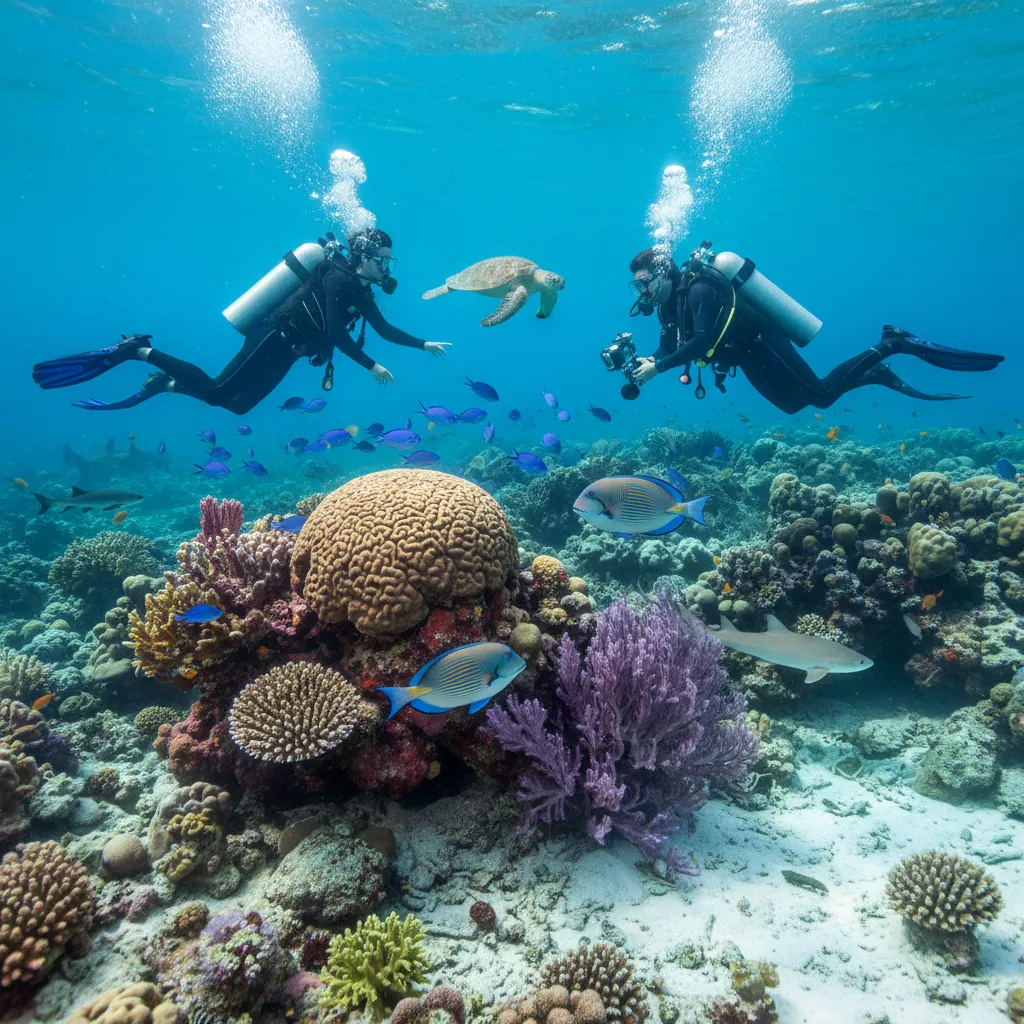
Diving in Barbuda
Why dive here
Barbuda offers some of Antigua & Barbuda's richest diving, with 155+ marine species recorded in the area - including orcas, sea turtles, sperm whales and pufferfish. Water ranges 27-30°C, warmest August, September, October.
Barbuda. Just saying the name conjures images of empty beaches, and that’s pretty much what you get underwater too. This isn’t a place you just show up and dive; there are no dive centres here, so you’ll be coming over from Antigua on a private charter, which, honestly, is part of the appeal. You’re trading convenience for genuine remoteness. The reefs here feel untouched. We’re talking about finding enormous barrel sponges and gorgonians the size of dinner tables, not the usual stunted growth you see at busier spots. We love the dramatic drop-offs on the north side, where the reef really plunges into the deep blue. Keep an eye out for larger pelagics moving through there. Visibility is generally excellent, often pushing 30 metres, so you can really appreciate the scale. Our favourite site is probably the wreck of the George S. This old freighter is a magnet for schooling fish and we’ve seen some seriously chunky tiger groupers lurking in its shadows. On the deeper edges, we’ve even spotted gulper sharks, which is a real treat if you’re comfortable on those deeper dives. If you’re lucky enough to be there during nesting season, you might even see a Leatherback Sea Turtle cruising past. The currents can pick up, so it’s definitely one for the intermediate diver, but the reward is worth the effort. It’s a proper expedition, not just another dive.
Barbuda Dive Site Map
Dive sites and dive centres in Barbuda
Barbuda Dive Sites
12 dive sites in Barbuda
AMERSFOORT
The *Amersfoort* isn't about depth; it's about story. Sunk back in 1927, this old steamship lies spread across the seafloor in just three metres of water, making it a dream for snorkelers and divers who want to take their time. We love drifting over the scattered remains of its hull, imagining the ship's final moments. You’ll see the outlines of bulkheads, twisted metal plates, and where the superstructure once stood, all now encrusted with sponges and soft corals. It’s not about big pelagics here, but rather the smaller, more intricate life – parrotfish grazing on algae, tiny blennies peering from crevices, and juvenile snapper darting through the shadows. The shallow depth means fantastic light penetration, especially around midday, painting the wreck in blues and greens. It’s our favourite spot in Barbuda for a truly relaxed exploration, perfect for photographers or anyone who just wants to soak up a piece of history without worrying about bottom time. Go early to avoid any afternoon chop.
Cobb Reef
Cobb Reef off Barbuda is a decent drift dive, often with a gentle current pushing you along a sloping coral wall. We've seen plenty of nurse sharks here, often tucked into the overhangs, and large barrel sponges are common. It's a good spot for a relaxed dive if you're looking for something straightforward and don't mind a lack of big pelagics.
CROYDON
Croydon is a wreck dive, but it’s probably not what you’re picturing. This isn’t some deep, intact hulk. The SS Croydon, a steamship that went down in 1919, lies in just 5 metres of water off Barbuda’s coast. That makes it incredibly accessible, a real treat for those who want to spend their time exploring without worrying about bottom time. We love Croydon for its sheer size and the way the Caribbean has reclaimed it. It’s been down there for over a century, so the hull, though broken, is absolutely carpeted in sponges and colourful soft corals. You’ll weave through massive sections of collapsed plating, past huge anchor chains, and into what used to be cargo holds, now open to the sky. Look closely among the nooks and crannies – you’ll spot moray eels peering out, plenty of snapper, and schools of grunts ghosting through the structure. It’s a photographer’s dream, especially on a sunny day when the light penetrates everywhere. Our pick for an afternoon dive, when the sun is lower and creates incredible shafts of light through the wreck. It’s shallow enough for snorkelers to enjoy too, making it a brilliant spot for mixed groups.
ELITE
The ELITE wreck off Barbuda is less about the grand structure and more about history and the critters it now hosts. Sunk way back in 1874, this schooner is well broken up, scattered across a shallow patch of Palaster Reef. At a maximum depth of just 5 meters, it’s a brilliant spot for an extended snorkel or a very relaxed dive, especially for those new to wrecks. You won't penetrate anything here, but we found plenty of small fish darting amongst the old timbers and some lovely colourful corals growing over the ribs. It's a gentle drift over history, not an adrenaline rush.
Goat Reef
Goat Reef is a solid Barbuda dive, often overlooked for its flashier neighbours. We typically find healthy coral formations here, with the usual suspects like parrotfish and snapper going about their day. It’s a good choice for a relaxed second dive, or if you're keen to escape the crowds you might find elsewhere. Come for the quiet, not for anything especially dramatic.
Palaster Reef
Palaster Reef is an interesting dive, one that we’ve always enjoyed on Barbuda’s calmer days. It’s not a deep spot, mostly a gentle slope of hard coral formations, but that makes it ideal for really taking your time. We love drifting along the sand channels here, especially in the late afternoon. That’s when you often spot the little post horn squid, almost translucent, hovering just above the sand, or sometimes a red grouper eyeing you from under a coral ledge. What makes Palaster shine isn’t the big pelagics – you’re not likely to see a sperm whale here, despite what some older records might suggest – it's the sheer density of smaller, fascinating critters. Keep your eyes peeled for cardinal cones moving slowly across the substrate, or the tiny, intricate shells like the modest triphora clinging to coral. We’ve spent entire dives just in a 20-meter stretch, finding new things with every pass. It’s a photographer’s dream if macro is your game, and fantastic for newer divers who want to build their confidence without strong currents.
Palaster Reef
Palaster Reef is one of those spots that really sticks with you from a Barbuda trip. We love how the reef starts shallow, around 5 metres, right in a sprawling elkhorn coral garden. It’s perfect for just floating along, watching the light play through the branches. We’ve seen juvenile reef sharks cruising through the coral in the mornings here, and those big Caribbean spiny lobsters are always tucked into crevices. As you drop deeper towards 20 metres, the reef structure shifts, becoming more about overhangs and ledges. That's where we tend to find the bigger red groupers lurking. Keep an eye out for smaller stuff too, especially the nudibranchs on the coral, and those funny little longspine squirrelfish peeking out. The visibility is usually fantastic, making it easy to just drift and soak it all in. It’s an intermediate dive, straightforward, with a gentle current most days, making it ideal for divers who appreciate healthy coral and a relaxed pace. This isn't a high-adrenaline drift, but a proper reef immersion.
PIERRE KUYPER
Pierre Kuyper isn't your typical Caribbean wreck dive. Forget huge metal hulls and engine rooms; this is an exercise in maritime archaeology and coral reclamation. We’re talking about a barque that ran aground in 1874, the captain famously doubting his chronometer, which, ironically, was spot on. What you find now, in a mere ten metres of water, are scattered timbers and plates, completely overgrown. It’s less about penetration and more about tracing the ghostly outline of a ship through fields of soft coral. Look closely and you’ll find sections of the hull acting as perfect apartment blocks for lobsters and grumpy moray eels. We love how the reef has just completely swallowed the wreck; it’s a living, breathing part of the ecosystem now, a testament to nature's relentless push. Our favourite time to visit is mid-morning, when the sun is high and bright, illuminating the sandy patches between the coral mounds and making the colours pop. It’s an easy dive, perfect for photographers who enjoy macro life, or anyone looking for a relaxed exploration with a real sense of history.
POLROSA
The Polrosa, a hulking mailboat that met its end in 1915, is less a wreck dive and more an underwater exploration of history. We love it because it’s shallow, only ten metres deep, meaning you get plenty of bottom time to really soak it all in. The sheer size of this thing is impressive – over a hundred metres long – and it’s broken up enough that you can still make out its form without feeling like you’re just swimming over a pile of scrap. What we really enjoy are the big structural pieces. Massive plates of steel, some bent at impossible angles, are now completely overgrown with sponges and soft corals. Look closely for the schools of grunts and snappers that hang out in the shadowy recesses. We often spot moray eels tucked away, just their heads peeking out. It’s a great site for photographers who appreciate the drama of a large, historically significant wreck. You can spend a whole dive just picking out different sections, imagining its journey from Liverpool before Barbuda claimed it.
RED JACKET
Alright, let's talk about the *Red Jacket* in Barbuda. We love this site not just for the wreck itself, but for the story it tells and how time has really softened its edges. It’s a shallow dive, maxing out at 9 meters, which means plenty of bottom time to really explore. We’re talking about a large, wooden sailing ship from the mid-1800s, completely broken apart, spread out over the sand. You won’t see a perfectly intact hull, but instead, an incredible scatter of timbers and ship structure. Picture sunlight filtering down through just a few meters of water, illuminating ancient, dark wood. It feels less like a shipwreck and more like an archaeological dig. Nurse sharks often sleep tucked under the larger sections, completely unbothered, and we’ve found green morays peering out from gaps in the planks. Schools of French grunts and snapper swirl around the debris, completely at home. This site is brilliant for photographers, especially macro fans, who can spend ages picking through the details of the timbers and the critters that have made it their home. It's calm, generally current-free, and an easy dive, making it one of our favourite Barbuda spots for a relaxed afternoon.
The Pillars of Hercules
The Pillars of Hercules really does feel like diving through a submerged ancient ruin, more so than just a jumble of rocks. We love the way the light filters down through the gaps in those massive limestone columns, creating these shifting patterns on the sandy bottom, almost like a spotlight searching for something. You’re weaving through archways and tunnels here, constantly looking up to appreciate the sheer scale of the rock. It’s an intermediate dive, yes, but mostly because of the sometimes-surprising surge you can get pushing you around the pillars. Keep an eye on the forecast. We’ve found the best time to visit is mid-morning, once the sun's high enough to really illuminate the topography. Visibility often hits 20 meters, letting you appreciate the grand scale of the place. Keep an eye out for Red Groupers tucked into crevices, and we’ve even spotted Longspine Squirrelfish flitting in the shadows. But honestly, it's the structure itself that’s the main draw. It’s not a super colourful reef, but the drama of the geology makes up for it. Dive it slowly, give yourself time to drift through the swim-throughs, and don’t forget to look up. It's a proper adventure for divers who appreciate unique underwater landscapes.
VICTOR
Victor isn't your typical Caribbean wreck dive, and that's precisely why we love it. Sunk way back in 1874, this barque lies in just five metres of water off Palaster Reef, a mere six miles southeast of Barbuda's Martello Tower. It’s an easy, shallow dive, more of a snorkel really, making it perfect for newer divers or those who prefer to stretch out their bottom time. There isn't a whole lot of intact structure left – the ocean has done its work over 150 years. What you'll find instead is a scattering of timbers, iron fastenings, and the ghostly outline of a ship, now completely encrusted. We’ve spent hours just poking around, imagining the ship's final moments. Look closely and you'll spot parrotfish nibbling on the coral-covered remains, damselfish flitting between crevices, and sometimes, a sleepy nurse shark tucked under a larger piece of wreckage. The shallow depth means fantastic natural light, making the colours pop even on an overcast day. It’s not about penetration or huge intact sections; it’s about history, easy exploration, and seeing how nature reclaims things, slowly, beautifully.
Barbuda Dive Centres
No dive centres listed in Barbuda yet. Browse all dive centres.
Ocean Wildlife in Barbuda
155 species recorded in Barbuda
Barbuda Daylight & Sunrise/Sunset
Sunrise and sunset times for Barbuda, calculated from coordinates
Today - Sunday 11 October
Sunrise
06:00
Sunset
17:50
Daylight
11h 50m
Golden Hour
17:21
First light (dawn) at 05:38 · Last light (dusk) at 18:12
Monthly Averages
| Month | Sunrise | Sunset | Daylight |
|---|---|---|---|
| Jan | 06:41 | 17:52 | 11h 11m |
| Feb | 06:35 | 18:09 | 11h 33m |
| Mar | 06:17 | 18:18 | 12h 1m |
| Apr | 05:52 | 18:24 | 12h 31m |
| May | 05:36 | 18:33 | 12h 57m |
| JunLongest | 05:33 | 18:44 | 13h 11m |
| Jul | 05:41 | 18:46 | 13h 6m |
| Aug | 05:50 | 18:35 | 12h 45m |
| Sep | 05:56 | 18:12 | 12h 16m |
| OctNow | 06:01 | 17:47 | 11h 46m |
| Nov | 06:13 | 17:32 | 11h 19m |
| DecShortest | 06:30 | 17:35 | 11h 5m |
Times are approximate local times based on longitude. Actual times may vary slightly depending on the exact timezone observed in Barbuda.
Where to Stay near Barbuda
Prices from Booking.com. We may earn a commission at no extra cost to you.
Marine Protected Areas near Barbuda
14 protected areas near Barbuda - please respect local regulations when diving
Redonda
Northeast coast
Low Bay Sanctuary
Two Foot Bay Sanctuary
Codrington Lagoon
Codrington Lagoon
Palaster Reef Sanctuary
Nelson's Dockyard
Goat Point Sanctuary
Cades Bay
Diamond Reef
Palaster Reef
Showing 12 largest of 14
Getting to Barbuda
Codrington
Osbourn
Gerald's Park
Plan & book
Ways to dive Barbuda, from day trips to liveaboards.
Day trips & courses
via GetYourGuideGuided dives, courses and snorkel trips with instant booking.
Find dive trips in BarbudaPlaces to stay
via Booking.comHotels and dive resorts near Barbuda.
Search stays in BarbudaDive insurance
Most travel insurance excludes or limits scuba. Check what you need before you go.
Dive insurance explainedPartner links: we may earn a commission if you book, at no extra cost to you. How we make money