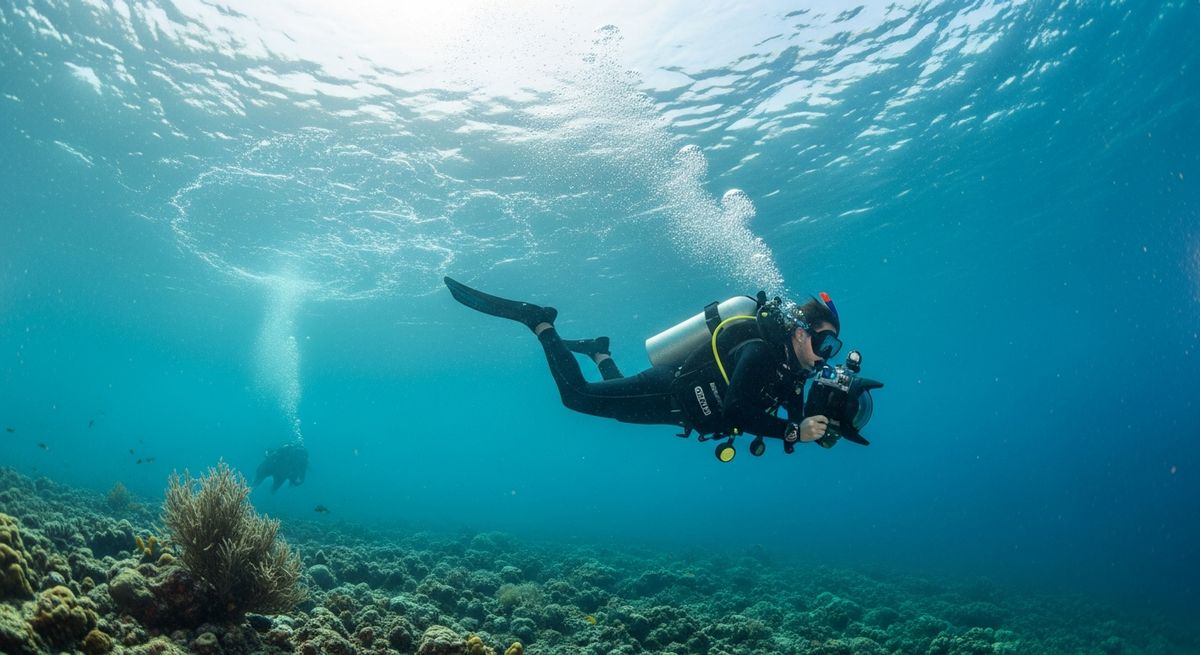
Bull Run
Why dive here
With 367+ marine species recorded in the area - including barracuda, dolphins, dwarf minke whales, humpback whales and nurse sharks - Bull Run offers some of Abaco's richest drift diving. Water ranges 24-30°C, warmest July, August, September.
Bull Run, just a quick hop from the Bimini Big Game Club, is a site we often talk about. It’s got a reputation for sharks, a big draw for some, a reason for others to consider cage diving. We’re talking blacktips almost guaranteed, with nurse and lemon sharks making regular appearances. But the main event, especially December through March, can be the bull sharks. It's a shallow dive, around 17 meters, good for newer divers keen to see some serious predators. We’d suggest going with an operator who focuses on responsible diving here; it makes all the difference.
Typical Bull Run Dive Profile
Illustrative profile based on site depth and type. Actual dive profiles vary - always follow your dive computer and training.
Safety Notes
Drift dive - carry a surface marker buoy (SMB) and stay with your group. Brief the current direction before entry.
Always perform a 3-minute safety stop at 5m before surfacing.
Reviews for Bull Run
Conditions
Ocean conditions, forecast and tides for Bull Run
Bull Run Ocean Conditions
Monthly averages for Bull Run, sourced from NOAA NDBC + Copernicus Marine (EU) - nearest station: 8722670 - Lake Worth Pier, FL (297km away)
October Averages
Sea Temperature
28°C
83°F · Range: 25.1–30.8°C
Air Temperature
27°C
80°F
Current Speed
4.47 cm/s
Direction: NW (296.6°)
Chlorophyll-a
0.047 mg/m³
Very clear (oligotrophic)
Salinity
36.54 PSU
Wind Speed
5.4 m/s
10.5 knots
Atmospheric Pressure
1014.5 hPa
Visibility
22 nmi
Based on 5 years of monitoring data · Data sources: NOAA NDBC + Copernicus Marine (EU)
Plan & book
Ways to dive Abaco, from day trips to liveaboards.
Day trips & courses
via GetYourGuideGuided dives, courses and snorkel trips with instant booking.
Find dive trips in AbacoPlaces to stay
via Booking.comHotels and dive resorts near Abaco.
Search stays in AbacoDive insurance
Most travel insurance excludes or limits scuba. Check what you need before you go.
Dive insurance explainedPartner links: we may earn a commission if you book, at no extra cost to you. How we make money
Where to Stay near Bull Run
Prices from Booking.com. We may earn a commission at no extra cost to you.