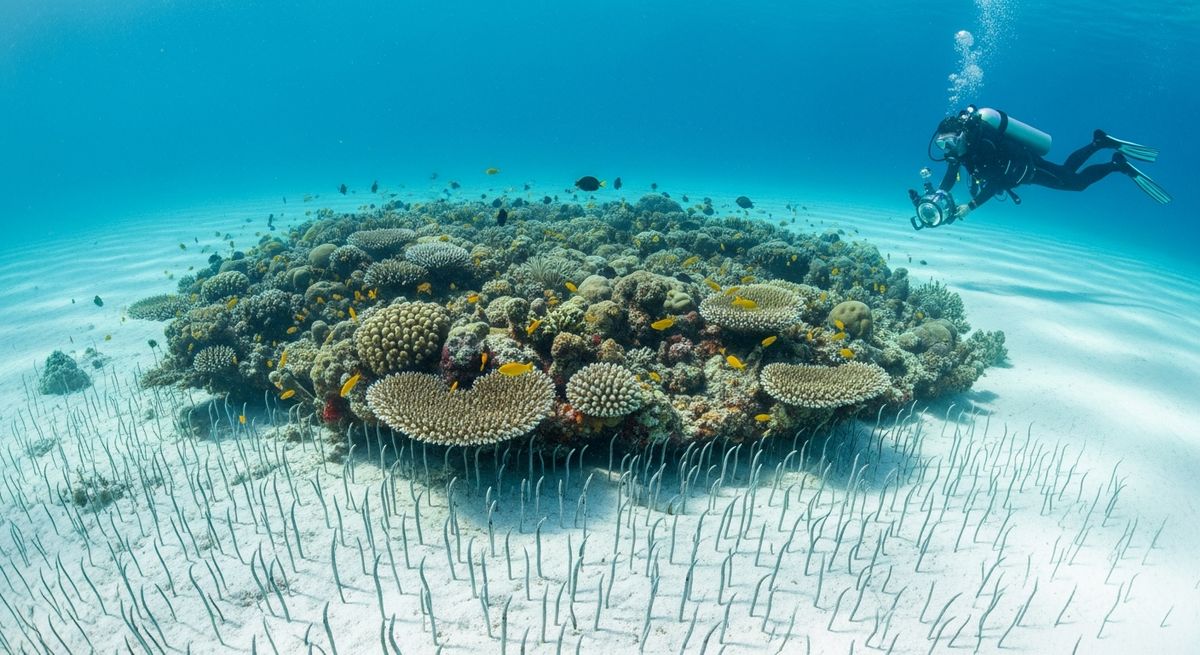
Pamir, wreck
Protected Area
Folkstone
Why dive here
With 376+ marine species recorded in the area - including barracuda, dolphins, humpback whales, octopuses and orcas - Pamir, wreck offers some of West Coast's richest reef diving. Water ranges 27-30°C, warmest August, September, October.
The Pamir, off Barbados’ west coast, is one of those wrecks we keep coming back to. It’s not a deep dive, maxing out around 16m, but what it lacks in depth it makes up for in character. Dropping down, you first pick out the stern, sitting upright and surprisingly intact. We love exploring the cargo holds, where shafts of light pierce the gloom, illuminating schools of glasseye snapper and the occasional spotted trunkfish peeking from crevices. Our favourite part is the bow, shallower at around 8m, where the deckhouse is still discernibly shaped. Look closely for tiny blackedge triplefins flitting about the decaying metalwork and watch for elusive mushroom scorpionfish camouflaged on the hull. Visibility averages a comfortable 14m, giving you plenty of time to soak in the details. It's an ideal site for newer wreck divers to get a feel for penetration in the open holds, and photographers will find endless compositions. We often combine it with a nearby reef for a solid two-tank day.
Nearest Dive Centres to Pamir, wreck
Dive shops near Pamir, wreck
Reefers & Wreckers
BarbadoScuba
Hightide Watersports
Salt & Sea Scuba
Reviews for Pamir, wreck
Conditions
Ocean conditions, forecast and tides for Pamir, wreck
Pamir, wreck Ocean Conditions
Monthly averages for Pamir, wreck, sourced from Open-Meteo marine data - nearest station: Open-Meteo marine grid (13.26, -59.65) (2km away)
October Averages
Sea Temperature
30°C
86°F · Range: 28.9–31.2°C
Air Temperature
28°C
82°F
Wind Speed
5.94 m/s
11.5 knots
Atmospheric Pressure
1012.2 hPa
Based on 4 years of monitoring data · Data sources: Open-Meteo marine data
Plan & book
Ways to dive West Coast, from day trips to liveaboards.
Day trips & courses
via GetYourGuideGuided dives, courses and snorkel trips with instant booking.
Find dive trips in West CoastPlaces to stay
via Booking.comHotels and dive resorts near West Coast.
Search stays in West CoastDive insurance
Most travel insurance excludes or limits scuba. Check what you need before you go.
Dive insurance explainedPartner links: we may earn a commission if you book, at no extra cost to you. How we make money
Where to Stay near Pamir, wreck
Prices from Booking.com. We may earn a commission at no extra cost to you.