ASTORIA
Protected Area
Ensenada de Portier-Lamas
Why dive here
With 139+ marine species recorded in the area - including barracuda, orcas, sea turtles, sperm whales and pufferfish - ASTORIA offers some of Isla de la Juventud's richest wreck diving. Water ranges 26-30°C, warmest July, August, September.
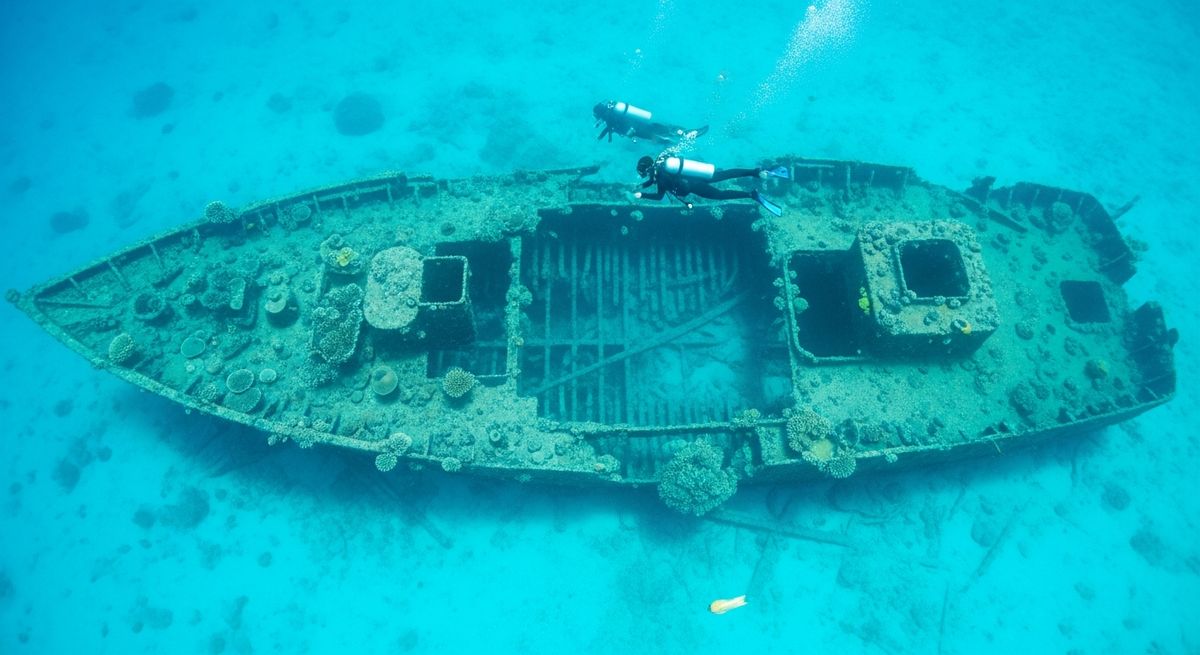
Now, Astoria. Not every wreck needs to be a deep technical dive to be genuinely interesting. This bulk carrier, grounded off Cabo San Antonio back in ’78, sits in just one metre of water. You read that right: one metre. We love it because it’s entirely different. It’s an exposed, skeletal structure, often breaking the surface, and frankly, it’s a masterclass in how marine life adapts to the harshest environments. Think of it as a living art installation. The sheer scale of the ship, at 195 metres long, is still impressive even if only bits remain visible. You’ll be snorkelling and free-diving rather than scuba, poking around rusted plating and twisted rebar. The sun filters through the shallow water, illuminating clouds of small baitfish darting amongst the shadows. We’ve seen juvenile barracuda lurking, and the way the light plays off the barnacled surfaces makes for incredible photos. It’s a photographer’s dream, honestly, especially late afternoon when the light softens. We’d suggest bringing a good wide-angle lens for this one. It’s not about finding rare species; it's about appreciating the raw power of the ocean claiming back this massive steel hulk. For divers who appreciate history and don't mind skipping the tanks for a day, it’s a fascinating look at the intersection of man-made structures and the natural world.
Typical ASTORIA Dive Profile
Illustrative profile based on site depth and type. Actual dive profiles vary - always follow your dive computer and training.
Safety Notes
Wreck site - avoid penetration without wreck diving certification. Watch for sharp metal and entanglement hazards.
ASTORIA Wreck History
Year Sunk
1978
Vessel Type
cargo ship
Cause
grounding
Built in Hamburg, Germany, in 1960, the Astoria served as a bulk carrier for nearly two decades. Its career came to an abrupt end on December 28, 1978. While on a long passage from New York to Brazil, the vessel ran into trouble in the Caribbean and grounded firmly off Cabo S, near Cuba's Isla de la Juventud. The damage was catastrophic, and the ship was declared a total loss, abandoned where it lay.
Lying in a mere one meter of water, the wreck of the Astoria is less of a scuba dive and more of a snorkeler's paradise or a landmark for kayakers. For years, the vessel has been battered by waves and tropical storms, breaking it apart and scattering its remains across the shallow reef. The engine block and other large sections of the hull are often visible from the surface, encrusted with coral and algae. It provides a fascinating and easily accessible site to witness the power of the sea and explore a shallow-water ecosystem teeming with juvenile fish and invertebrates that have taken refuge in the ship's metallic skeleton.
Nearest Dive Centres to ASTORIA
Dive shops near ASTORIA
View all dive centres in Isla de la JuventudReviews for ASTORIA
Conditions
Ocean conditions, forecast and tides for ASTORIA
ASTORIA Ocean Conditions
Monthly averages for ASTORIA, sourced from Open-Meteo marine data - nearest station: Open-Meteo marine grid (23.09, -81.45) (52km away)
October Averages
Sea Temperature
29°C
85°F · Range: 27.6–30.6°C
Air Temperature
28°C
82°F
Wind Speed
7.54 m/s
14.7 knots
Atmospheric Pressure
1012.9 hPa
Based on 4 years of monitoring data · Data sources: Open-Meteo marine data
Plan & book
Ways to dive Isla de la Juventud, from day trips to liveaboards.
Day trips & courses
via GetYourGuideGuided dives, courses and snorkel trips with instant booking.
Find dive trips in Isla de la JuventudPlaces to stay
via Booking.comHotels and dive resorts near Isla de la Juventud.
Search stays in Isla de la JuventudDive insurance
Most travel insurance excludes or limits scuba. Check what you need before you go.
Dive insurance explainedPartner links: we may earn a commission if you book, at no extra cost to you. How we make money
Where to Stay near ASTORIA
Prices from Booking.com. We may earn a commission at no extra cost to you.